

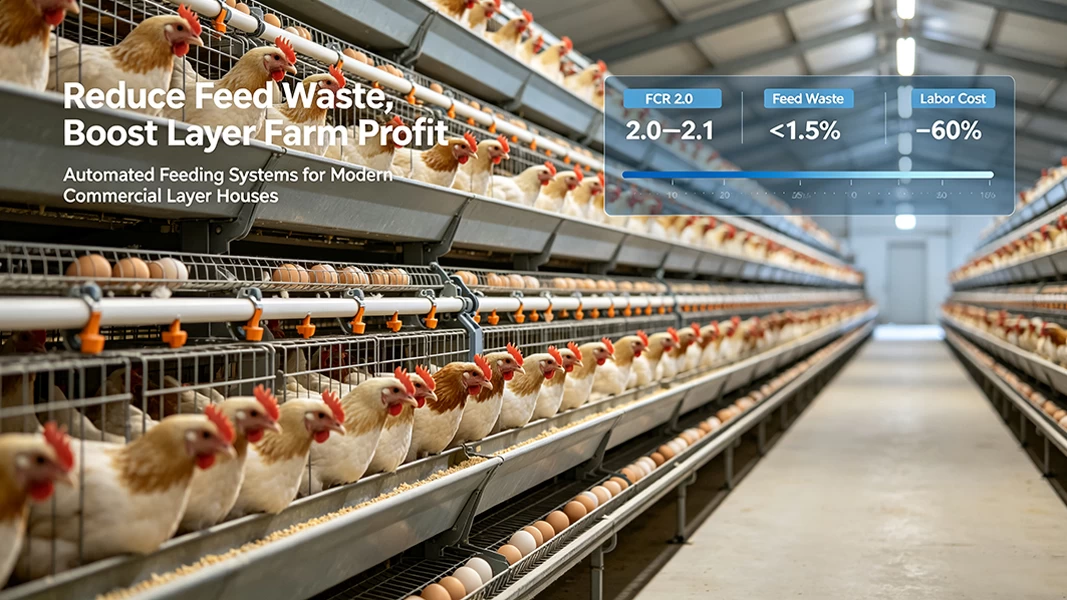
How Automated Feeding Systems Reduce Feed Waste and Cut Layer Farming Costs
In commercial layer poultry farming, feed accounts for 60% to 70% of total operational costs. With global raw material prices fluctuating, even a tiny 3% to 5% reduction in daily feed wastage can translate into thousands of dollars in annual savings for farm managers.
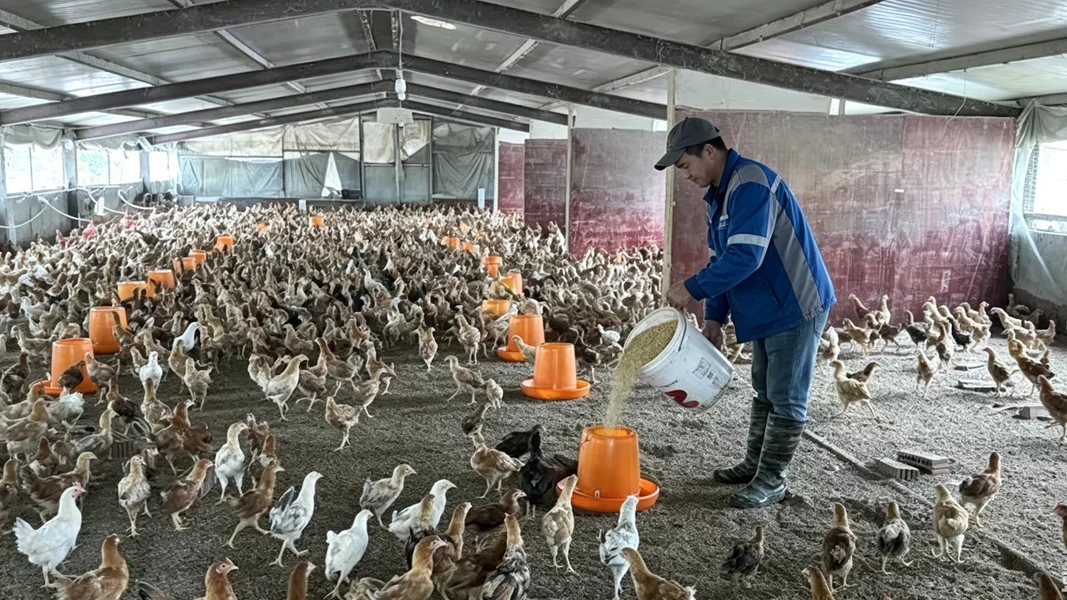
Many farm owners assume feed loss is inevitable. However, the majority of feed waste is caused by outdated manual feeding methods, poorly designed trough hardware, and uncalibrated feeding schedules.
In this article, we analyze where your feed disappears and how implementing modern automated layer feeding and drinking systems can significantly optimize your Feed Conversion Ratio (FCR) and maximize flock ROI.
 |
Part 1: The Hidden "Feed Thieves" in Traditional Layer Farms
Before upgrading your facility, it’s critical to identify how feed is being wasted in traditional manual or semi-automated operations:
1. Manual Overfilling & Trough Spillage
The Cause: When farm workers manually scoop feed into troughs, filling levels are often uneven.
The Waste: Overfilled troughs allow hens to flick feed out with their beaks while searching for larger grains, scattering expensive feed onto the floor or manure belt.
2. Selective Feeding & Nutritional Imbalance
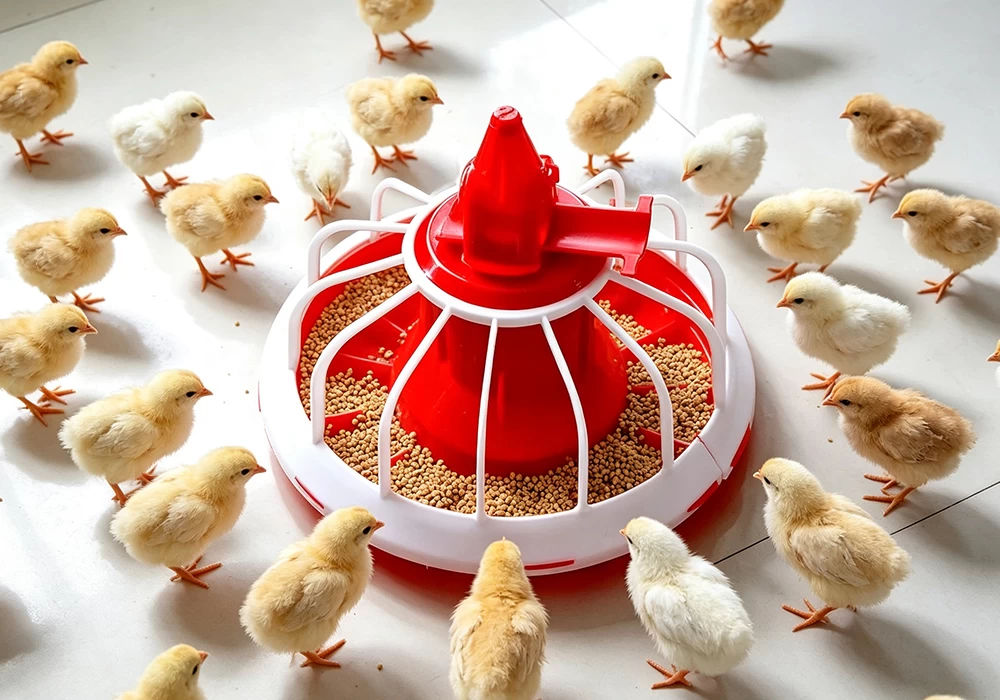
The Cause: In long, open troughs, birds closer to the feed inlet pick out the palatably larger grains, leaving fine powder and essential vitamins/minerals for the hens further down the row.
The Waste: Uneven nutrient intake leads to inconsistent egg weights and uneven laying peaks across the flock.
3. Rodent Contamination & Mold Risk
The Cause: Open feed storage and slow, static feed distribution expose mash to moisture, pest infestation, and mold.
 |  |
Part 2: How Modern Automated Systems Stop Feed Wastage
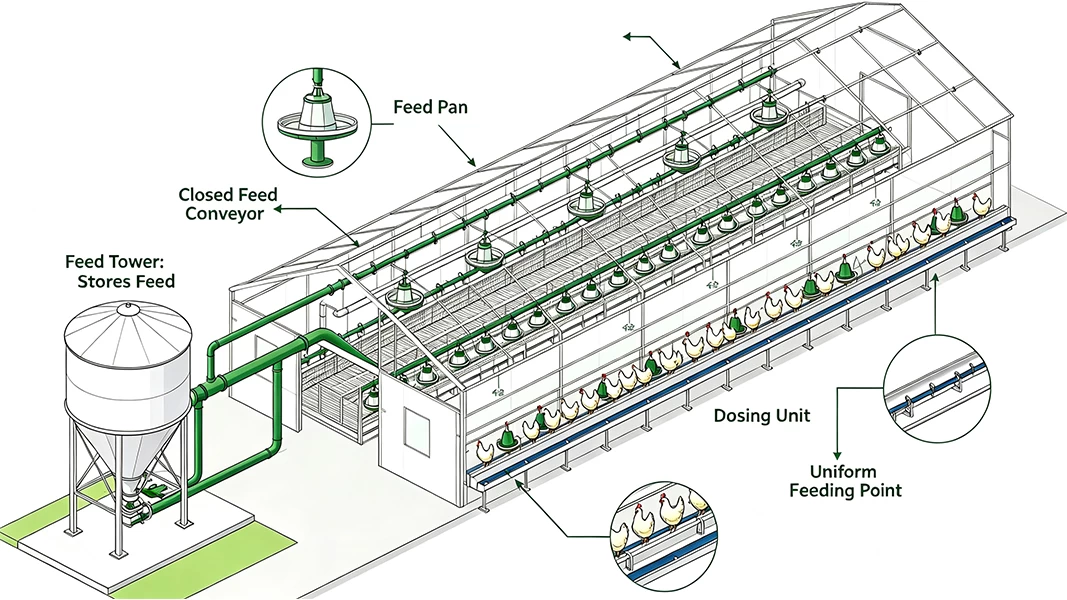
Transitioning to a precision-engineered automated layer feeding system addresses these issues at the hardware level:
1. Trolley (Gantry) & Chain Feeding Systems for Precise Dosing
Modern H-Type and A-Type layer cages utilize automated feeding trolleys (trolley feeders) or chain feeding loops:
Uniform Layer Thickness: Adjustable feed dispensers deliver an exact, razor-thin layer of feed along the entire trough length within seconds.
Anti-Flick Trough Lip: Ergonomically curved trough edges prevent hens from billing feed out of the trough during eating, cutting mechanical spillage by up to 80%.
2. Automated Nipple Drinking Systems to Prevent Caking
Feed and water management go hand in hand:
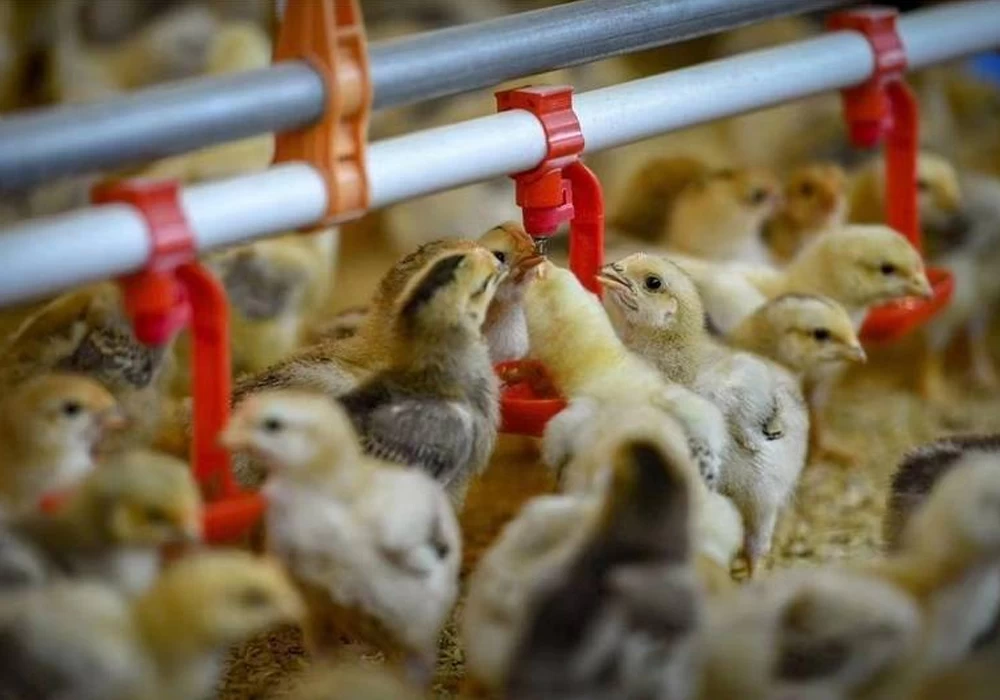
Drip-Free Nipple Drinkers: Traditional water troughs or leaky nipples create wet mash inside the feed trough. Wet feed spoils rapidly and is rejected by the birds.
Precision Pressure Regulators: Ensure consistent water pressure, keeping feed dry and palatable while maintaining optimal hydration for maximum egg production.
3. Climate-Controlled Appetite Management
Feed intake is heavily dictated by poultry house temperature:
Ventilation & Cooling Support: By integrating negative pressure exhaust fans and evaporative cooling pads, the house microclimate remains in the ideal zone (18°C–23°C). Preventing heat stress ensures hens maintain a healthy, consistent appetite without over-consuming feed just to regulate metabolic heat.
 |
Part 3: Calculating Your ROI: The Math Behind Automated Feeding
How fast does an automated feeding system pay for itself? Let's look at a quick comparison:
| Metric | Manual / Outdated Feeding | Modern Automated Feeding System |
| Daily Feed Wastage | 5% – 8% (Spillage & spoilage) | Less than 1.5% |
| Labor Requirement | 4–6 workers per 50,000 birds | 1 operator per 50,000 birds |
| Feed Conversion Ratio (FCR) | 2.3 – 2.4 | 2.0 – 2.1 |
| Annual Feed Savings | Baseline | $12,000 – $18,000 USD (per 50,000 layers) |
Conclusion: Transform Waste Into Profit
In modern poultry farming, reducing feed wastage is the single fastest way to boost your net profit margins. By equipping your layer house with precision automated feeding trolleys, anti-spillage troughs, and climate control systems, you protect every grain of feed and ensure uniform flock performance.
Optimize Your Layer Farm Efficiency with North Husbandry Machinery
Ready to reduce feed waste and lower labor costs? We manufacture robust automated trolley feeding systems, A/H-type layer cages, nipple drinking lines, and climate control fans/pads tailored to your farm dimensions.
[Contact Our Engineering Team Today] for a free custom farm layout and automated equipment quotation!