

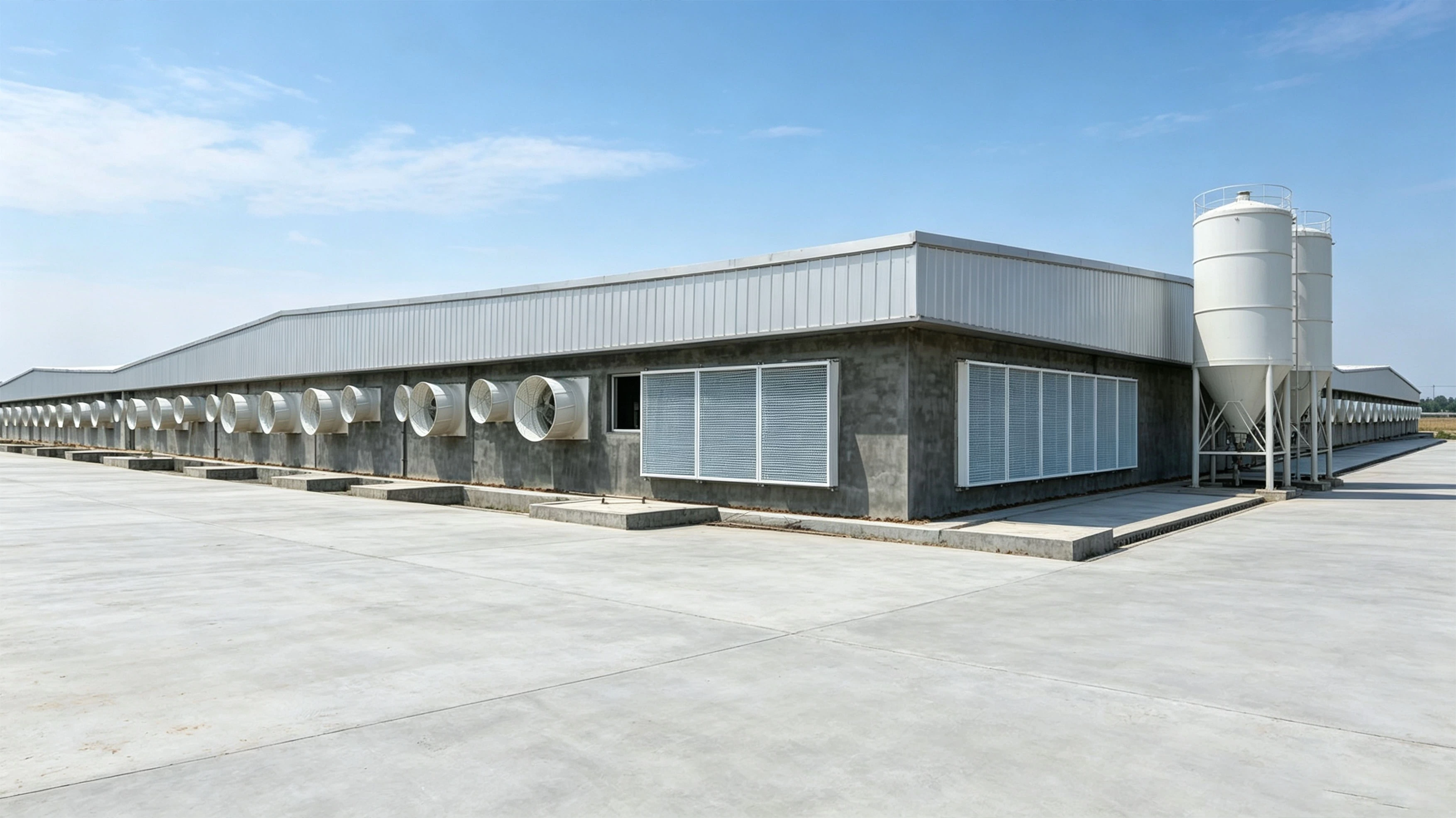
When designing or upgrading your poultry house ventilation system, choosing the right fan housing material is one of the most critical decisions you will make. Pick the wrong one, and corrosive ammonia combined with high humidity will eat away at your investment in just a few short years.
Two heavyweights dominate the market: Galvanized Steel and Fiberglass (FRP).
Which one reigns supreme for durability, efficiency, and your budget? Let’s break down the pros, cons, and bottom line.
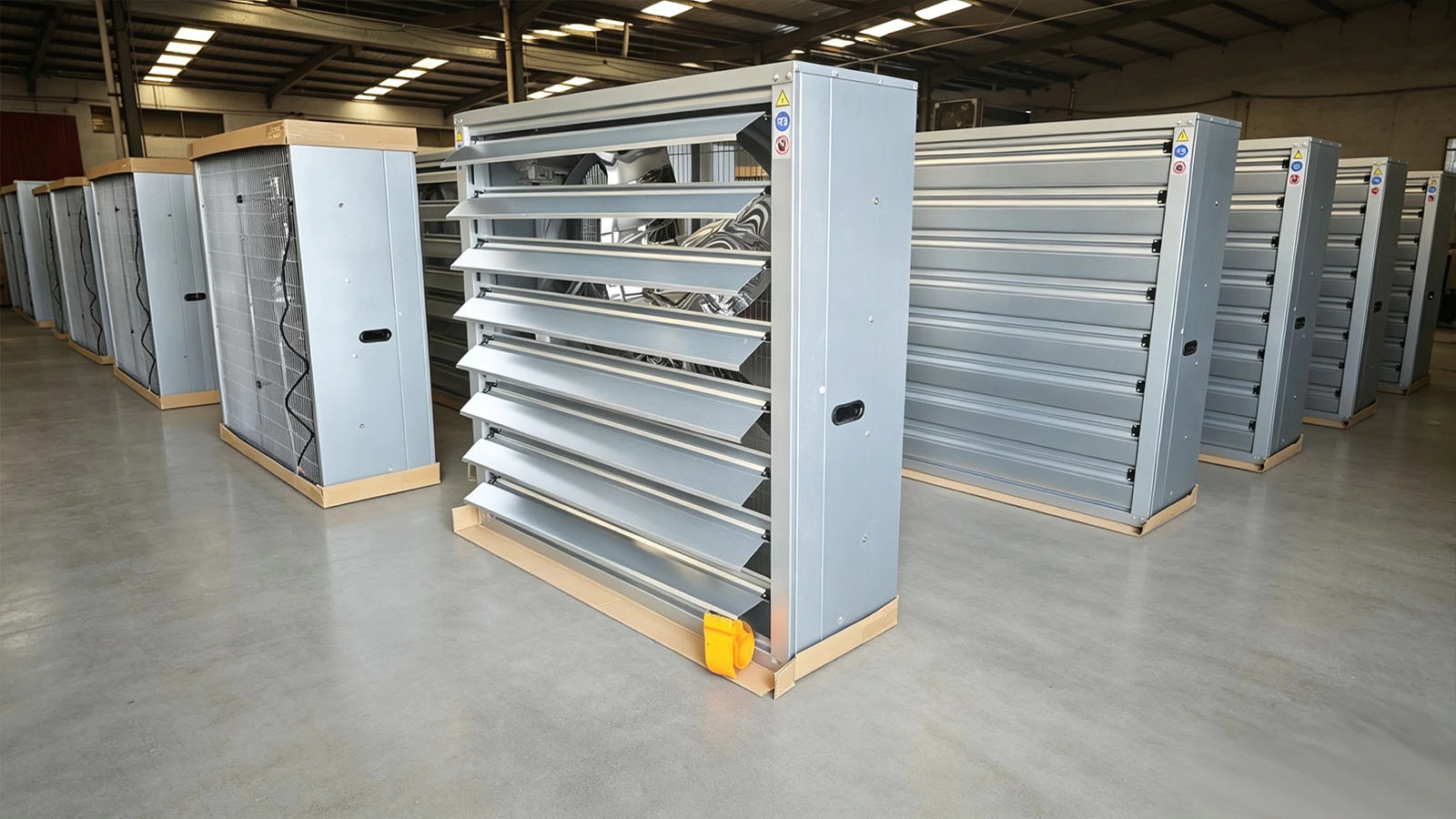
1. Galvanized Steel Poultry Fans: The Traditional Workhorse
Galvanized fans have been the staple of commercial livestock housing for decades. They consist of steel coated with a protective layer of zinc to prevent rusting.
Pros 👍
- Lower Upfront Cost: Significantly cheaper initially, making them ideal for tight installation budgets.
- Structural Strength: Rigid steel handles high static pressure extremely well without warping.
- Easy Maintenance & Repair: Readily available replacement parts and easy welding/bolting fixes if damaged.
Cons 👎
- Vulnerability to Ammonia Corrosion: Once the zinc coating scratches or wears down, aggressive poultry house ammonia and moisture trigger rapid rust and structural failure.
- Shorter Lifespan in Harsh Environments: Typically lasts 5–8 years in high-moisture broiler houses without meticulous maintenance.
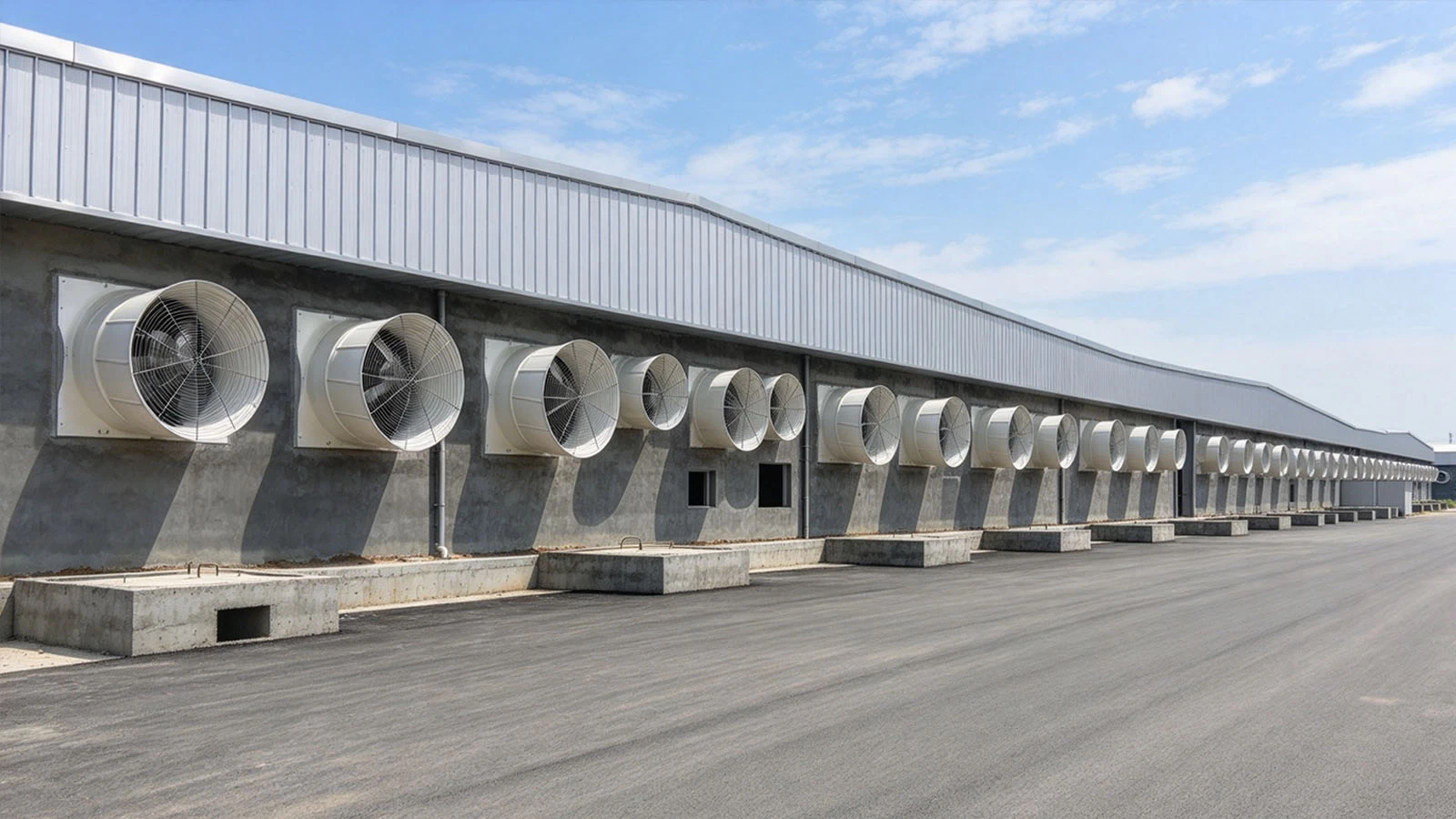  |
2. Fiberglass (FRP) Poultry Fans: The Corrosion-Resistant Champions
Fiberglass Reinforced Plastic (FRP) fans are engineered specifically to withstand the most corrosive, humid agricultural environments imaginable.
Pros 👍
- Superior Corrosion Resistance: Totally immune to rust, moisture, and agricultural gas corrosion. Perfect for wet pad-cooling systems and closed houses.
- Extended Lifespan: Can easily operate for 10–15+ years with minimal structural degradation.
- Smooth Airflow Inside: Molded fiberglass housings offer seamless interiors, reducing aerodynamic drag and maximizing airflow efficiency.
Cons 👎
- Higher Initial Investment: Significantly more expensive upfront compared to galvanized steel models.
- UV Degradation Risk (Cheap FRP): Low-quality fiberglass can degrade or crack over time under intense direct sunlight (though mitigated by UV-resistant gel coats).
3. Quick Head-to-Head Comparison Table
| Feature | Galvanized Steel Fans | Fiberglass (FRP) Fans |
Corrosion Resistance | Moderate (vulnerable over time) | Exceptional |
Initial Cost | Budget-Friendly | Higher |
Expected Lifespan | 5 – 8 Years | 10 – 15+ Years |
Maintenance Need | High (frequent rust checks/paint) | Low |
Best Suited For | Dry climates / Tight initial budgets | Wet climates, breeder houses, high ammonia |
The Verdict: Which One Should You Choose?
- Choose Galvanized Steel if: You are operating on a strict startup budget, managing a dry-climate facility, or planning a facility upgrade within a few years.
- Choose Fiberglass (FRP) if: You run a high-density broiler or breeder house with heavy washing schedules, high ammonia levels, or wet cooling pads where longevity matters most.
Need Help Selecting the Right Fans for Your Farm?
Whether you need rugged galvanized exhaust fans or rust-proof fiberglass models, our ventilation engineers can help you optimize airflow and energy efficiency.
👉 [Contact Our Experts Today for a Custom Ventilation Quote!]