

Agricultural environments are notoriously harsh on metal equipment. High atmospheric humidity combined with toxic ammonia ( NH 3 ) and hydrogen sulfide (H2S) gases accelerates oxidation. Choosing between galvanized steel and stainless steel exhaust fan components determines both equipment service life and total cost of ownership.
 |
1. Hot-Dip Galvanized Steel Housing: Cost-Effective Defense
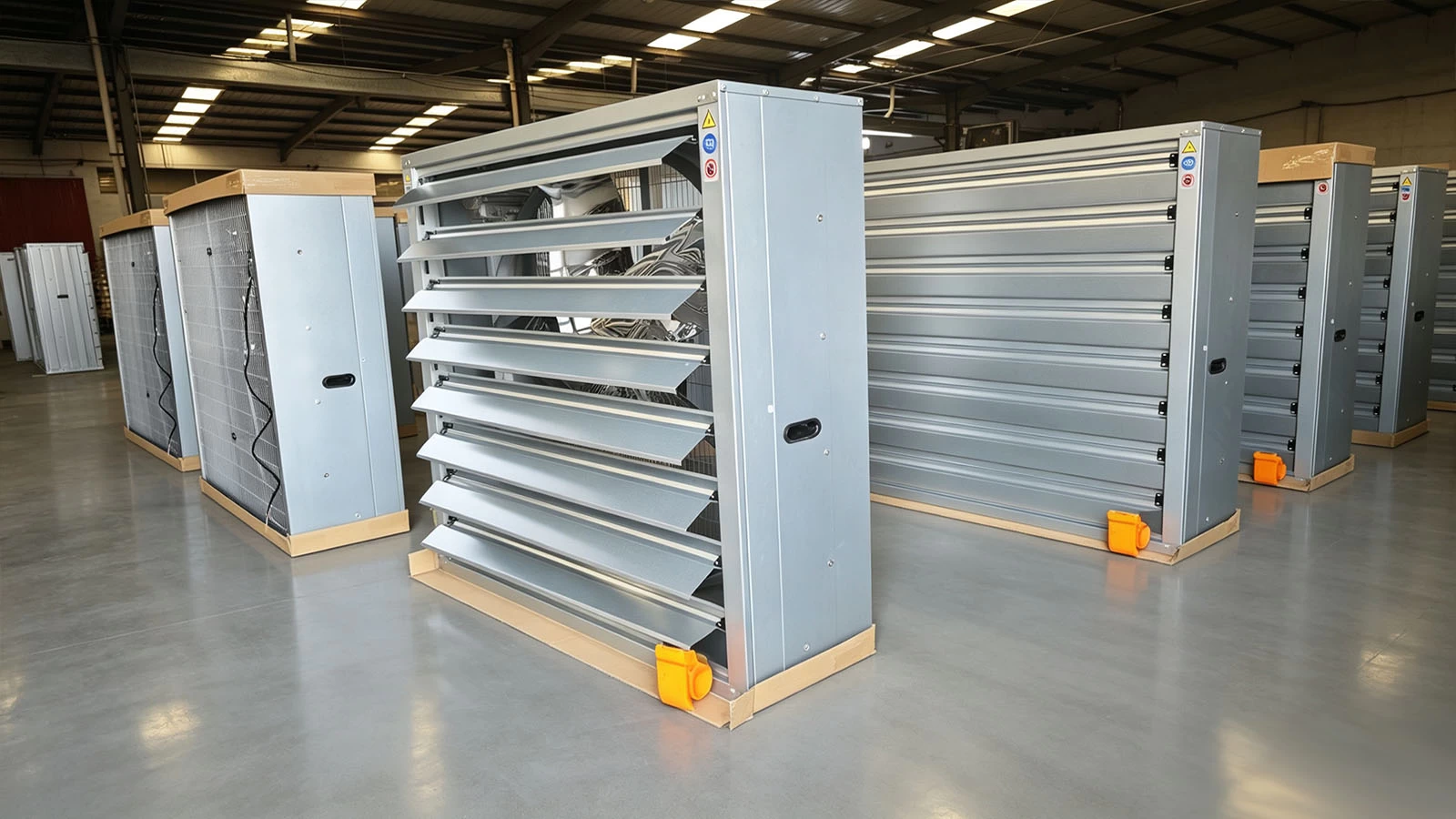
Hot-dip galvanized steel sheets feature a thick protective zinc layer that acts as a sacrificial anode against steel corrosion.
Corrosion Resistance: The heavy zinc coating prevents rust formation even in damp poultry and swine environments.
Structural Rigidity: Galvanized steel frames offer excellent tensile strength, resisting structural deformation during high-speed fan operation.
Economic Advantage: Provides exceptional cost efficiency for large-scale engineering projects requiring dozens of exhaust units.
2. Stainless Steel Fan Blades: Balance and Precision
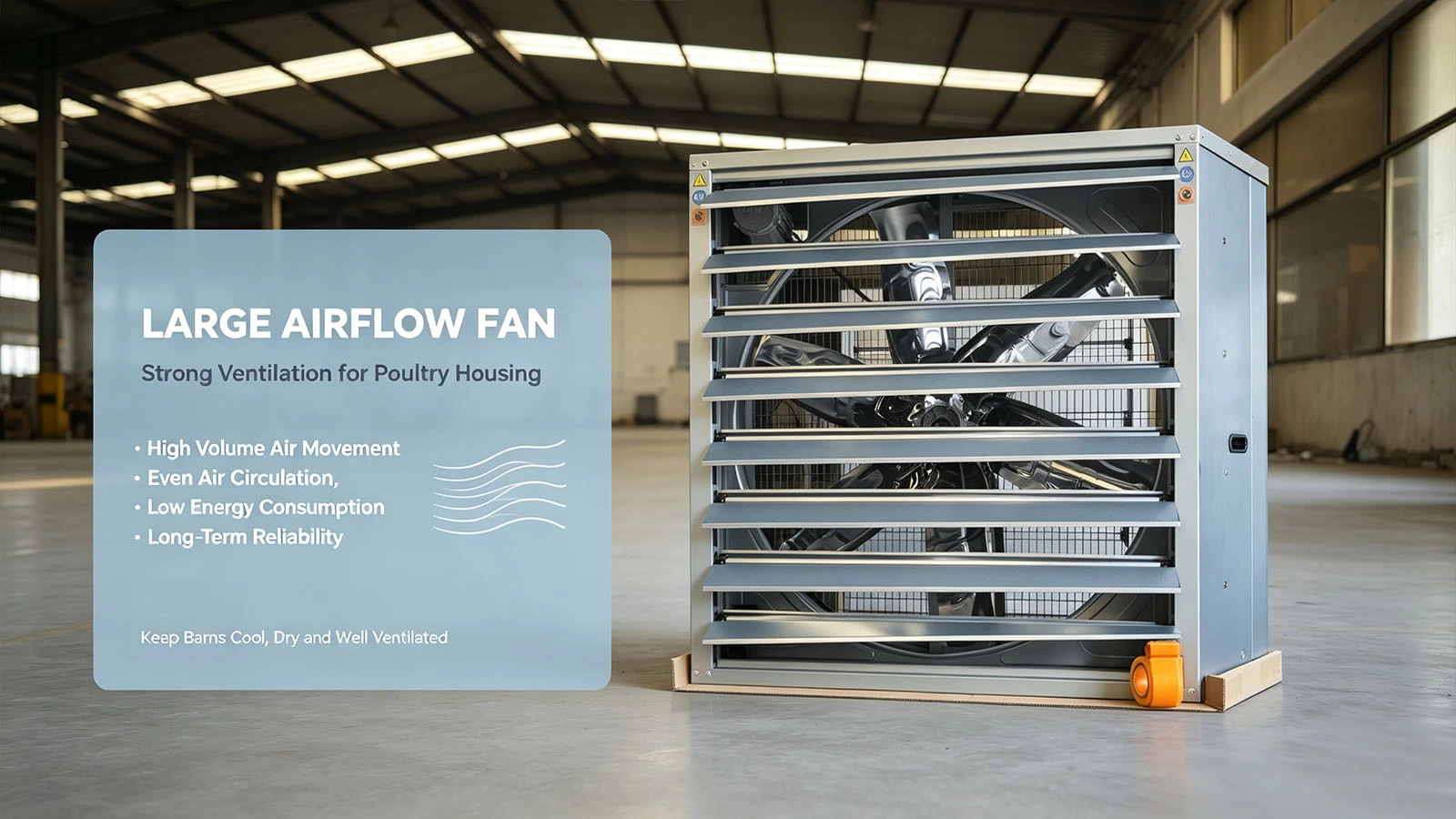
While fan frames are typically built from heavy galvanized sheet, fan blades demand specialized materials like 430 or 304 stainless steel.
Aerodynamic Stability: Precision-stamped stainless blades maintain shape integrity, reducing vibration and noise under heavy static pressure.
Resistance to Organic Acids: Stainless blades withstand direct exposure to poultry dust and cleaning chemicals during routine barn washdowns.
3. The Power-Hammer Mechanism Advantage
Unlike conventional centrifugal or light-gravity shutters that jam when rusted, the heavy-duty power-hammer mechanism utilizes drop-weight gravity. It forces shutters completely open at 90 °during operation and seals them tight against wind and rain when idle—preventing rust-induced shutter jamming over years of exposure.