

Ammonia gas (NH3) is an inevitable byproduct of uric acid decomposition in poultry manure. When waste sits inside a high-temperature barn, toxic ammonia concentrations quickly rise. Exceeding recommended thresholds (20--50 ppm) severely damages birds' respiratory tracts, reduces feed conversion efficiency, and increases flock mortality.
1. The Science of Ammonia Generation in Poultry Housing
Ammonia is produced when nitrogenous waste in fresh feces is broken down by bacteria in warm, moist environments. If wet manure remains inside the house for days, gas emissions surge. High indoor ammonia causes:
Respiratory Damage: Blinding, tracheal damage, and increased susceptibility to Newcastle disease or infectious bronchitis.
Reduced Feed Efficiency: Birds under stress consume less feed, directly reducing weight gain in broilers and egg weight in layers.
Corrosion of Equipment: Ammonia fumes accelerate rust on steel cage structures and electrical components.
2. Eliminating Ammonia at the Source with PP Conveyor Belts
The most effective way to control atmospheric ammonia is frequent, complete waste evacuation before microbial fermentation occurs.
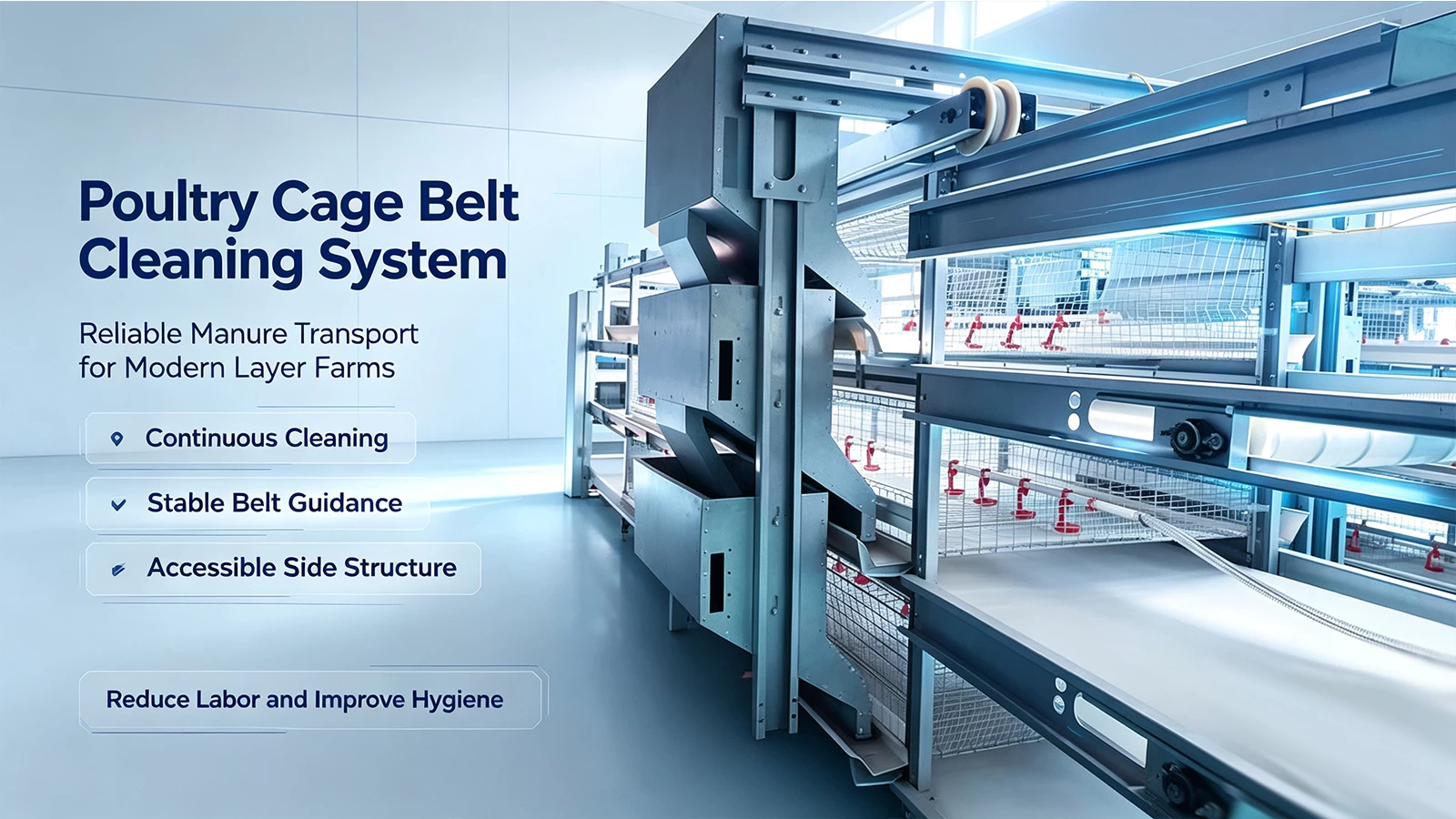
Frequent Removal Cycles: Automated PP manure belts allow farmers to clear waste daily or multiple times per day with the touch of a button.
Drier Barn Environment: PP belts prevent liquid seepage onto the floor, keeping manure drier and drastically slowing bacterial breakdown
Rapid Cross Transport: Transverse transport systems move manure out of the barn structure immediately, eliminating toxic fumes at the source
3. Better Air Quality, Higher Flock Productivity
Combining automated PP manure handling with optimal ventilation creates a healthier microclimate