

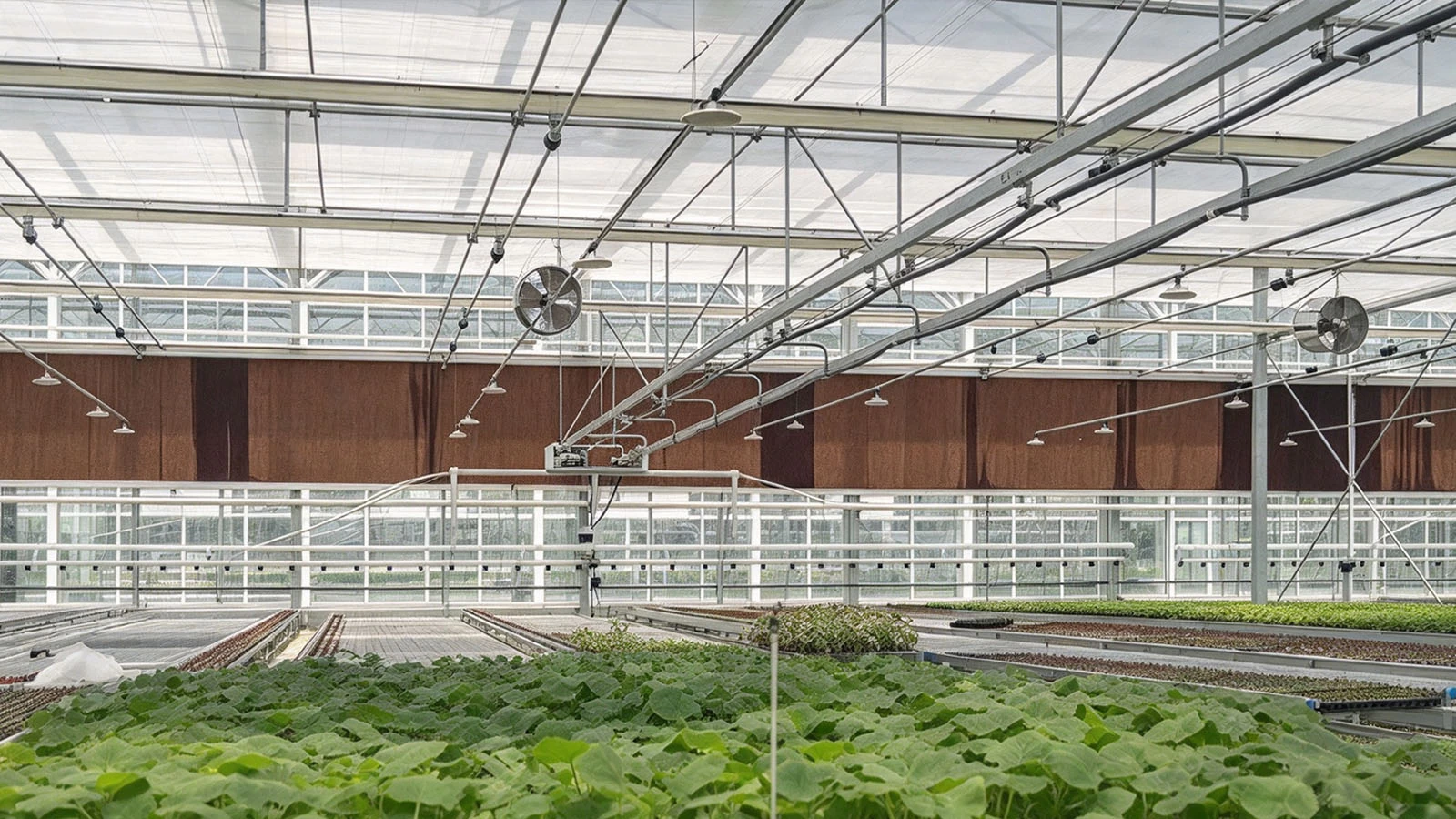
The Challenge of Tropical and Subtropical Greenhouse Farming
In regions like Southeast Asia, South Asia, and the Middle East, high ambient temperatures coupled with intense humidity create severe stress for greenhouse crops. Without specialized air exchange configurations, greenhouses quickly turn into "heat traps," causing heat stress, flower drop, and widespread fungal infestations.
 |
Structural Design Strategies for High-Heat Environments
Designing a greenhouse for tropical conditions requires a dual approach—combining structural engineering with mechanical airflow systems:
Increased Structure Height: Raising gutter heights to 4.5–6 meters provides a larger buffer zone for hot air to accumulate above the plant canopy before being exhausted.
Insect-Proof Netting Integration: While netting prevents pests, it restricts airflow by up to 30–50%. Fan power calculations must account for this added static pressure.
Shading Screen Synergy: Internal or external thermal shading screens reduce solar radiation heat load during peak sunlight hours, working hand-in-hand with exhaust fans.
Deploying Negative Pressure Evaporative Cooling Systems
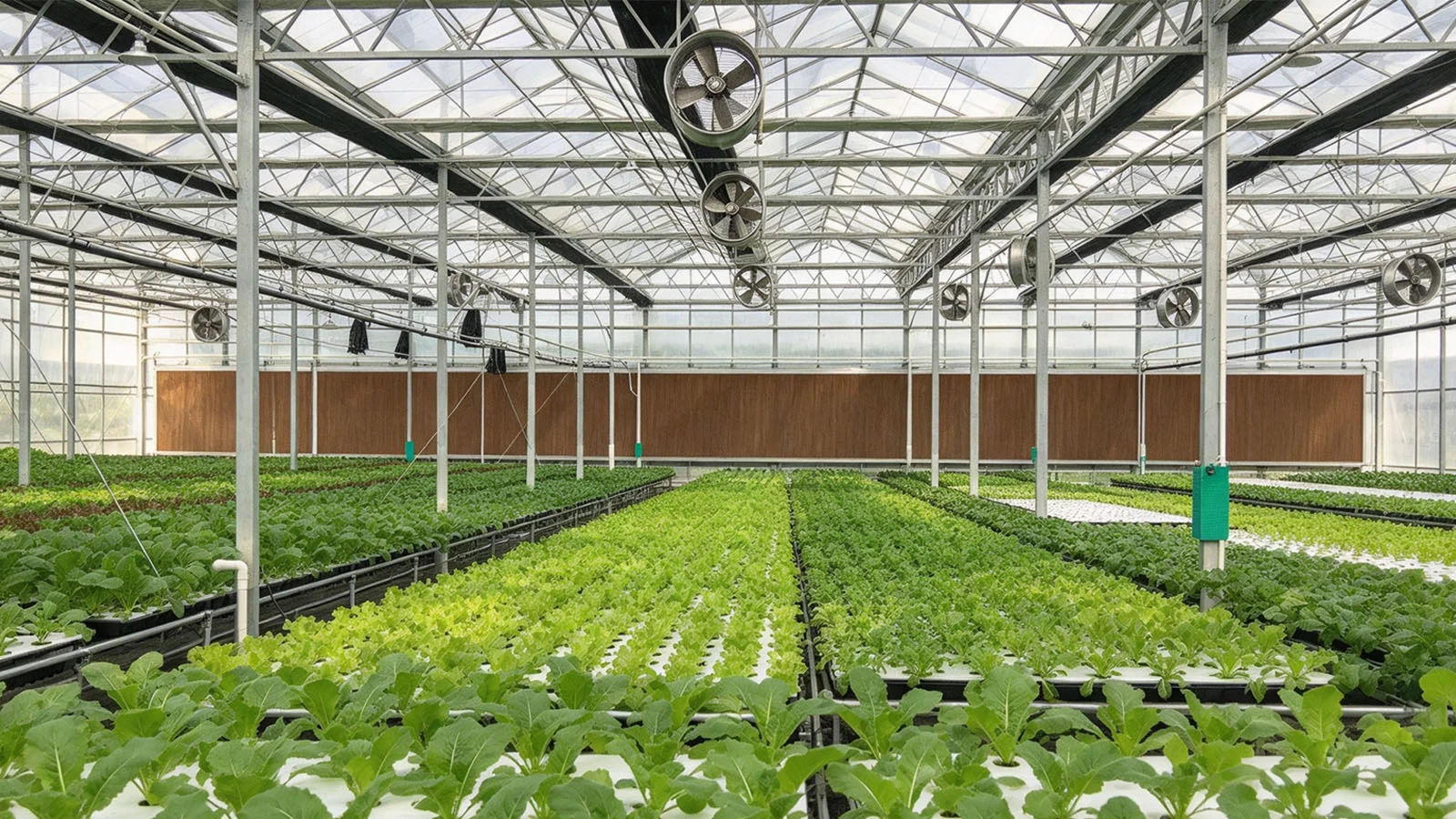
In tropical regions where natural airflow falls short, forced negative pressure cooling is the most reliable solution.
Air Velocity Maintenance: Air velocity across the crop canopy should be maintained between 1.0 m/s and 1.5 m/s to promote plant transpiration without causing mechanical damage.
Modular Pad-Fan Distance: For optimal cooling, the distance between the cooling pad wall and the exhaust fan wall should ideally not exceed 40 to 50 meters to prevent excessive temperature gradients inside the house.
Corrosion-Resistant Hardware: Given high moisture and humidity, heavy-duty hot-dip galvanized steel or FRP (fiberglass-reinforced plastic) fan housings are mandatory to prevent rust and extend service life.