

The Upfront Dilemma: Paper Cheapness vs. Plastic Durability
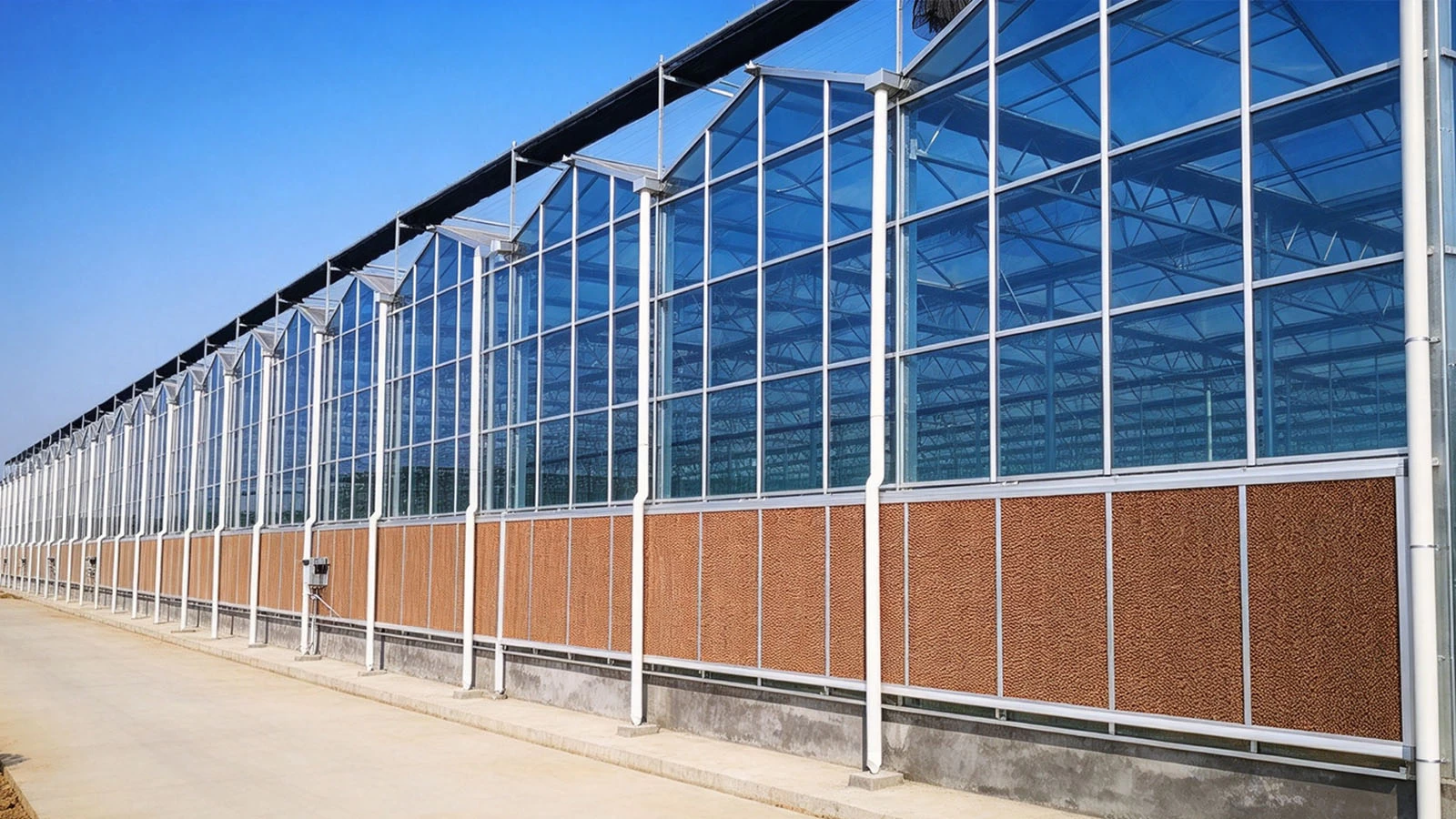
When outfitting a commercial greenhouse with an evaporative cooling system, one of the most frequent dilemmas growers face is selecting the right pad material. Paper cooling pads (made from treated kraft paper) have dominated the market for decades due to their low initial purchase price. However, plastic cooling pads (engineered from durable polypropylene) are rapidly gaining traction in modern high-tech farms.
Understanding the trade-offs between initial capital expenditure (CAPEX) and long-term operating expenditure (OPEX) is key to maximizing your return on investment.
Head-to-Head Performance Comparison
| Feature | Cellulose Paper Cooling Pads | Polypropylene Plastic Cooling Pads |
| Initial Cost | Low (Budget-friendly) | Moderate to High (Higher CAPEX) |
| Average Lifespan | 2 to 4 Years | 8 to 10+ Years |
| Water Absorption Speed | Superior (Instant saturation) | Moderate (Requires special surface fluting) |
| Hard Water / Scaling Resistance | Poor (Pores clog easily with minerals) | Exceptional (Smooth surface resists scaling) |
| High-Pressure Washability | No (Fibers tear easily) | Yes (Can be jet-washed repeatedly) |
Cooling Efficiency vs. Airflow Resistance
Paper pads excel at water absorption, achieving instantaneous saturation and providing exceptionally high evaporative cooling rates during early installation. However, as paper pads absorb mineral deposits and sag over time, static pressure increases, forcing exhaust fans to work harder and consume more electricity.
Plastic pads, on the other hand, feature rigid structural geometry that maintains consistent airflow resistance over years of continuous operation. While their initial water distribution pattern requires precise pump pressure, their thermal efficiency remains virtually unchanged over a decade of use.
 |
3-Year ROI Calculation: Which Saves More Money?
For a standard 1,000 m² greenhouse operating in hard-water agricultural zones:
Paper Pads: Lower initial cost, but requiring complete replacement every 2–3 years due to clogging, along with higher fan energy draw as static pressure rises.
Plastic Pads: Higher initial investment, but zero replacement costs for up to 10 years and significantly lower cleaning labor expenses.
Verdict: If operating in soft-water areas with limited upfront budget, paper pads are ideal. If operating in hard-water regions or planning long-term commercial operations, plastic pads deliver a far superior total cost of ownership (TCO).