

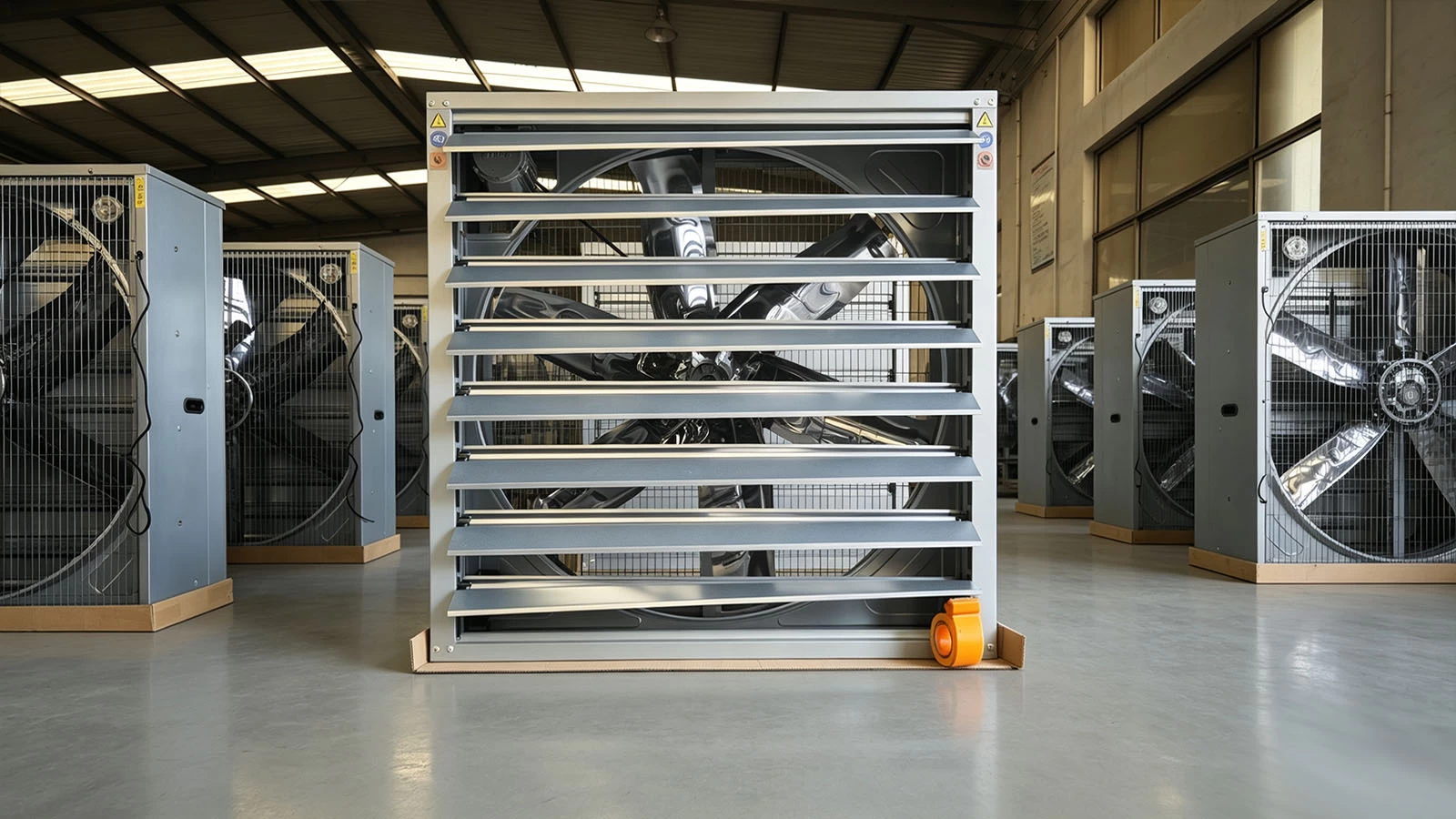
Industrial power-hammer exhaust fans operate continuously in challenging environments filled with dust, organic debris, and moisture. Neglecting routine maintenance degrades CFM output by up to $30\%$ and causes premature motor or bearing failure. Follow these 5 steps to ensure long-term operational efficiency.
1. Inspect and Adjust Belt Tension Regularly
Loose drive belts slip, reducing blade RPM and cutting airflow capacity, while over-tightened belts damage motor bearings.
Check belt deflection monthly—it should depress approximately 10mm to 15mm under thumb pressure.
Replace worn or frayed V-belts immediately to prevent sudden operational downtime.
2. Keep Shutter Blades and Power-Hammer Mechanism Clean
Dust, dirt, and poultry feathers accumulate on shutter louvers, increasing mechanical load.
Clean shutter blades and power-hammer connecting rods quarterly using compressed air or low-pressure water.
Lubricate pivot points with silicone spray to ensure smooth 90-degree opening action.
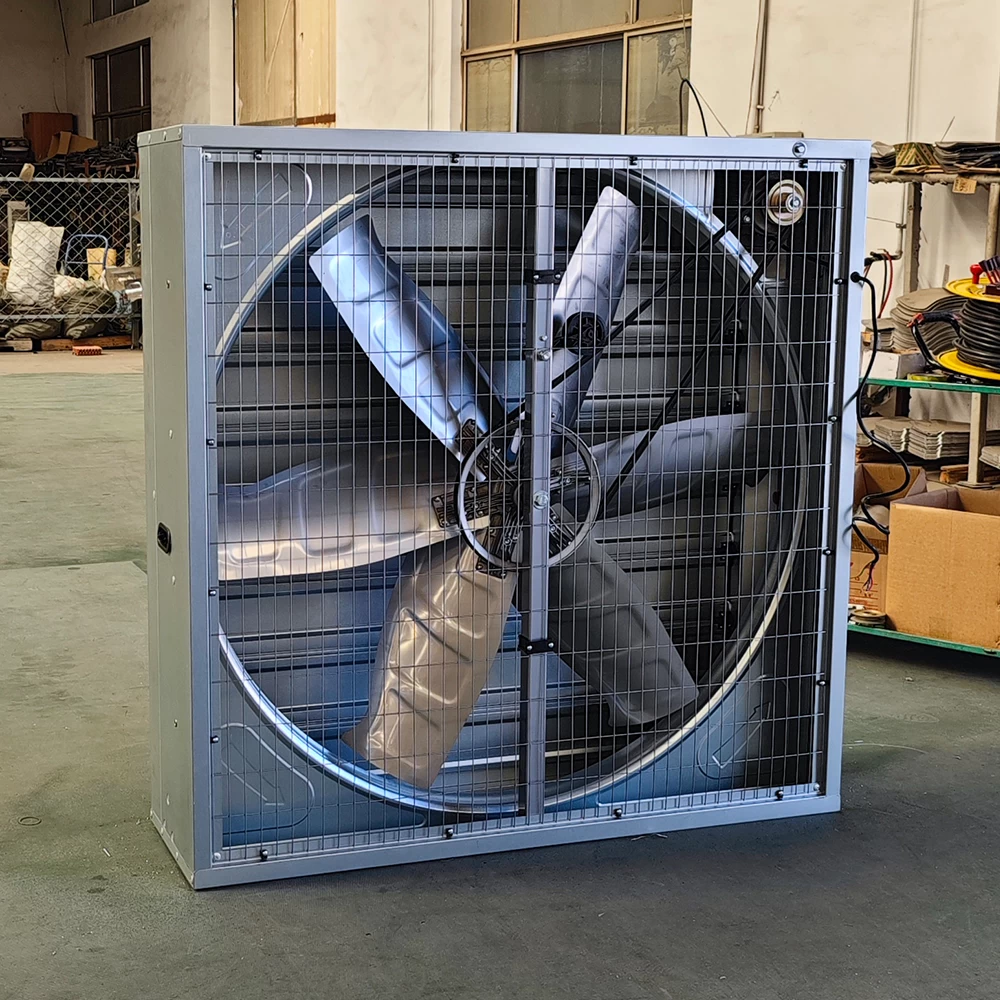 | 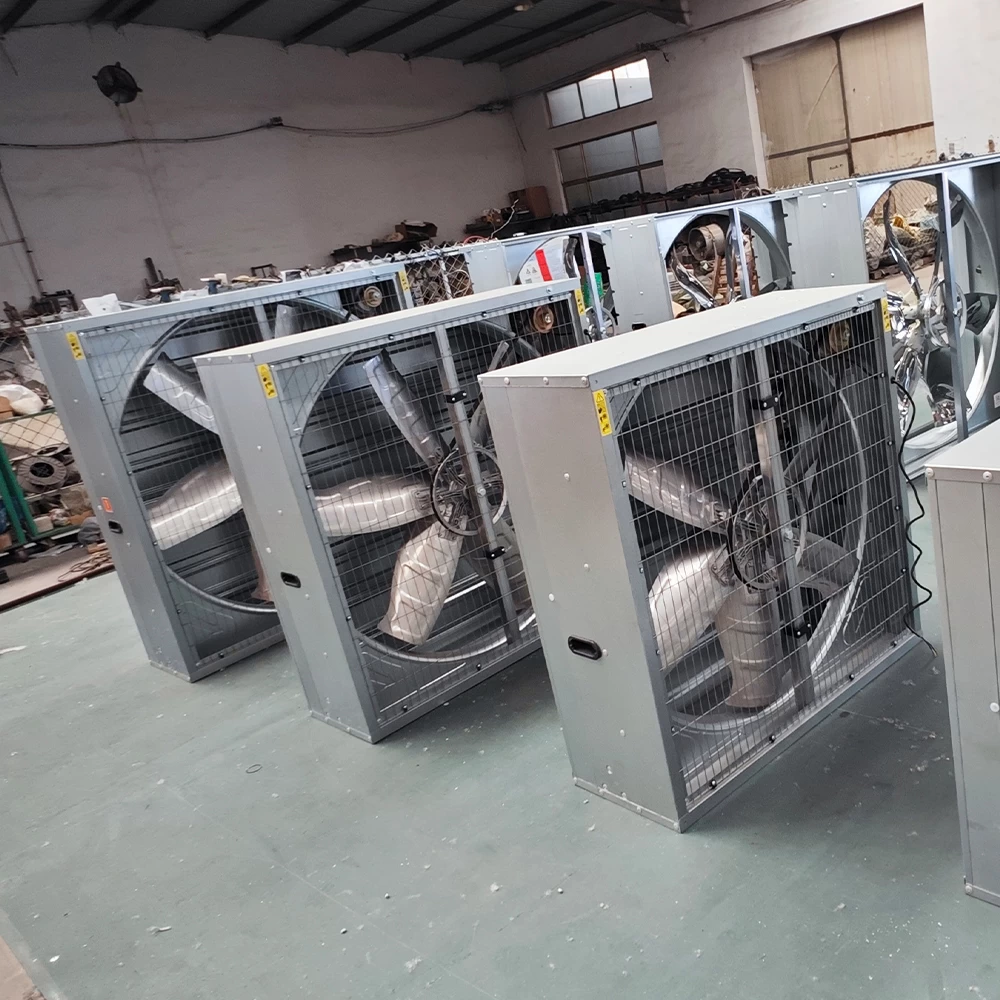 |
3. Clean Fan Blades to Preserve Aerodynamic Balance
Dust buildup on stainless steel blades alters blade balance, creating excessive vibration that ruins motor bearings.
Wipe down fan blades periodically to remove caked-on grime.
Inspect blade alignment to prevent housing contact during high-speed rotation.
4. Monitor Motor Health and Electrical Connections
Motors rated IP55 are sealed against dust and moisture, but require thermal monitoring.
Clear dust from motor cooling fins to allow proper heat dissipation.
Inspect wiring terminals for oxidation or loose screws caused by machine vibration.
5. Schedule Pre-Season Preventive Overhauls
Before peak summer temperatures arrive, conduct a complete system diagnostic. Test total amperage draw, inspect safety wire guards, and replace aging components proactively to prevent heatwave equipment failure.