

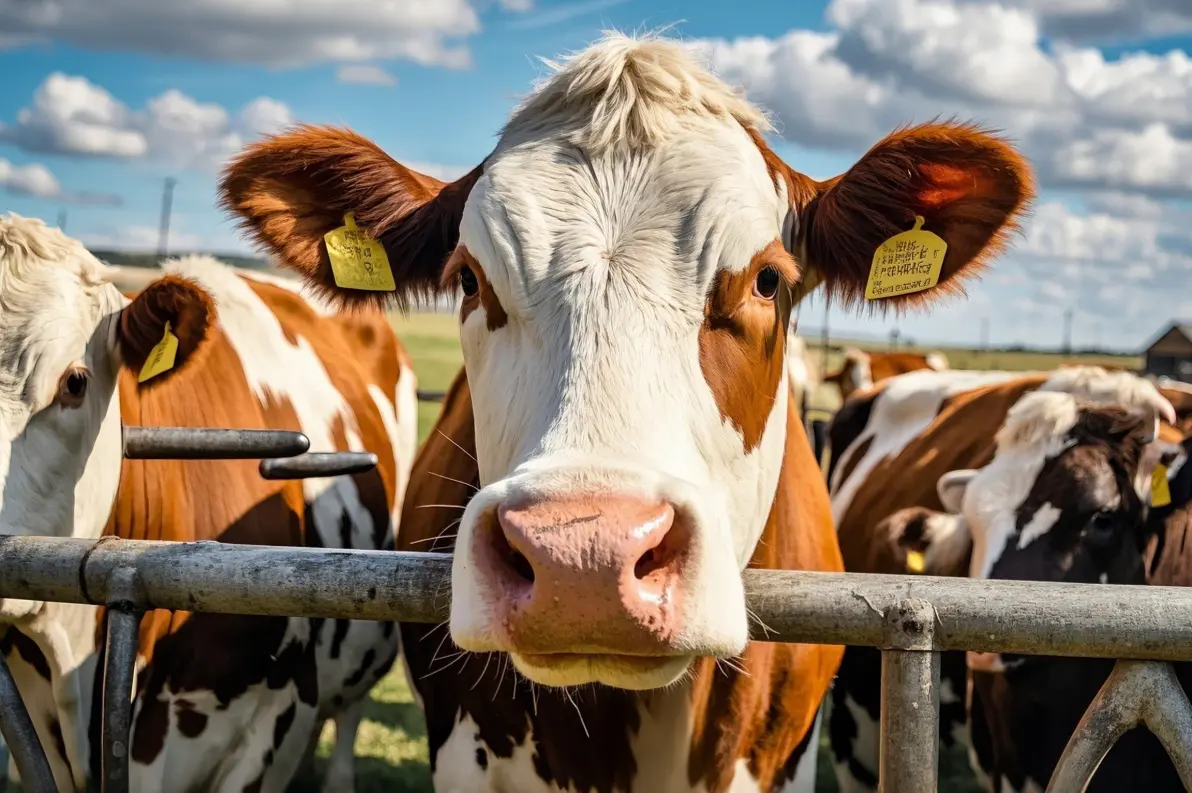
For dairy and beef producers, summer heat stress is a silent profit killer. It triggers sharp drops in milk production, lowers conception rates, and can even cause fatal heat exhaustion. Because cattle have large body masses and low sweating capacity, they begin experiencing heat stress at ambient temperatures as low as 20–22°C (68–72°F), especially when coupled with high humidity.
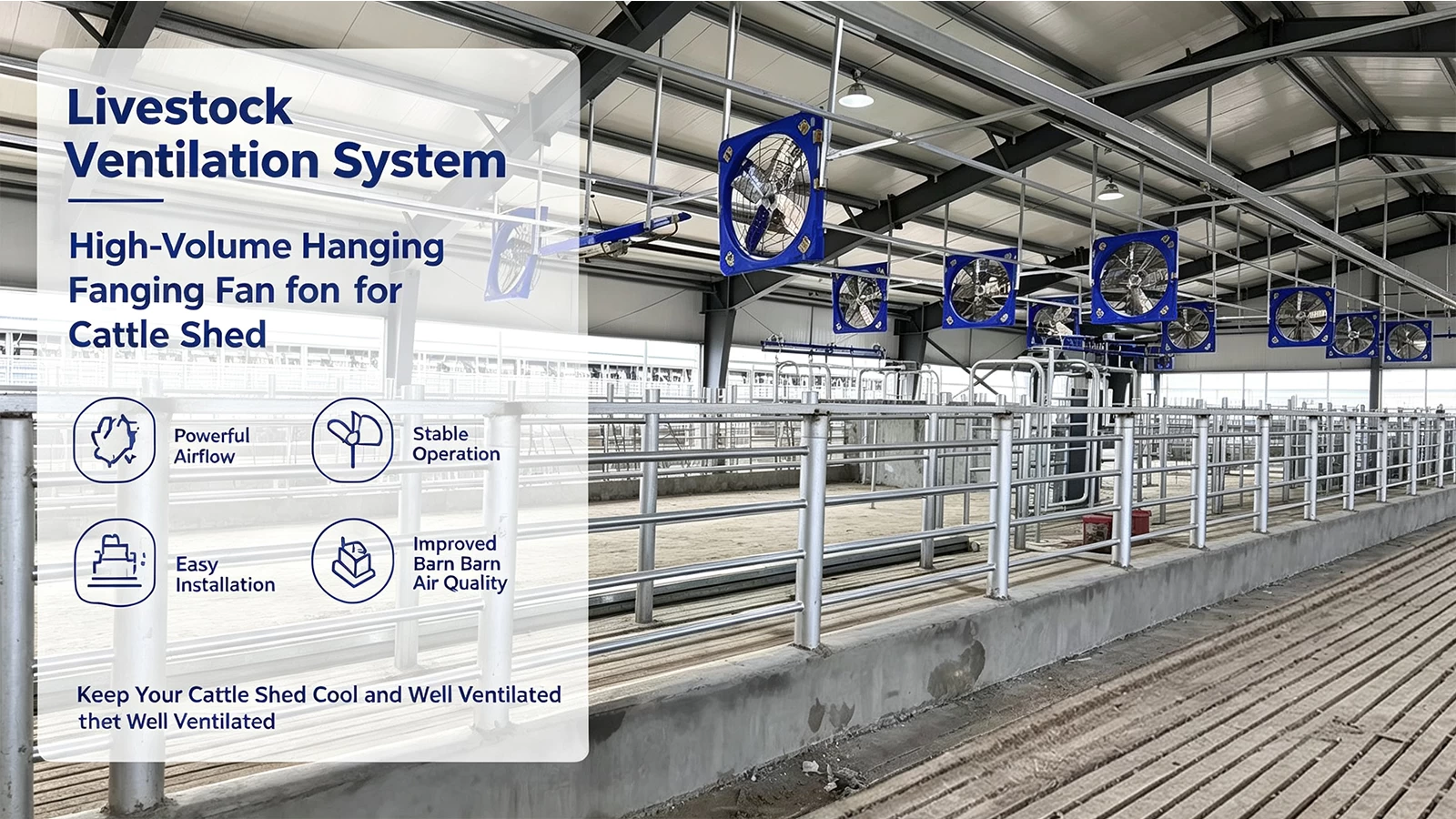 |
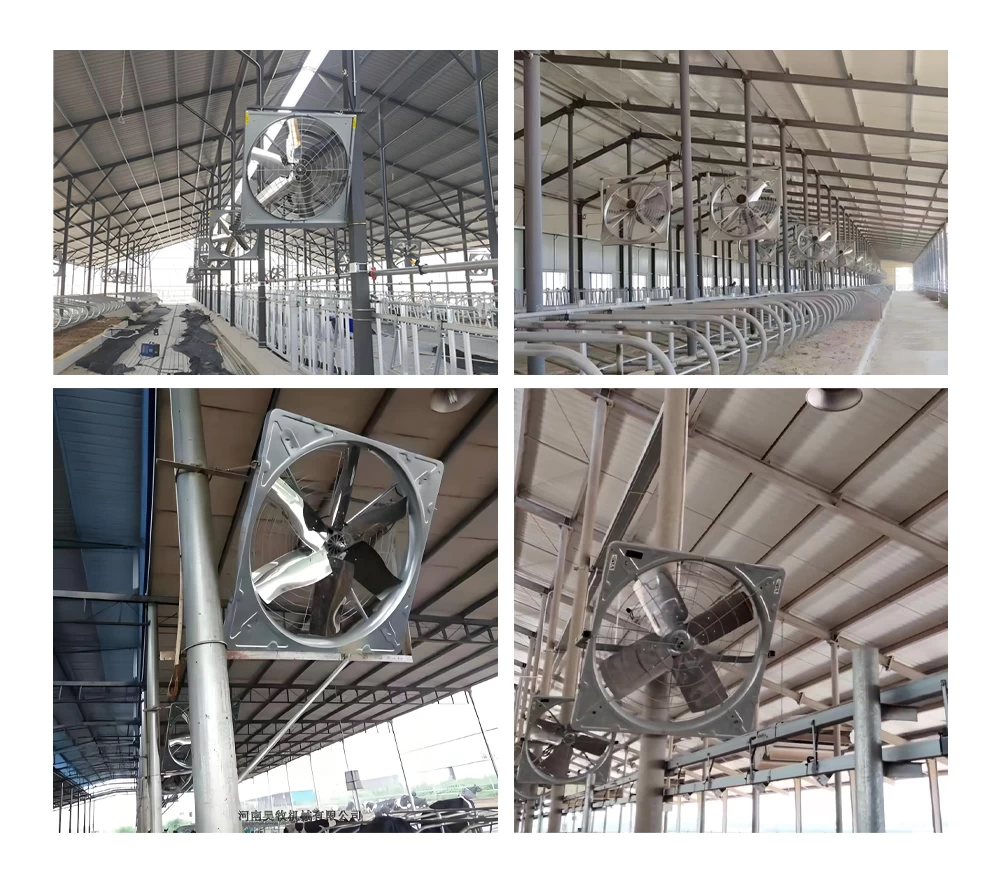
To alleviate heat stress, almost all modern barn designs utilize hanging circulation fans (panel fans, basket fans, or ECU fans). However, many farm managers make a critical mistake during installation: assuming that simply hanging the fans and turning them on is enough.
In reality, the hanging angle directly determines how effectively air velocity reaches the cow's body. Angle the fan too flat or too steep, and you waste substantial electricity blowing air over empty space while leaving the cows heat-stressed.
Here is a practical guide on choosing the right number of fans, spacing, and optimal hanging angles for your barn.
 |
1. Why Hanging Angle is Critical for Cooling
To understand why the angle matters, consider the two foundational goals of circulation fan cooling:
- Air Velocity Drives the Wind-Chill Effect: Delivering a wind speed of 1.5 to 2.5 m/s (300–500 fpm) over a cow’s body increases convective heat loss, reducing perceived temperature by 3°C to 6°C (5°F to 10°F).
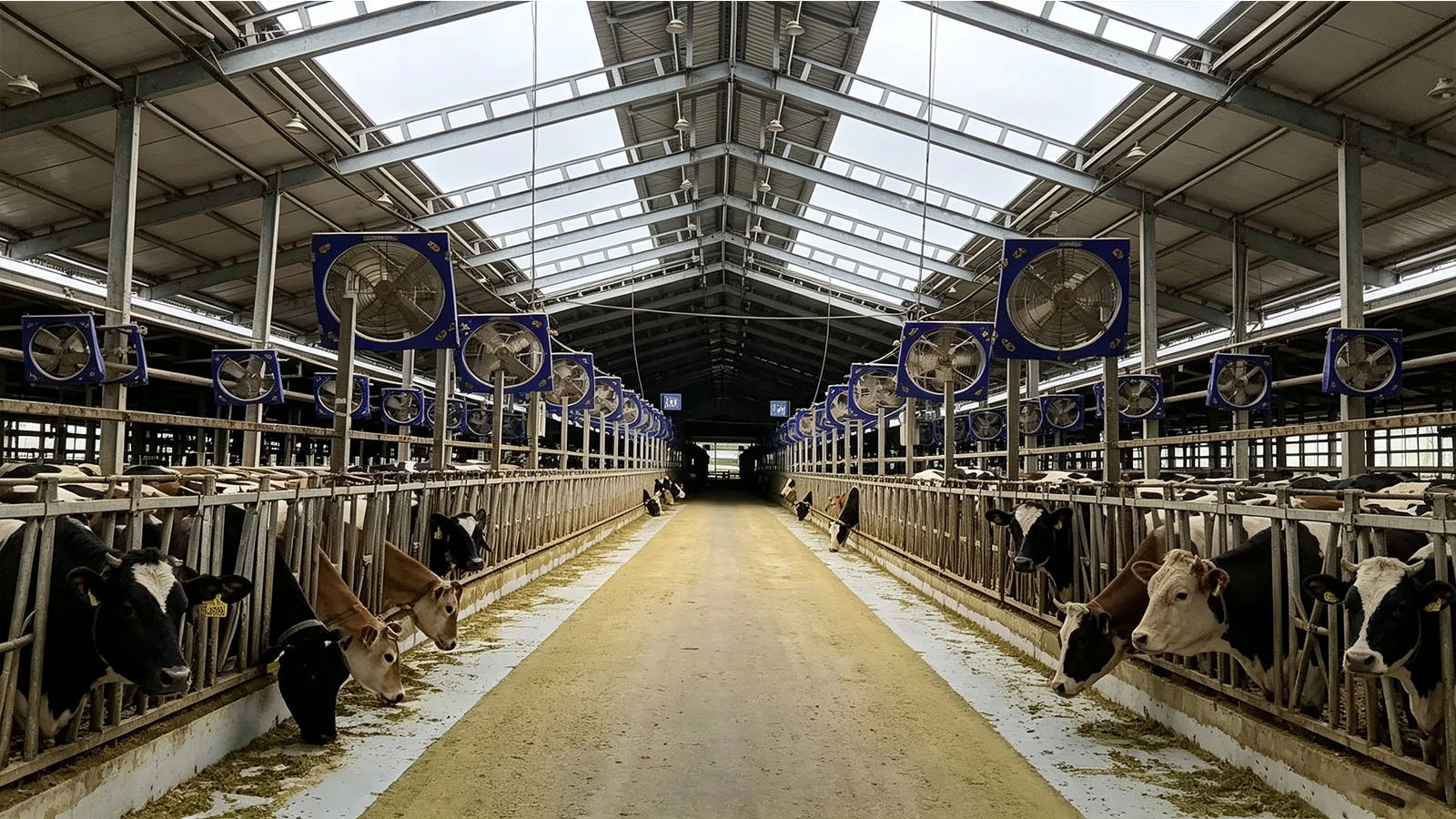
- Targeting the Micro-Zone: Cows spend most of their day in two places: resting in freestalls or standing at the feed bunk. The airflow must target the body level of cows in these exact zones (0.5 to 1.5 meters above the floor), rather than wasting energy on rafters or empty alleys.
If the angle is set incorrectly:
- Too Flat (close to 0° horizontal): The air jet streams high above the herd, traveling down the length of the barn without ever reaching the cows—a classic waste of energy.
- Too Steep (close to 90° vertical): The air blasts straight into the concrete floor, creating local turbulence that destroys the horizontal reach of the air plume and kicks up dust and moisture from manure.
2. Fan Quantity, Spacing, and Angle Reference Table
In farm applications, the downward tilt angle (relative to horizontal) should be set based on the barn zone, mounting height, and fan spacing.
The following reference table applies to standard 1.2m to 1.4m (48-inch to 54-inch) industrial circulation fans:
Circulation Fan Setup and Angle Reference Table
| Herd Size | Recommended Fans | Fan Spacing | Freestall (Lying) Tilt | Feed Bunk (Standing) Tilt | Soaking / Holding Tilt |
| 30 – 50 cows | 2 – 4 units | 8 – 10 m | 15° – 20° | 20° – 25° | 25° – 30° |
| 50 – 100 cows | 4 – 8 units | 8 – 12 m | 15° – 20° | 20° – 25° | 25° – 30° |
| 100 – 200 cows | 8 – 16 units | 10 – 12 m | 15° – 20° | 20° – 25° | 25° – 30° |
| 200 – 300 cows | 16 – 24 units | 10 – 12 m | 15° – 20° | 20° – 25° | 25° – 30° |
| 300 – 500 cows | 24 – 40 units | 10 – 14 m | 15° – 20° | 20° – 25° | 25° – 30° |
Quantity Sizing Tip: For single-row freestall or single-alley layouts, choose the lower end of the fan count (e.g., 4 fans for 50–100 cows). For double-row layouts requiring parallel fan lines (e.g., one over freestalls and one over the feed bunk), choose the higher end (e.g., 8 fans total for 50–100 cows, running 4 per line).
3. Optimal Angles by Barn Functional Zone
Airflow needs differ depending on animal position and behavior across barn zones:
1. Freestall / Resting Area: 15° to 20° Downward Tilt
- Target: Lying cows during rumination and rest. A lying cow’s body height is only 0.5 to 0.8 meters (20–30 inches) off the ground.
- Logic: A lying cow presents a smaller profile to incoming air. A shallower tilt (15°–20°) allows the air stream to extend farther down the stall row, delivering smooth, continuous air speed along the entire stall bed.
2. Feed Bunk / Feed Alley: 20° to 25° Downward Tilt
- Target: Standing cows during feeding. A standing cow’s body height is roughly 1.3 to 1.5 meters (50–60 inches).
- Logic: Animal density and heat generation are highest at the feed fence. A slightly steeper angle concentrates the air stream directly onto the cows' backs and necks to rapidly strip away body heat.
3. Soaking / Holding Pen Area: 25° to 30° Downward Tilt
- Target: Rapidly evaporating water from soaked cows (combined fan and sprinkler systems).
- Logic: High-velocity air must hit the wet coat directly to drive flash evaporation. A steeper tilt directs the core high-velocity plume straight down onto the animals' hides.
4. Four Key Optimization Practices for On-Farm Setup
Beyond setting the baseline angles from the table, implement these four field practices to maximize cooling performance:
1. Adjust for Mounting Height
- Standard Height (2.7 – 3.0 m): Apply the tilt angles directly from the table.
- High Mounting (> 3.5 m): Increase the tilt angle by roughly 5° (e.g., adjust freestall zones to 20°–25°) so the air plume reaches cow level before dissipating.
- Low Mounting (2.5 – 2.7 m): Decrease the tilt angle slightly (10°–15°) to prevent harsh floor-level drafts that kick up debris.
2. Manage Fan Spacing to Prevent Dead Zones
Never space fans further than 14 meters apart (8 to 12 meters is ideal). Beyond 12 meters, air velocity drops below 1.0 m/s. If fans are spaced too far apart, the air stream from one fan will lose momentum before reaching the coverage zone of the next, creating hot spots in between.
3. Maintain Line Consistency (Air Relay)
Circulation fans work as a system to push air through the barn. Every fan in a single line must be set to the exact same angle. Mismatched angles create conflicting air plumes and turbulence, breaking air speed continuity down the line.
4. Verify Velocity with an Anemometer
Never rely solely on visual estimation. Use a handheld digital anemometer to measure air velocity at animal height (0.6 m for lying, 1.3 m for standing):
- Target Benchmark: Air velocity across the cow's body should measure consistently between 1.5 and 2.5 m/s (300–500 fpm).
- Troubleshooting: If air speed at cow level is below 1.0 m/s but high overhead, your angle is too flat. If high air speed is concentrated in a small patch directly under the fan and dissipates within 4 meters, your angle is too steep.
 |
Summary
When it comes to circulation fans in dairy facilities, "higher and flatter" or "steep and close" are both costly mistakes.
- Core Principle: Ensure a steady air speed of 1.5–2.5 m/s lands directly on the cows where they rest and eat.
- Benchmark Angles: Keep downward tilt angles within the 15° to 30° window.
- Field Verification: Reference the setup table for initial fan positioning, then use a hand-held anemometer at cow height to fine-tune your angles.
Properly angling and spacing your hanging fans can increase cooling efficiency by over 30%, lowering heat stress impact while saving energy on your farm.