

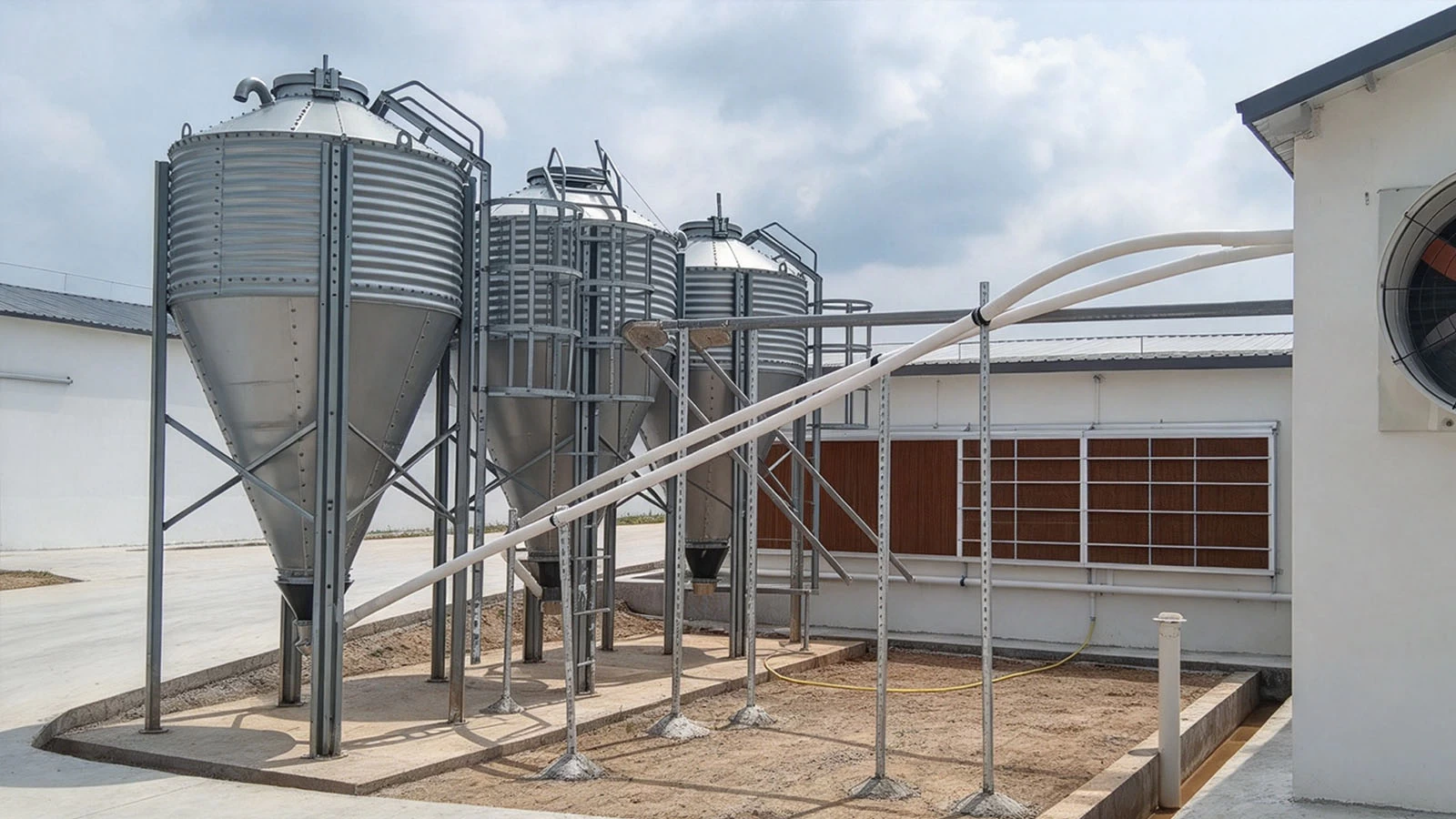
Automatic feeding has become a standard upgrade for modern commercial poultry farms. The automatic poultry feeding line works together with feed silos, transporting feed in sealed pipes and sending fresh feed evenly to every feeding pan inside the house. It changes the traditional manual feeding mode and brings stable benefits for broiler, layer and breeder farms.
A complete automatic feeding line includes feeding hopper, drive unit, feed pipe, auger or chain conveyor, feeding pans, suspension system, feed level sensor and control box. Feed flows from the silo into the hopper, then the conveyor moves feed along the feed line. Sensors detect feed level in pans and control feeding automatically. The whole line can be lifted up and down to match different growth stages of chickens.
The first obvious benefit is labor saving. Manual feeding needs many workers to carry and spread feed every day. With automatic feeding line, farmers only need to set feeding time and frequency on the control panel. Heavy repetitive feeding work is removed, and one worker can manage more chicken houses at the same time.
Second, it greatly reduces feed waste. The feeding pan is designed with anti-spill structure. The height of pans can be adjusted. When the pan is set to proper height, chickens can eat feed easily but cannot scratch feed out. Closed pipe transportation also avoids feed spilling, moisture and contamination during delivery. Better feed conversion rate brings down total feeding cost.
Uniform feeding is another key advantage. All feeding pans get feed at the same time. Every chicken gets equal chance to take feed. The flock grows more evenly. It helps reduce uneven weight, lower stress and improve flock health. Good feeding consistency also makes farm management easier and stable for slaughter or egg production plans.
This feeding system fits different poultry house types. Floor rearing broiler farms widely use pan type auger feed lines. Cage layer farms often choose chain trough feeding lines. It can be customized according to house length, house width, bird quantity and layout. The feeding line can be matched with cooling pad, negative pressure fan and automatic drinking line to build a full automatic poultry environment system.
When choosing an automatic feeding line, buyers need to check several practical points. Confirm the rearing mode first, floor rearing or cage rearing. Check the material of feed pipe and pans, anti corrosion and wear resistance are important for long service life. Check the stability of drive motor and sensor sensitivity. Make sure the supplier can provide layout drawing, installation guide and spare parts support.
Simple daily maintenance can extend the service life of the feeding line. Clean the feeding pans regularly to remove leftover feed and dust. Check suspension ropes and connectors every week, keep the line level and smooth. Check the motor and sensor before each batch starts. Clear blocked feed in pipes in time. Good maintenance keeps the feeding line running steadily during the whole breeding cycle.
For growing poultry businesses, automatic feeding line is a valuable investment. It controls feeding cost, stabilizes flock performance and supports farm expansion. Combined with feed silo and ventilation system, it helps poultry farms move toward standardized and automatic production.