
In modern large-scale, high-density enclosed poultry farming, proper ventilation and environmental control directly impact flock health, market-ready rates, and overall farm profitability. Facing the severe challenge of summer heat stress, achieving cost-effective and high-efficiency cooling ventilation is top priority.
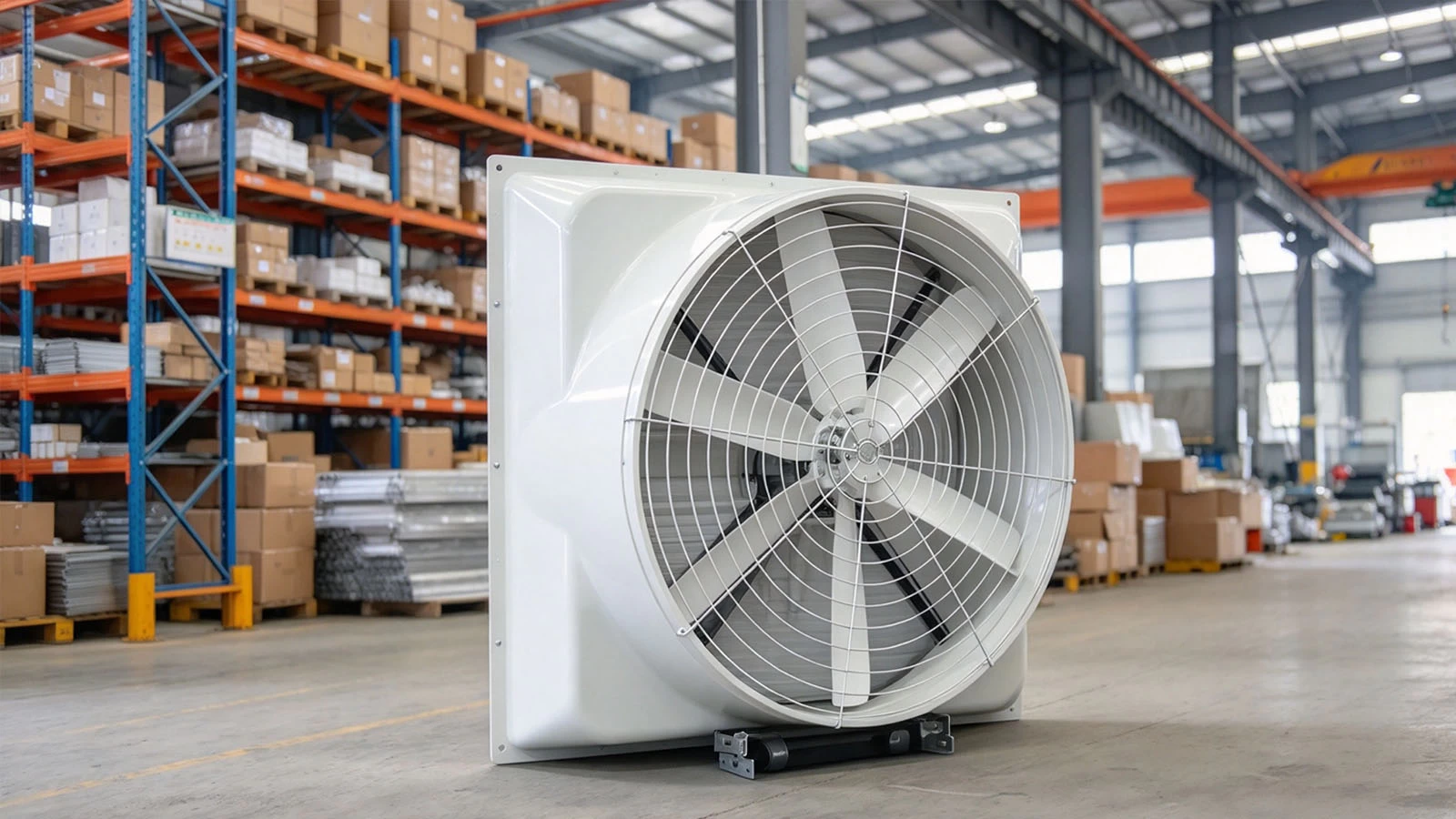
Compared to traditional galvanized sheet metal fans, fiberglass exhaust fans (FRP fans) have become the standard cooling solution for modern poultry operations—especially broiler and layer farms—thanks to their unique material properties and exceptional corrosion resistance. This article provides an in-depth breakdown of the operational and economic benefits FRP fans bring to poultry farms.
Core Benefits of Fiberglass Exhaust Fans for Poultry Farms
1. Superior Corrosion Resistance & Extended Equipment Lifespan
The environment inside a chicken house is unique and harsh. The decomposition of poultry manure releases high concentrations of corrosive gases such as ammonia ($NH_3$) and hydrogen sulfide (H_2S, combined with high humidity from evaporative cooling pads.
- Traditional Steel Fans: The housing and blades rust and corrode quickly, often suffering from frame perforation, blade deformation, or dynamic imbalance within 2 to 3 years.
- Fiberglass (FRP) Fans: Molded from premium resin and glass fiber, FRP offers outstanding resistance to acids and alkalis. Under harsh poultry house conditions, FRP fans can deliver a service life of over 10 years, dramatically reducing secondary replacement and frequent repair costs.
2. High Airflow & Low Energy Consumption to Reduce Electricity Bills
Exhaust fans on commercial farms run continuously for long periods or even 24/7, making electricity a major operating expense.
- Streamlined Cone Design: FRP fans feature an integrated, fluid cone housing (Cone Fan / Butterfly Door Fan) that minimizes wind resistance and maximizes discharge efficiency.
- Energy-Efficient Motors: Combined with precision dynamically balanced aluminum alloy or fiberglass blades, these fans deliver higher airflow output per watt (higher CFM/W efficiency), saving significant electricity costs over long-term operation.
3. Precise Air Velocity Control to Effectively Mitigate Heat Stress
During hot summer months, heat stress in poultry can cause a sudden drop in feed intake, lower egg production, or even severe mortality rates.
- FRP cone fans, working in synergy with cooling pads, quickly establish a stable and uniform wind chill effect, maintaining house air speed at optimal levels ($2.5 - 3.0 \text{ m/s}$).
- Rapidly removing body heat from the birds helps maintain strong feed intake and optimal growth performance, directly safeguarding farm profitability.
 |
4. Airtight Design Prevents Drafts & Air Backflow
Most high-quality FRP exhaust fans are equipped with heavy-duty louvers or insulated butterfly doors:
- Fan Running: Airflow smoothly pushes open the louvers/butterfly doors for maximum exhaust throughput.
- Fan Stopped: Gravity or spring mechanisms tightly seal the shutter, preventing cold outdoor air from leaking back into the house. This eliminates unwanted winter drafts and heat loss, lowering winter heating expenses.
5. Stable Structure & Low Noise Operation to Reduce Flock Stress
Fiberglass material inherently absorbs vibration and dampens sound. Even during high-speed rotation, the fan operates smoothly with minimal vibration and low noise levels, creating a quiet and stable environment that prevents flock panic, smothering, or abnormal egg production caused by sudden noise stress.
Summary
For modern poultry farms seeking long-term, stable returns on investment, fiberglass exhaust fans are far more than a routine equipment purchase—they are a high-yield, long-term strategic investment. Through exceptional durability, power savings, and superior temperature control, FRP fans empower farm managers to lower operating costs and boost production efficiency.