

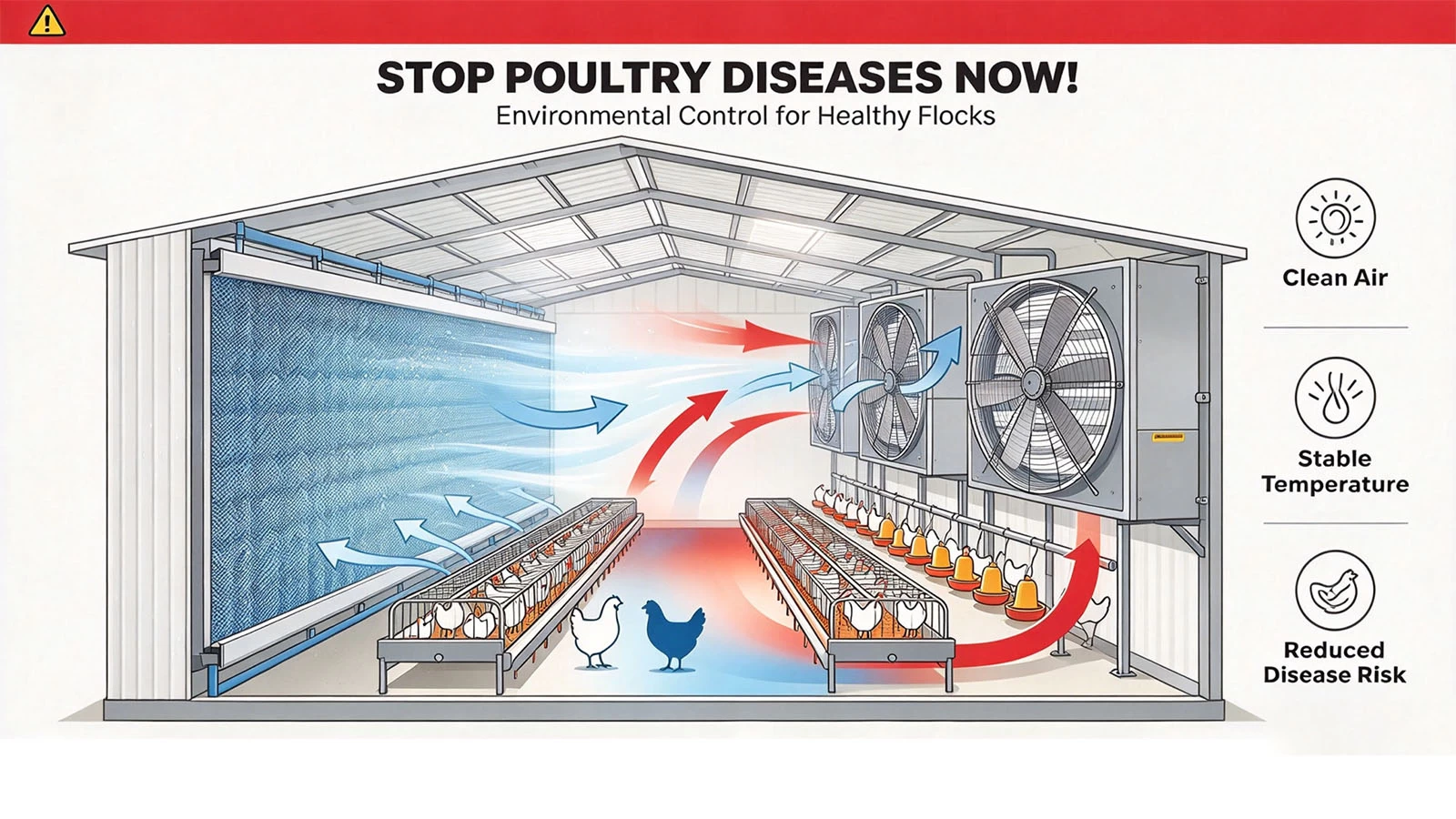
In the era of smart livestock production, climate control is no longer about simply turning on a fan when it feels hot. It is about maintaining a hyper-stable physiological environment that allows animals to convert feed into revenue with maximum efficiency.
At the center of this environmental revolution is the integrated Exhaust Fan and Evaporative Wet Pad System—the standard for modern precision poultry farming.
The Architecture of Tunnel Climate Control
Traditional cross-ventilation often leaves dead zones with stagnant air and hot pockets. Modern poultry housing overcomes this using tunnel ventilation architecture.
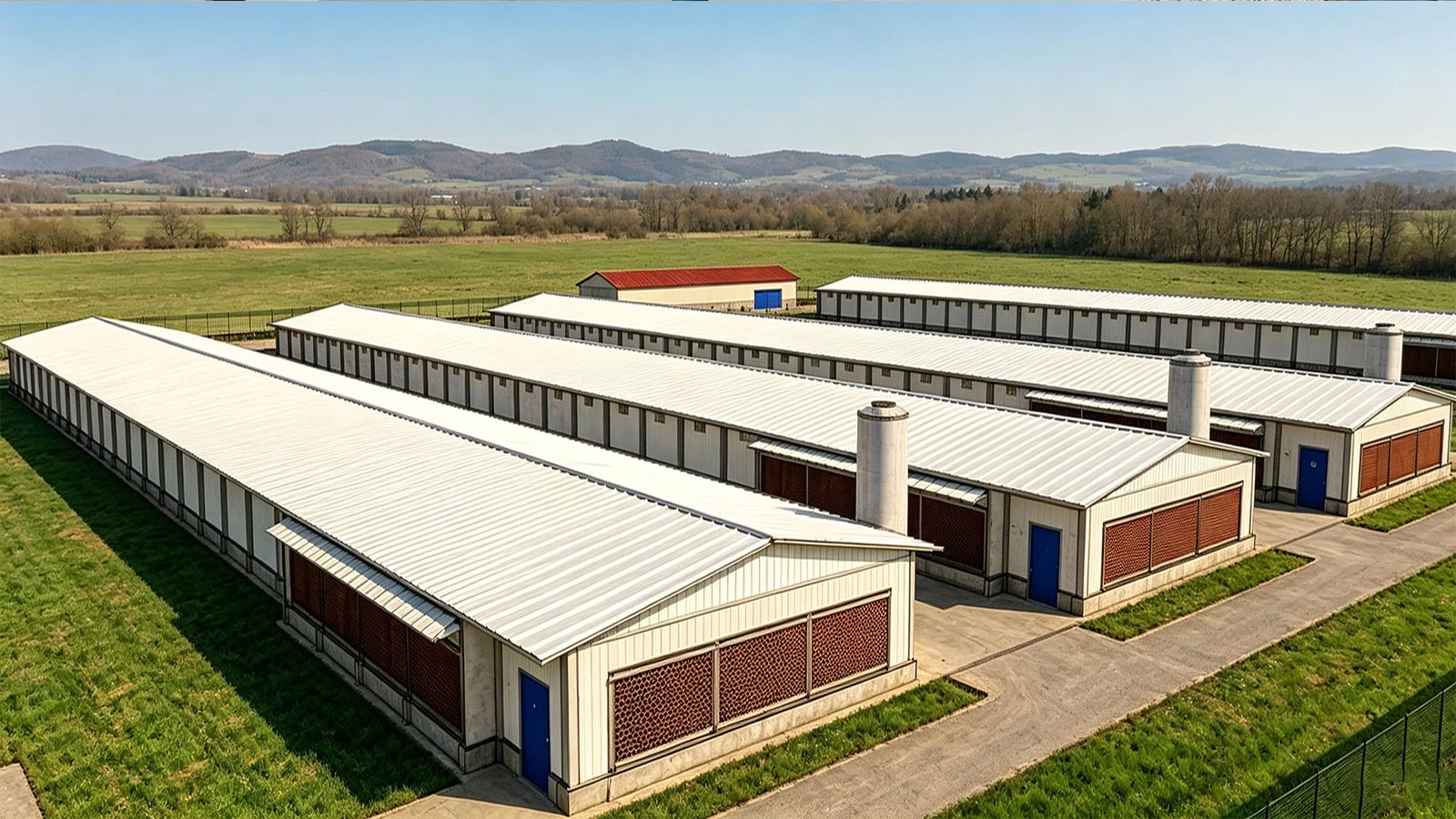
By placing evaporative wet pads at air inlets and heavy-duty axial fans at the exhaust end, air is pulled linearly down the entire length of the building like a wind tunnel. This ensures that every bird, regardless of its position in the cage stack, receives identical cooling and fresh airflow.
Why the Pair Outperforms Standalone Cooling
| Cooling Method | Air Movement | Temperature Reduction | Humidity Control | Efficiency |
| Fans Only | High | Low (Circulates hot air) | Minimal Impact | Moderate |
| Wet Pads Only | Very Low | High near pads only | High local humidity | Poor |
| Fan + Wet Pad System | High & Uniform | High (Up to 10°C drop) | Balanced & Controlled | Maximum |
Combining fans and wet pads bridges the gap between air velocity and air cooling. Fans provide the force needed to move massive volumes of air, while wet pads supply the thermodynamic energy reduction. Together, they create a balanced microclimate that raw ventilation or standalone misting systems cannot match.
 |
Smart Automation: The Next Evolution
The true power of this combination is unlocked when paired with intelligent environment controllers:
Staged Activation: Sensor arrays monitor indoor temperature, relative humidity, and static pressure, automatically turning on additional fans or activating water pumps as heat indexes rise.
Humidity Threshold Guarding: When ambient humidity exceeds 75–80%, the controller throttles pad pump operations to prevent wet litter and respiratory distress, relying instead on maximum wind velocity.
Energy Cost Optimization: Variable-frequency drives (VFDs) modulate fan speeds, ensuring the farm consumes only the electricity required for current ambient conditions.
The Business Impact: Higher ROI and Better Welfare
Investing in an integrated climate setup delivers measurable economic returns:
Lower Mortality: Prevents catastrophic heat stroke losses during extreme heat events.
Consistent Feed Conversion Ratio (FCR): Birds maintain normal feed intake, translating directly into steady weight gain or uninterrupted egg production.
Animal Welfare Compliance: Meets modern consumer and retailer standards for humane, climate-controlled animal housing.
Conclusion:
The integration of exhaust fans and wet pads represents the perfect alignment of thermodynamics and livestock management. For modern poultry enterprises seeking high productivity, reduced operational risk, and superior farm ROI, this combination remains the ultimate foundation of smart climate control.
 |