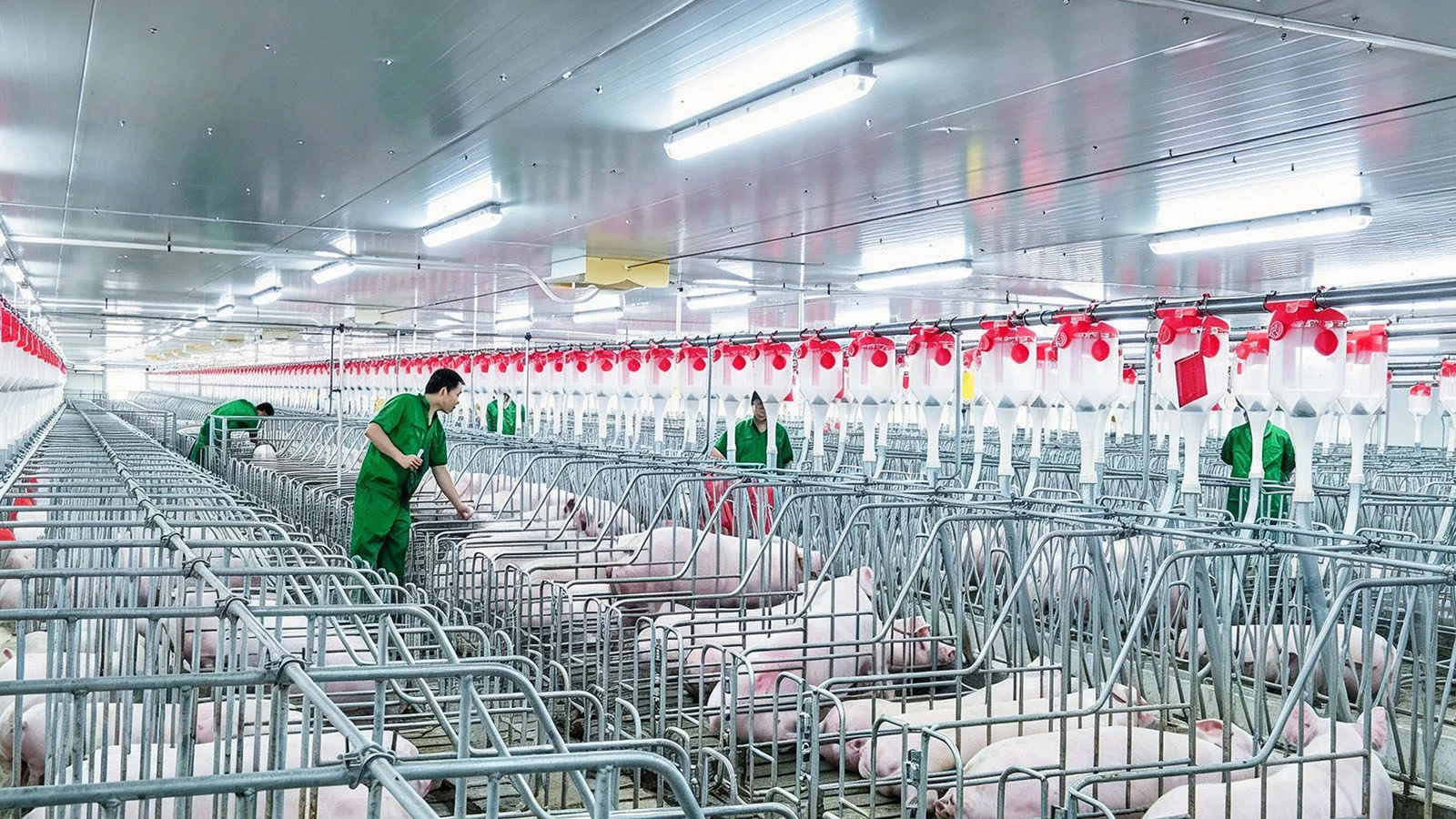

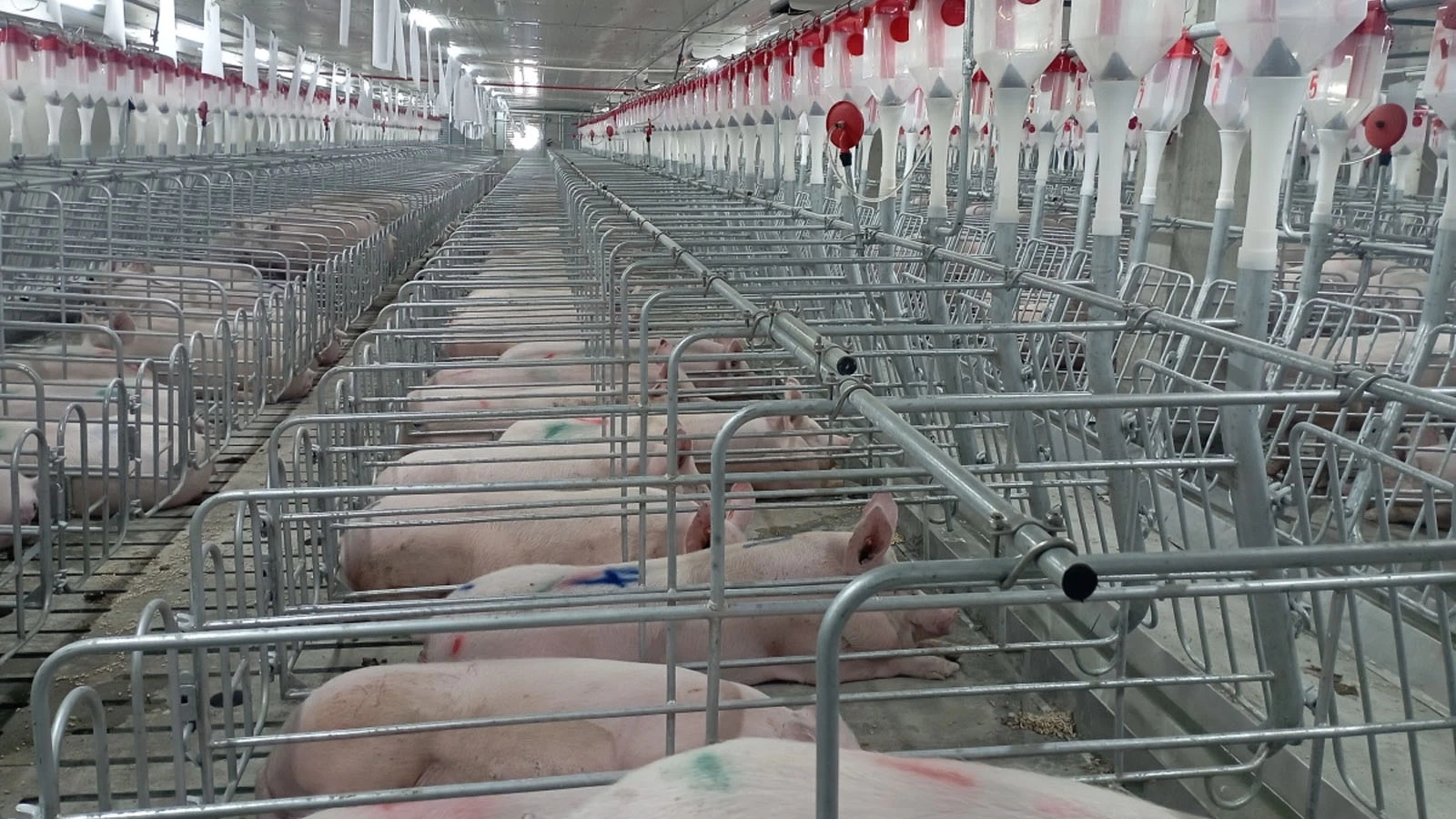
The Autumn Climate Paradox
In autumn, daytime conditions can remain warm while nighttime temperatures plummet by 10°C or more. Over-ventilating at night leads to chilled pigs and respiratory disease, whereas under-ventilating during warm afternoons creates stagnant, ammonia-heavy air. Achieving a dynamic balance is critical to keeping pigs comfortable and growing.
1. Transitioning to Minimum Ventilation Modes
Switching Off Summer Cooling: Completely drain, clean, and seal evaporative cooling pads to prevent unwanted humidity buildup and mold growth inside the housing.
Establishing Minimum Ventilation Rates: Set exhaust fans to operate on timer intervals calculated strictly based on the total body weight of pigs in the room. This removes excess moisture, carbon dioxide ($\text{CO}_2$), and ammonia ($\text{NH}_3$) without dumping indoor heat.
2. Managing Drafts and Air Inlets
Air Velocity & Direct Drafts: Drafts exceeding $0.2 \text{ m/s}$ directly on sleeping pigs cause rapid chilling. Ensure cold incoming air is directed upward toward the ceiling ridge to mix with warm air before descending to pig level.
Automated Inlet Calibration: Ensure motorized air inlets adjust opening sizes based on static pressure differentials, maintaining consistent air velocity regardless of fan stage changes.
3. Equipment Inspections & Heating Pre-Checks
Sensor Calibration: Re-calibrate indoor temperature and humidity sensors monthly. Dust accumulation on sensors can skew readings by several degrees.
Heating System Dry-Runs: Test creep floor heaters, infrared heat lamps, and space heaters weeks before the first severe cold snap to ensure full operational readiness.