

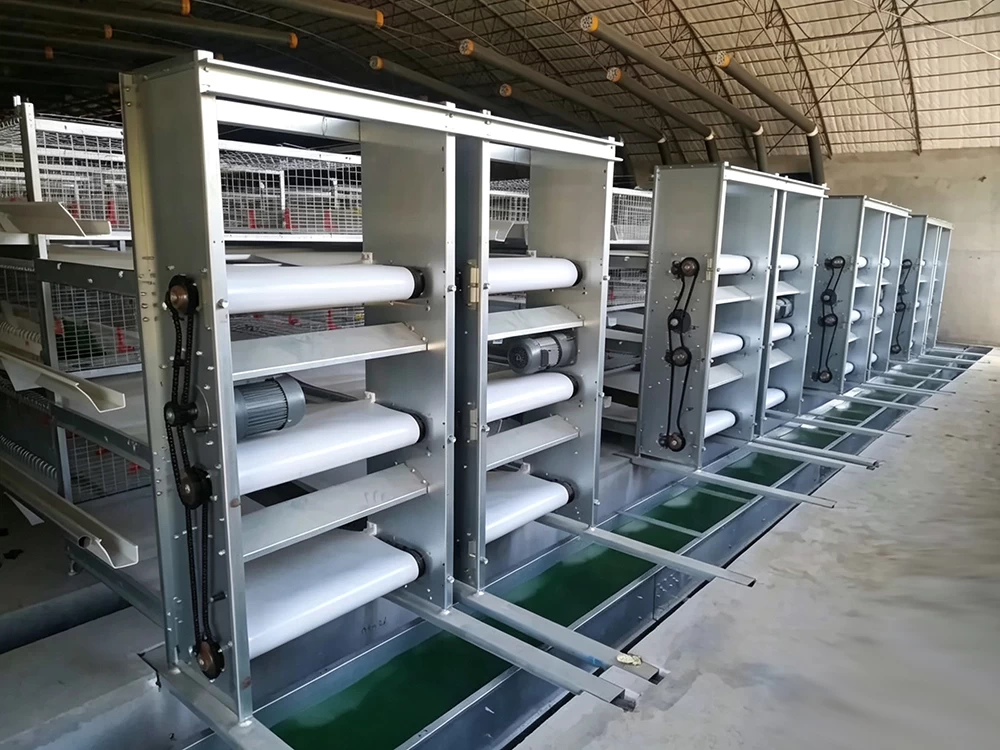
In modern high-density poultry operations, daily waste management presents a major operational challenge. Traditional manure collection methods require excessive manual labor and frequently cause environmental contamination inside the barn. Installing an automated polypropylene (PP) manure conveyor belt system provides a seamless solution for rapid, automated waste disposal
1. How Polypropylene (PP) Manure Belts Work
Polypropylene (PP) is engineered to withstand the demanding conditions of commercial poultry houses:
High Tensile Strength & Anti-Deviation: Heavy-duty PP belts run under cage tiers with smooth tracking, resisting stretching and alignment slippage even over extended lengths.
Corrosion & Moisture Resistance: Unlike rubber or low-grade plastics, PP does not absorb water, resisting degradation from organic acids, chicken manure, and high humidity
Smooth Surface Cleaving: The non-stick surface allows clean scraping, leaving virtually zero residue on the belt.
2. The Complete Automated Waste Transport Workflow
To achieve end-to-end automation, PP belts work in tandem with secondary transport systems:
Tier-Level Conveying: PP belts positioned beneath cage rows collect dropped manure continuously.
Longitudinal Scrapers: High-torque drive units activate longitudinal scrapers that push accumulated manure off the ends of the belt tiers.
Cross (Transverse) Manure Conveyors: Heavy-duty cross-inclined conveyors collect manure from all rows and transport it directly into outdoor storage trucks or composting pits
3. Measurable Benefits for Commercial Operations
Automating your poultry waste logistics significantly lowers labor expenses, minimizes mechanical downtime, and ensures immediate waste removal before anaerobic decomposition begins—helping you maintain strict regulatory compliance and optimal farm hygiene