

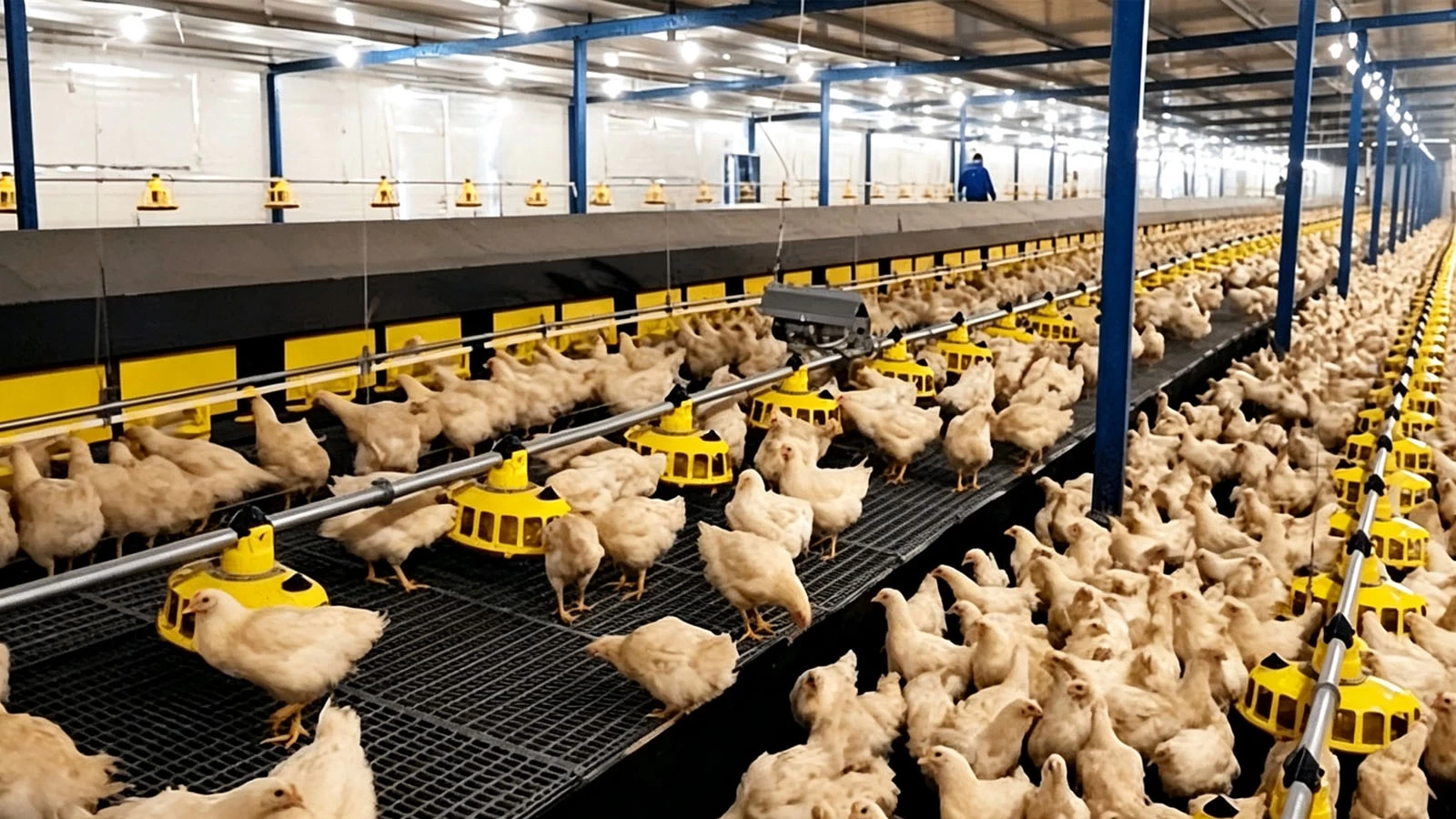
Floor-raising systems (free-range, deep litter, or aviaries) are becoming increasingly popular in modern layer farming. However, managing floor-raised hens comes with a unique set of challenges—most notably floor eggs, dirty eggshells, and higher egg breakage rates.
Selecting the right nest box system is the single most important decision for encouraging hens to lay inside designated areas, keeping eggs pristine, and protecting your profit margins.
 |
1. Automatic vs. Manual Nest Boxes: Which Fits Your Scale?
The primary decision depends on your farm capacity and labor budget:
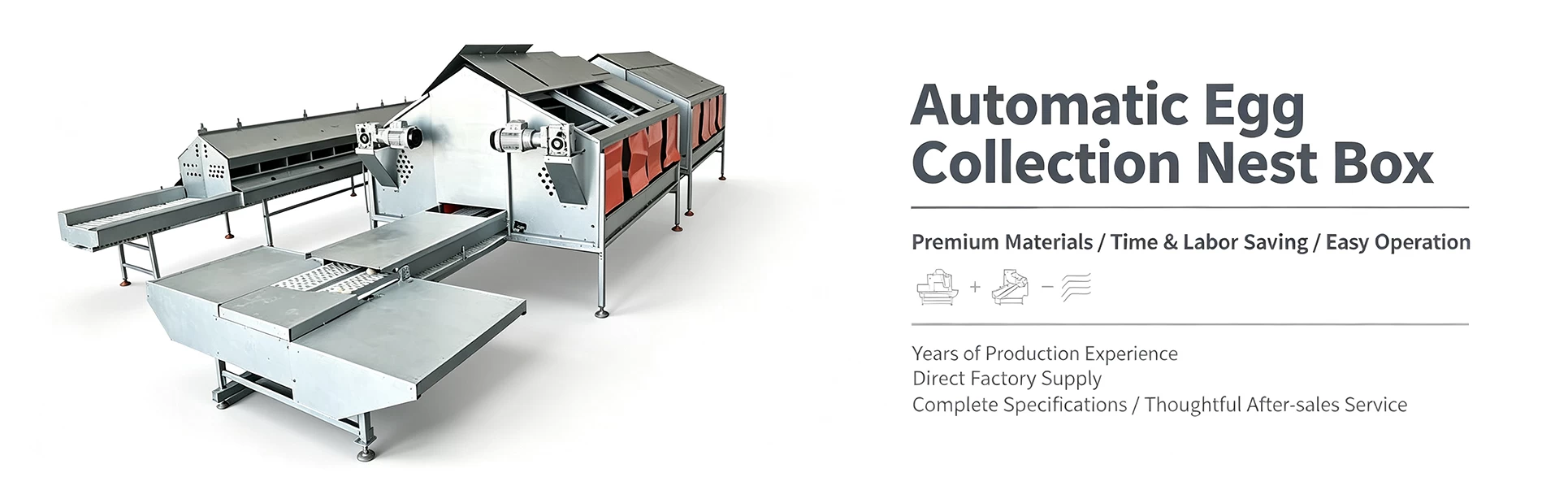
Automatic Rollaway Nest Boxes: Equipped with motorized egg belts, these systems automatically transport eggs out of the nesting area immediately after laying. Ideal for medium to large-scale commercial operations (over 5,000 layers) seeking to minimize labor costs and achieve rapid egg gathering.
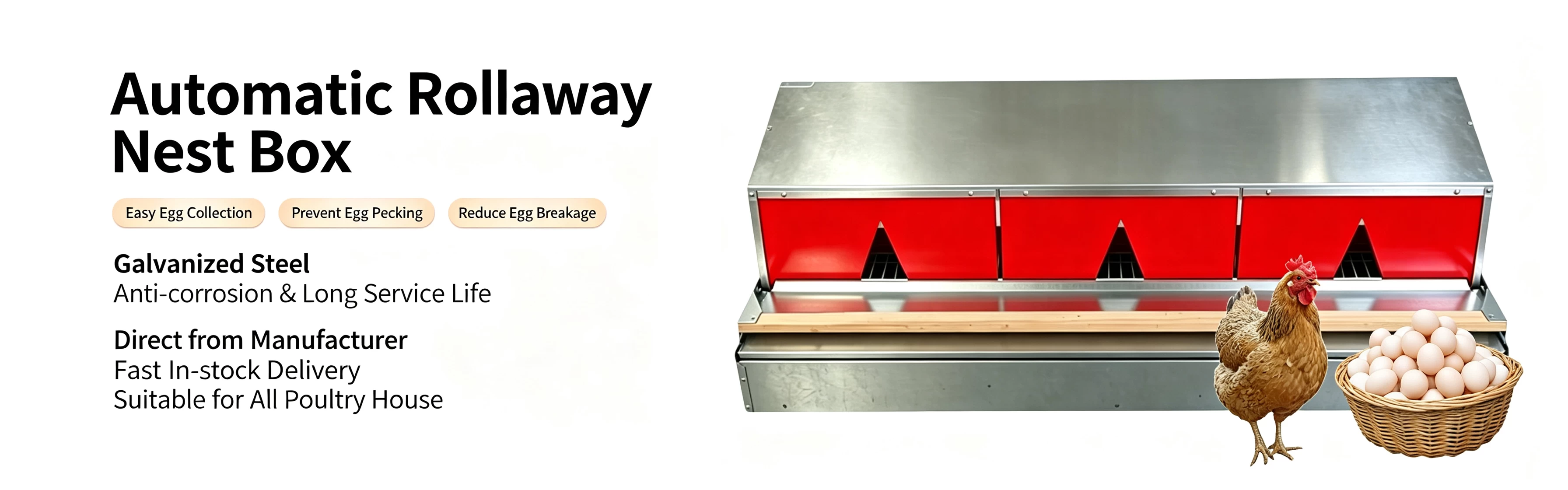
Manual Rollaway Nest Boxes: Eggs automatically roll down into a protective central collection tray where staff can gather them by hand. Highly cost-effective for small-to-medium poultry farms or organic free-range setups with manageable labor.
2. Key Features to Look for When Choosing Nest Boxes
To ensure long-term performance and high egg quality, evaluate the following structural aspects:
A. Rollaway Design & Floor Slope
The nest bottom must feature a gentle, precise incline (around 7° to 9°). This allows the egg to roll away from the hen immediately into a safe compartment without rolling too fast and cracking. Preventing hens from sitting on newly laid eggs drastically reduces broodiness and broken shells.
B. Comfortable Nesting Mats & Hygiene
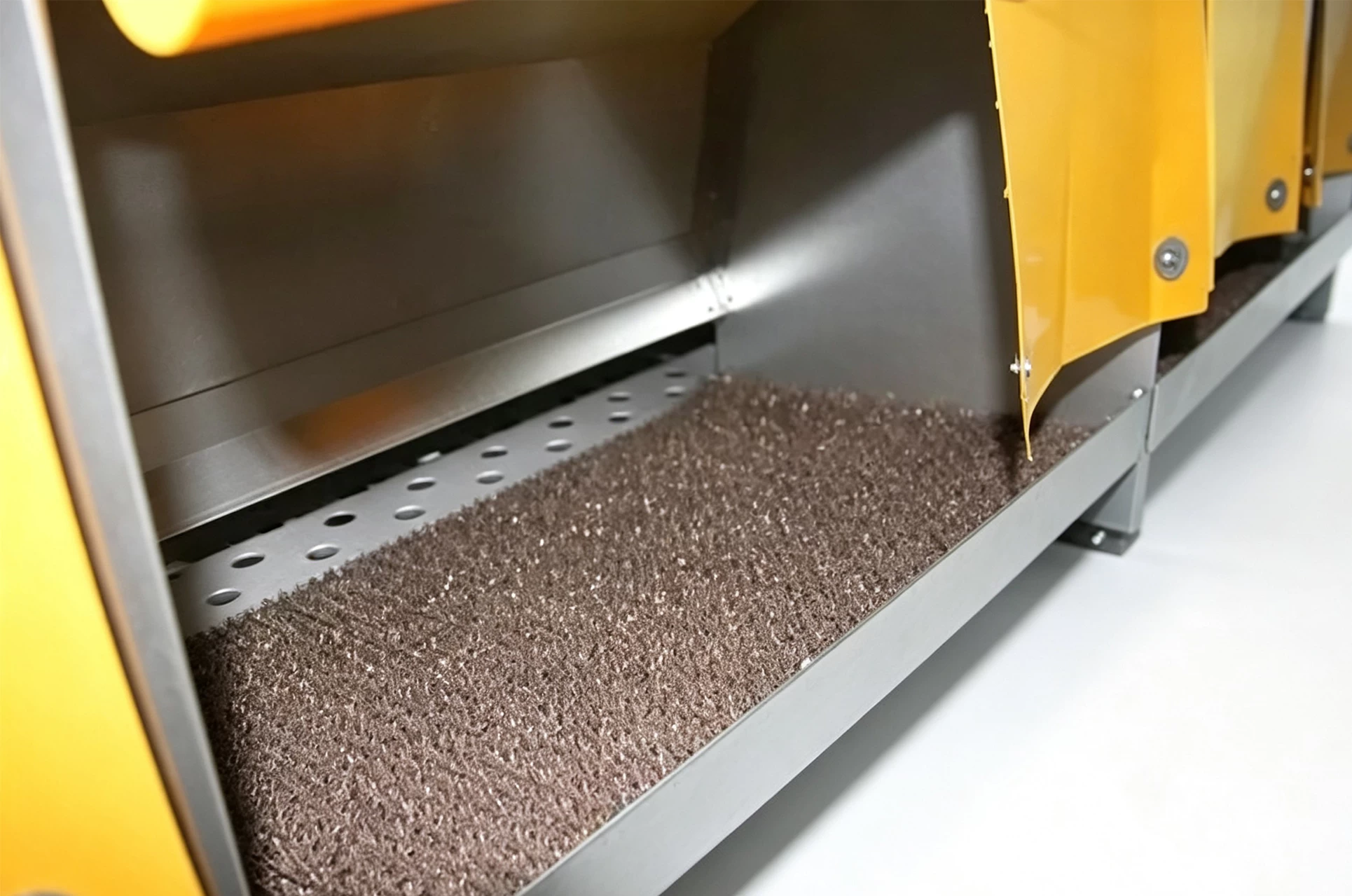
Hens prefer dark, quiet, and comfortable environments. Choose nest boxes with perforated synthetic grass mats or astro-turf. The perforations allow dust and manure to fall through, keeping the laying surface clean and bacteria-free.
C. Expulsion Systems (Anti-Roosting)
To prevent hens from sleeping inside the boxes overnight and fouling the mats, choose systems equipped with an automated/manual expulsion mechanism (such as tilting floors or expulsion bars that gently push hens out at dusk).
 |  |
3. Calculating Capacity: How Many Nests Do You Need?
Underestimating nest space is a primary cause of floor eggs, as crowded hens will resort to laying on the litter.
高估产蛋箱承载能力或配置不足是导致地面蛋的主因,因为拥挤的母鸡会迫不得已直接在垫料上产蛋。
Standard Rule: Provide 1 individual nest hole for every 4 to 5 hens, or 100 hens per meter in continuous double-sided community nest systems. 标准配置比例:建议按 4 至 5 只母鸡配置 1 个单体产蛋穴;若采用双向连续社区型产蛋箱,则按 100 只母鸡/米 进行计算。
Optimize Your Floor-Raised Layer Farm Today
立即优化您的平养蛋鸡场
Selecting the ideal nest box system balances hen comfort, durable equipment materials (such as high-quality galvanized steel and modified PP plastic), and efficient egg collection.
选择理想的产蛋箱系统需要平衡母鸡舒适度、耐用的设备材质(如高质量镀锌板和改性 PP 塑料)以及高效的集蛋流程。
Contact our poultry machinery team today to discuss your barn layout and get a tailored quotation on automatic or manual rollaway nest boxes.
欢迎今天联系我们的禽业机械团队,探讨您的鸡舍布局,获取自动或人工滚蛋产蛋箱的定制化报价。