

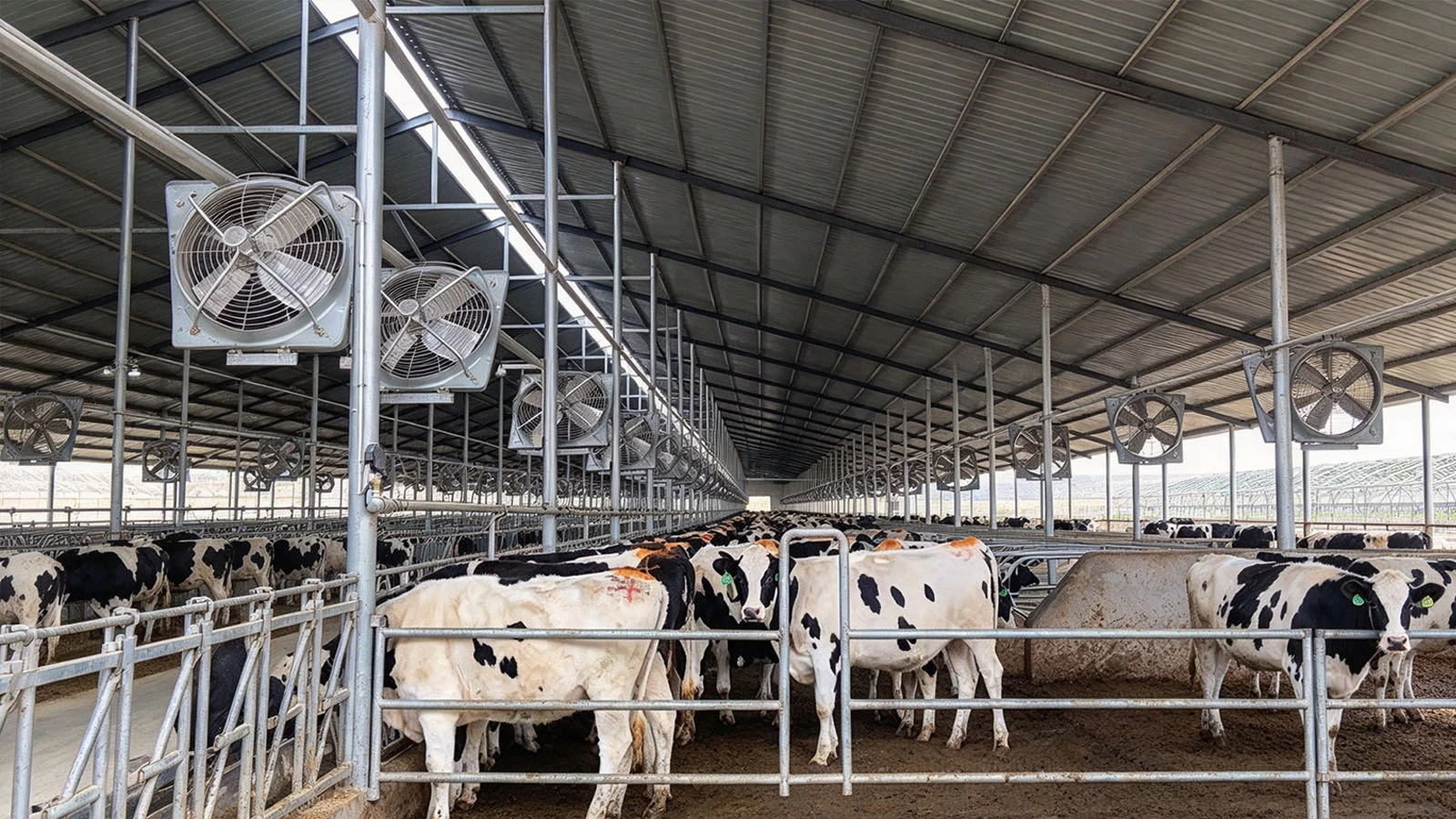
Heat stress is one of the biggest hidden threats to cattle farm productivity. When barn temperatures exceed $28^\circ\text{C}$ and relative humidity surpasses $70\%$, cattle experience reduced feed intake, lower immune response, and plummeting daily weight gains. Installing an effective climate control system is essential for maintaining optimal livestock growth.
1. The Impact of Heat Stress on Cattle Performance
Cattle naturally generate significant body heat during rumination. Excessive environmental heat leads to:
Feed Intake Drop: Cattle cut feed consumption by $10\% - 35\%$ to lower metabolic heat generation.
Milk & Weight Loss: Lactating cows show a steep decline in milk yield, while fattening bulls experience stalled weight gain.
Increased Disease Vulnerability: High ammonia levels ($>20\text{ ppm}$) combined with heat stress irritate the respiratory tract.
2. Negative Pressure Ventilation & Cooling Pad Synergy
To combat high summer temperatures, modern cattle barns rely on tunnel ventilation systems:
Exhaust Fans: Heavy-duty exhaust fans (such as $50" - 54"$ FRP or galvanized steel fans) rapidly pull stale air, dust, and ammonia out of the barn.
Evaporative Cooling Pads: As fresh outdoor air passes through wet cellulose cooling pads, ambient air temperature drops by $5^\circ\text{C} - 10^\circ\text{C}$, creating a refreshing wind-chill effect ($2.5\text{ m/s}$ air speed).
3. Winter Hydration: Temperature-Controlled Drinkers
Climate control isn't just about cooling in summer. In winter, cold water reduces rumen digestion speed. Installing heated, automatic drinking troughs that maintain water temperatures at $15^\circ\text{C} - 20^\circ\text{C}$ ensures consistent water intake, optimal digestion, and stable growth year-round.