

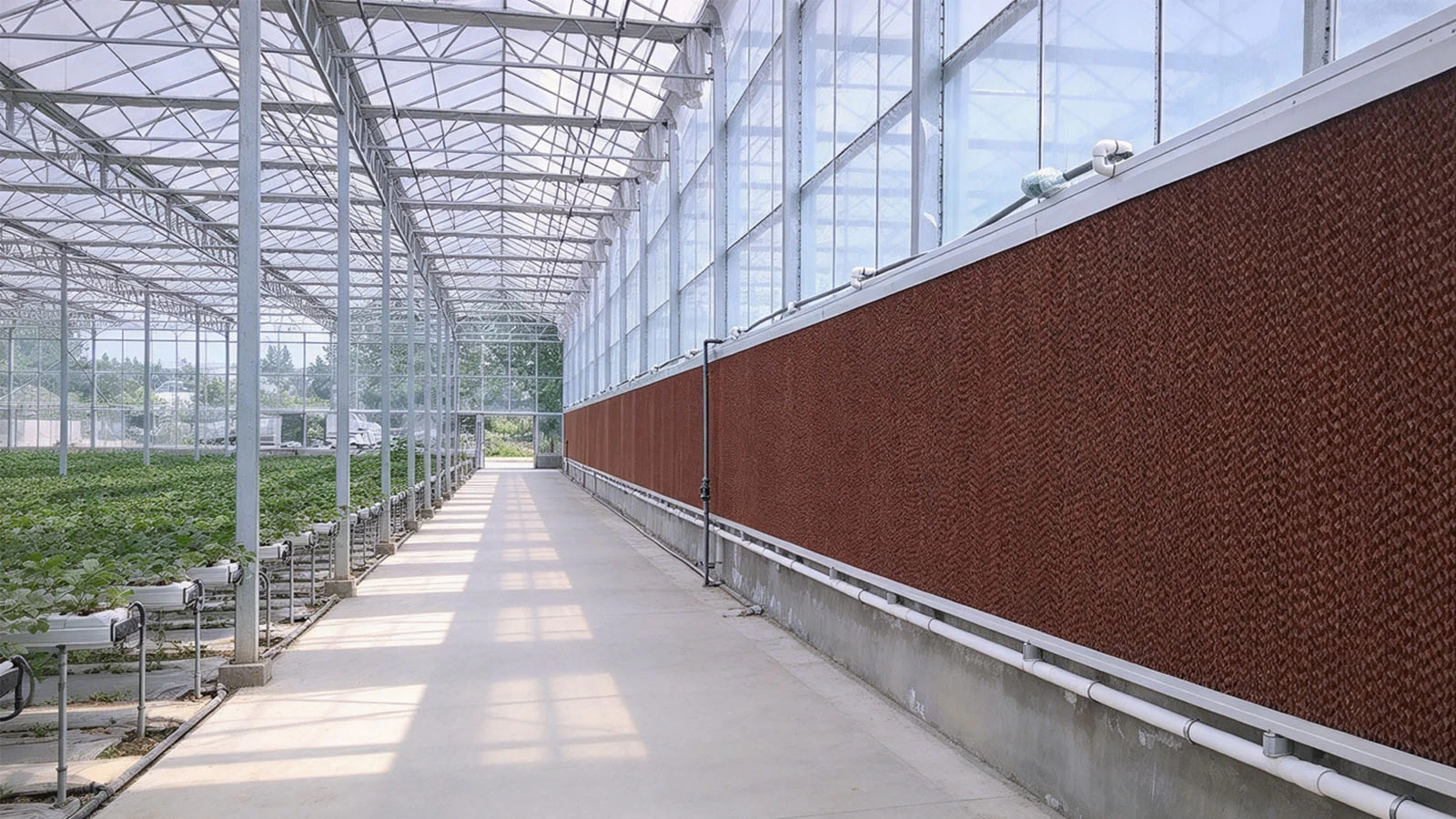
In modern livestock farming and greenhouse environment control, evaporative cooling technology is widely favored for its high efficiency and low energy consumption. As the core component of the cooling pad and fan system, cellulose evaporative cooling pads play a crucial role in maintaining optimal indoor temperatures. This article provides an in-depth breakdown of how cellulose cooling pads work, alongside practical maintenance guidelines to help extend their service life and maximize cooling performance.
How Cellulose Cooling Pads Work
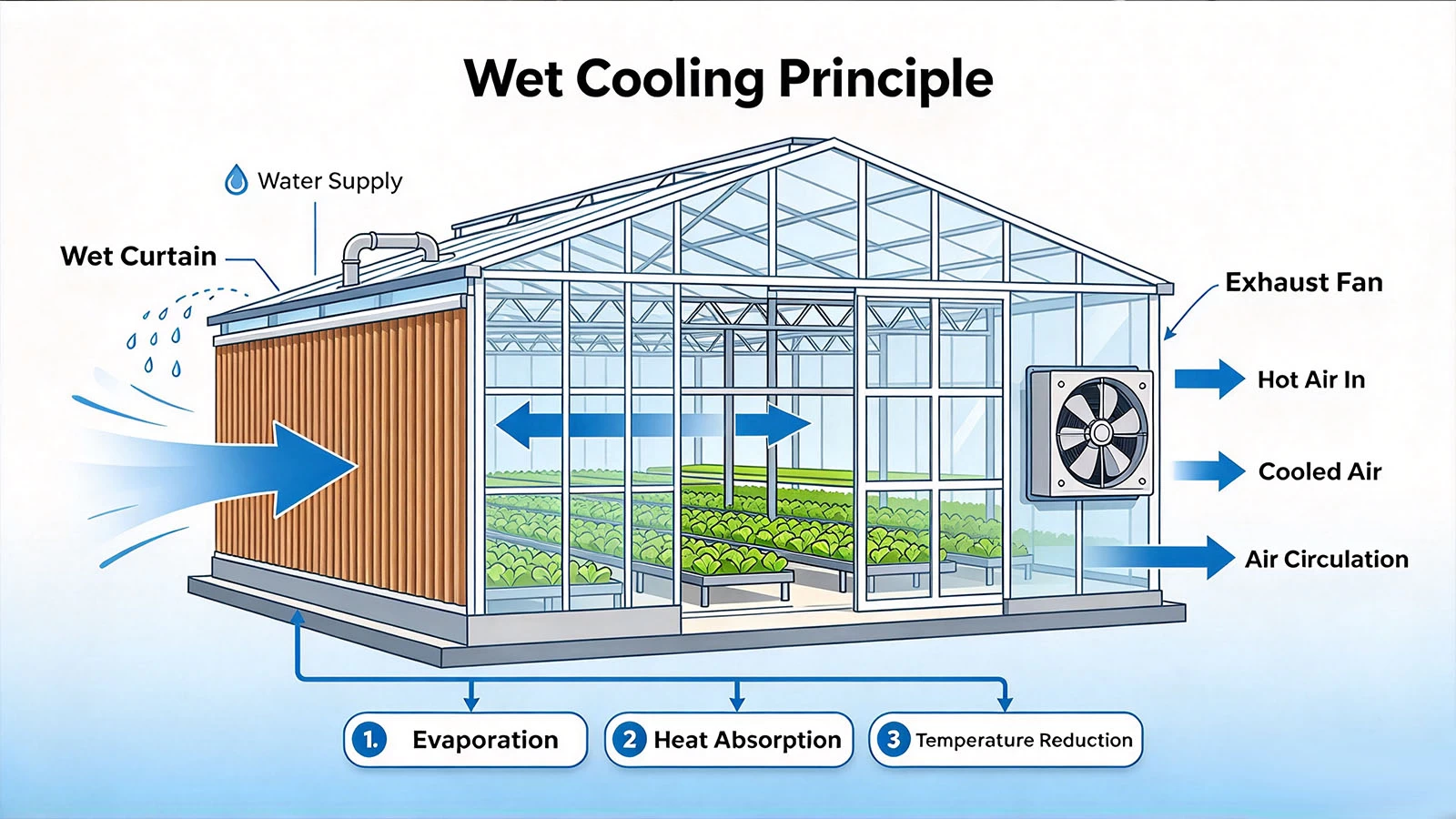
The cooling mechanism of cellulose cooling pads is based on the natural physical principle of "heat absorption through water evaporation," optimized by fluid dynamics design:
1. Water Evaporation Heat Absorption
When dry, warm air passes through the wet cooling pad, water molecules absorb sensible heat from the incoming air and evaporate into water vapor. This process removes heat from the air stream, significantly dropping the air temperature while moderately increasing relative humidity.
2. Corrugated Cross-Flute Structure
Cellulose cooling pads are made from specialized kraft paper, stacked in corrugated angles and cross-linked with protective resins:
High Surface Area: Flute designs (such as 7090 and 5090 models) offer an exceptionally large contact area between air and water.
Uniform Water Distribution: Excellent wettability and capillary action ensure water spreads evenly across the entire pad surface, creating a continuous water film and preventing dry spots that reduce cooling efficiency.
3. Synergistic Negative Pressure Ventilation
Cooling pads do not operate in isolation. They work in tandem with negative pressure exhaust fans installed in sealed poultry or livestock houses. As exhaust fans pull air out of the building, negative pressure forces ambient hot air through the wet pads, achieving rapid air exchange and house-wide temperature reduction.
Best Practices for Cooling Pad Maintenance
Proper daily care not only maintains high cooling performance but also prevents algae growth, scale accumulation, and clogging, extending pad service life by 3 to 5 years or more.
1. Water Quality Management (Crucial Factor)
Maintain Ideal pH Levels: Keep the circulating water pH between 6.0 and 9.0. Highly acidic or alkaline water deteriorates the resin bond, softening the paper structure.
Control Water Hardness: Monitor water hardness regularly to prevent calcium and magnesium scale deposits. Consider adding water softeners or replacing circulating water frequently if hard water is used.
Regular Reservoir Cleaning: Clean the water tank or sump pit weekly to clear out sediment, dust, and feathers, preventing dirty water from clogging the pad pores.
2. Water Flow & Operational Control
Optimize Water Volume: Adjust the water flow so it fully wets the pad without causing excess splash. Insufficient flow causes dry spot scaling, while excessive flow increases airflow resistance and causes water carryover into the housing area.
Daily Drying Routine (Anti-Algae & Anti-Mold): Turn off the water pump 15 to 30 minutes before shutting down exhaust fans at the end of the day. Allowing fans to blow the pads completely dry is the most effective way to prevent green algae and mold growth.
3. Physical Cleaning & Clogging Prevention
Soft Brush Cleaning: If dust, fluff, or feathers collect on the pad surface, wait until the pads are fully dry, then gently brush along the corrugated flutes using a soft-bristle brush. Avoid sharp objects or hard scraping.
Low-Pressure Rinsing: Flush the pads from the inside out using low-pressure water. Avoid high-pressure washers, which can tear or damage the cellulose fibers.
4. Off-Season Storage & Care
Winterization: Before shutting down the system for winter or long periods, thoroughly wash and dry the pads. Drain all water from pipes, pumps, and reservoirs to prevent freeze damage.
Install Protective Screens: In areas prone to heavy dust, lint, or cottonwood seeds, install removable protective mesh screens outside the cooling pad bank to catch debris before it reaches the pad surface.
Proper operation and routine maintenance are key to unlocking the full cost-saving potential of cellulose cooling pads. By managing water quality, enforcing daily drying cycles, and performing periodic cleaning, farm managers can ensure stable indoor climate control throughout hot seasons while reducing equipment replacement costs.