

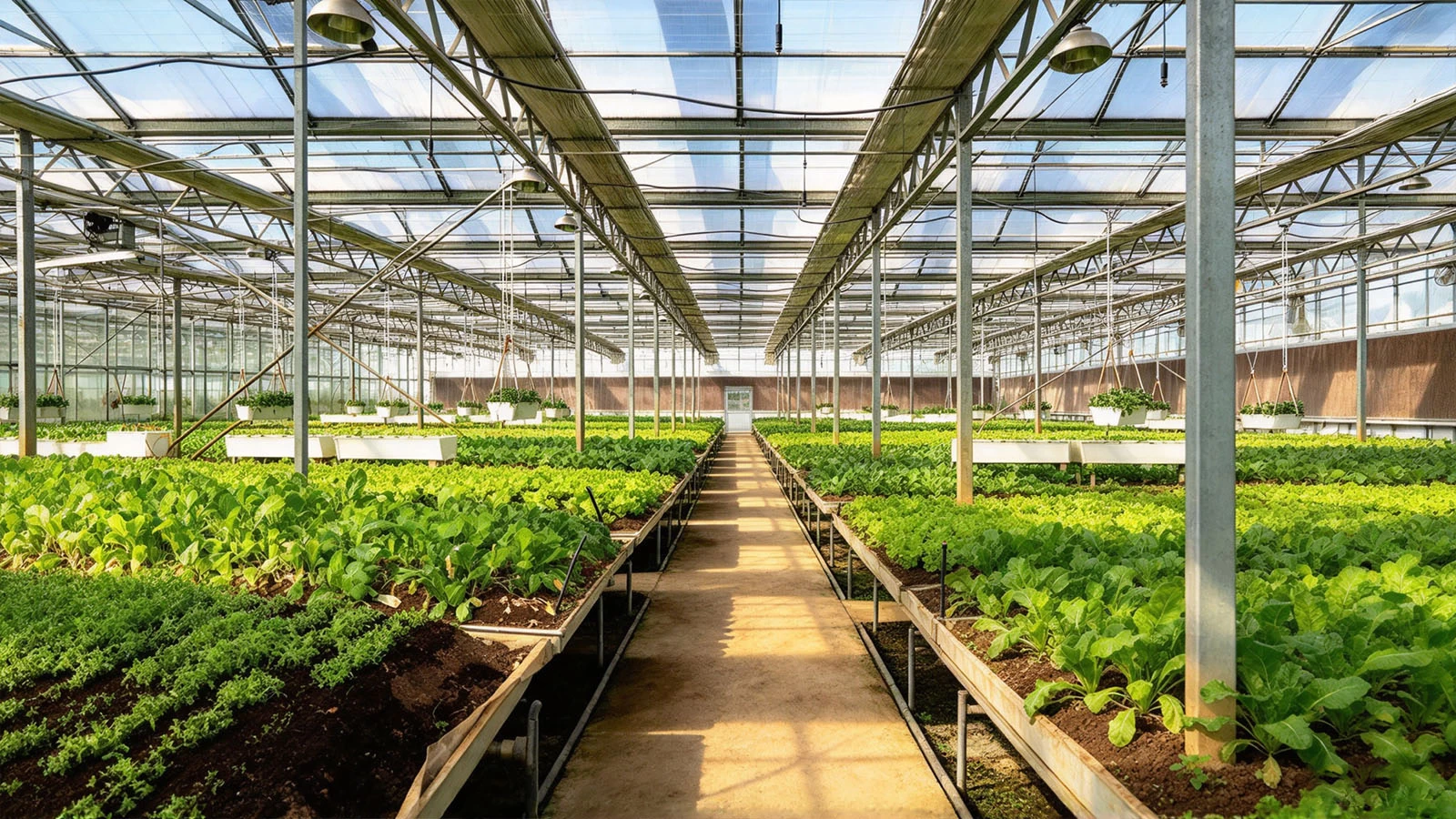
Introduction to Commercial Greenhouse Climate Control
Maintaining an ideal temperature and humidity balance inside a commercial greenhouse directly impacts plant health, pollination, and yield. Without proper air exchange, excessive heat build-up and humidity can foster fungal diseases and stress crops. Choosing the correct greenhouse ventilation system is the first critical step toward building a successful agricultural production facility.
 |
Natural Ventilation vs. Forced Ventilation Systems
Depending on your regional climate, crop sensitivity, and budget, greenhouse airflow can be managed in two primary ways:
Natural Ventilation (Roof and Side Vents):
How it works: Relies on natural thermal buoyancy (hot air rising) and wind pressure to exchange air through manual or motorized roof and sidewall openings.
Best for: Mild climates, lower-budget setups, or crops with wide temperature tolerance.
Limitations: Ineffective during hot, windless days and offers limited precision over humidity levels.
Forced Draft Ventilation (Negative Pressure Systems):
How it works: Employs industrial exhaust fans at one end of the structure to pull fresh air in through designated inlets or cooling pads at the opposite end.
Best for: Commercial-scale production, hot/humid regions, and high-value crops requiring precise climate stability.
Benefits: Guarantees constant airflow, eliminates hot spots, and allows full automation.
Key Components: Exhaust Fans and Evaporative Cooling Pads
To achieve maximum cooling efficiency in warm climates, negative pressure ventilation systems rely on two essential engineering components:
Heavy-Duty Exhaust Fans: High-efficiency cone fans or shutter exhaust fans (constructed with galvanized steel or fiberglass) pull stagnant air out of the structure quickly.
Evaporative Cooling Pad Systems: Installed on the opposite wall, cellulose or plastic cooling pads saturate incoming air with moisture, dropping internal temperatures by 5°C to 12°C compared to ambient outdoor temperatures.
How to Calculate Required Airflow for Your Greenhouse
A general industry standard for forced ventilation is achieving 1 complete air exchange per minute up to a height of 2.5 to 3 meters.
Factoring in local climate maximums, shading cloth efficiency, and static pressure resistance ensures your fans operate smoothly without overloading the motors.