

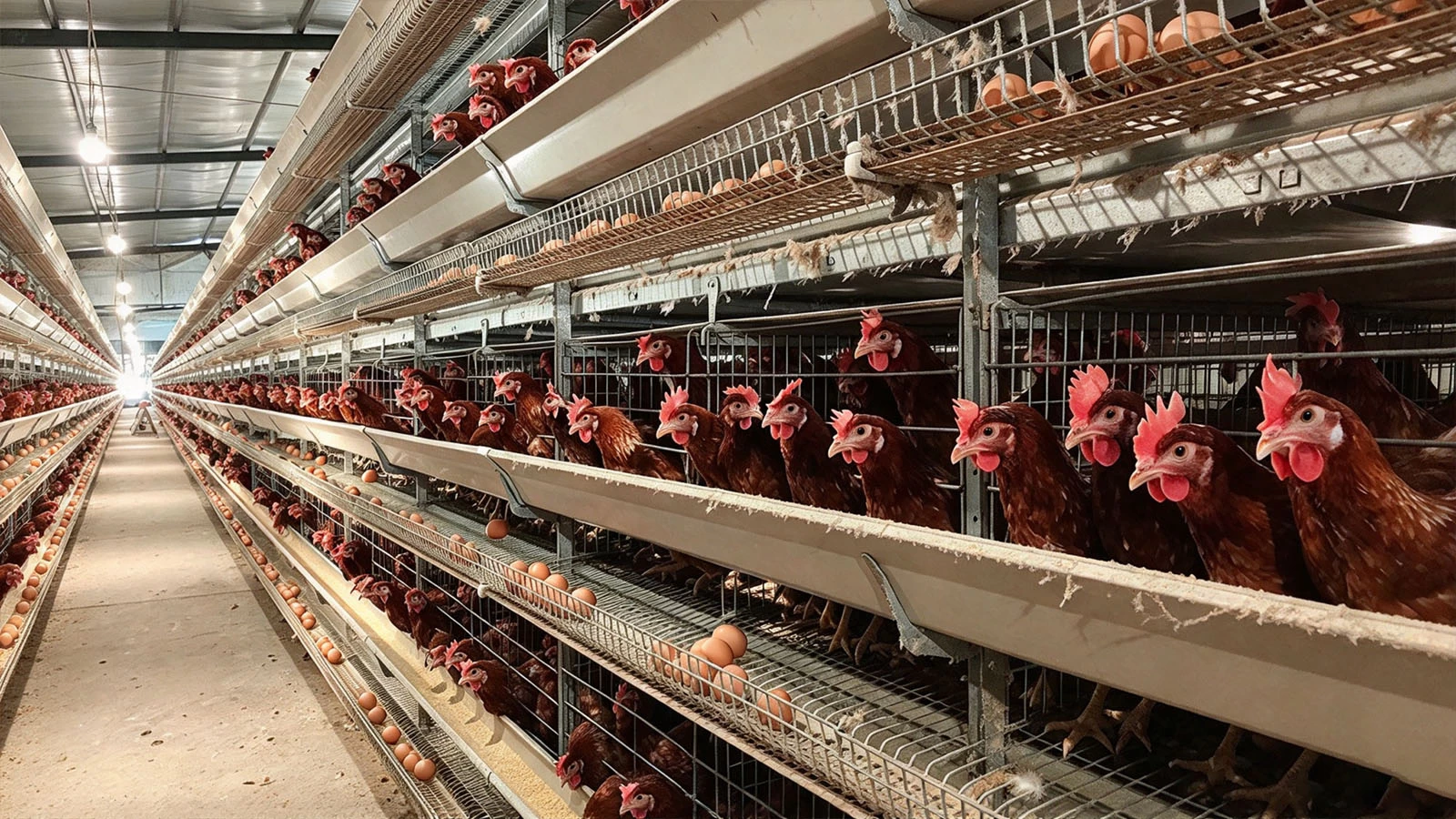
Many poultry farmers focus on ventilation, disinfection and isolation for disease control, but overlook the risks brought by manual feeding. Every time workers enter the chicken house to carry feed and distribute feed, they carry bacteria and viruses from outside. Frequent human activity also disturbs chickens and causes stress. An automatic poultry feeding line solves these hidden troubles and builds a safer feeding link for your farm.
Matched with outdoor feed silos, the feeding line delivers feed through fully sealed pipelines. Feed never touches the ground or workers during transportation from silo to feeding pans. There is no open feed pile inside the house, which reduces the chance of feed getting contaminated by chicken droppings, dust and pathogens. Clean feed directly supports better intestinal health and lower mortality.
Less human entry is the biggest biosecurity gain. After setting feeding schedules on the control box, the whole feeding process runs automatically. Workers do not need to walk through the chicken house for daily feeding. Fewer people inside the house means less risk of cross infection between different sheds. This is very helpful for preventing common poultry diseases.
Stable feeding rhythm also reduces flock stress. Chickens are sensitive to sudden noise and frequent human disturbance. Regular, quiet automatic feeding keeps the feeding rhythm consistent day by day. Less stress helps strengthen the immune ability of the flock. Stress free feeding is easy to ignore, but it plays an important role in long term disease prevention.
The feeding line also helps keep the chicken house cleaner. Spilled feed is easy to go moldy and breed bacteria. The anti spill feeding pan design greatly cuts scattered feed on the floor. Less leftover feed means fewer harmful microorganisms and less pests such as rats and insects. A dry and clean floor environment further optimizes the living condition of poultry.
Different farms can adjust the feeding line design for better biosecurity performance. Separate the silo area and chicken house zone reasonably. Keep the main pipe sealed well at all joints. Install the feeding pan at proper height according to chicken age. If you run multiple houses, independent feeding control for each shed is recommended to avoid cross flow of feed.
Cooperated with other farm equipment, the feeding system forms a complete biosecurity solution. Pair it with negative pressure ventilation system and automatic drinking line. Reduce manual operation links as much as possible. Disinfection work will be easier when there are fewer moving parts and less scattered feed in the house.
For modern poultry production, biosecurity is not only about disinfection work. Optimizing every daily operation link matters. The automatic feeding line is not only a labor saving device. It blocks pollution sources from the feeding chain, stabilizes flock condition and reduces unexpected loss caused by disease outbreaks. It is a worthy investment for farms that pursue long term stable production.