

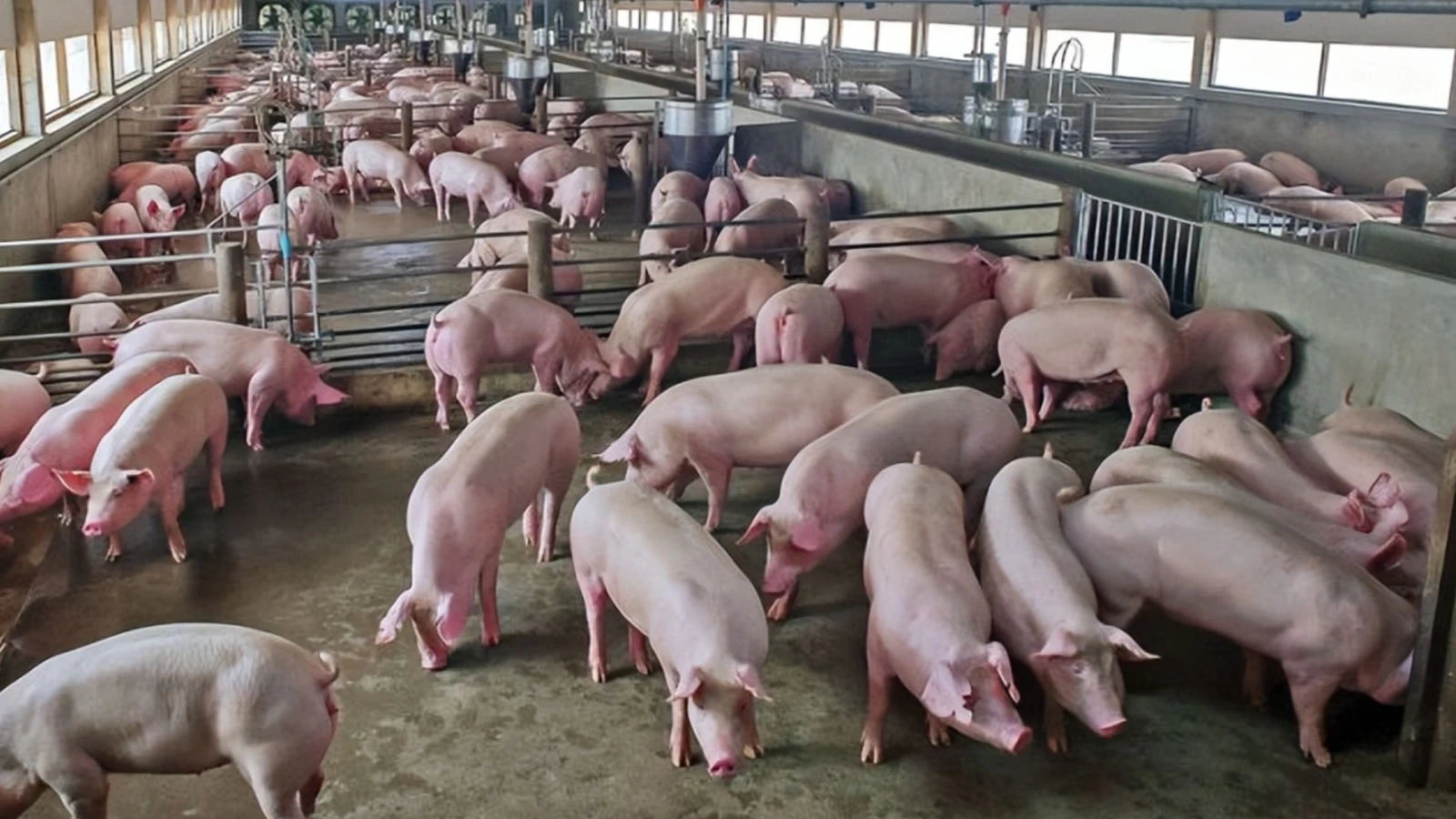
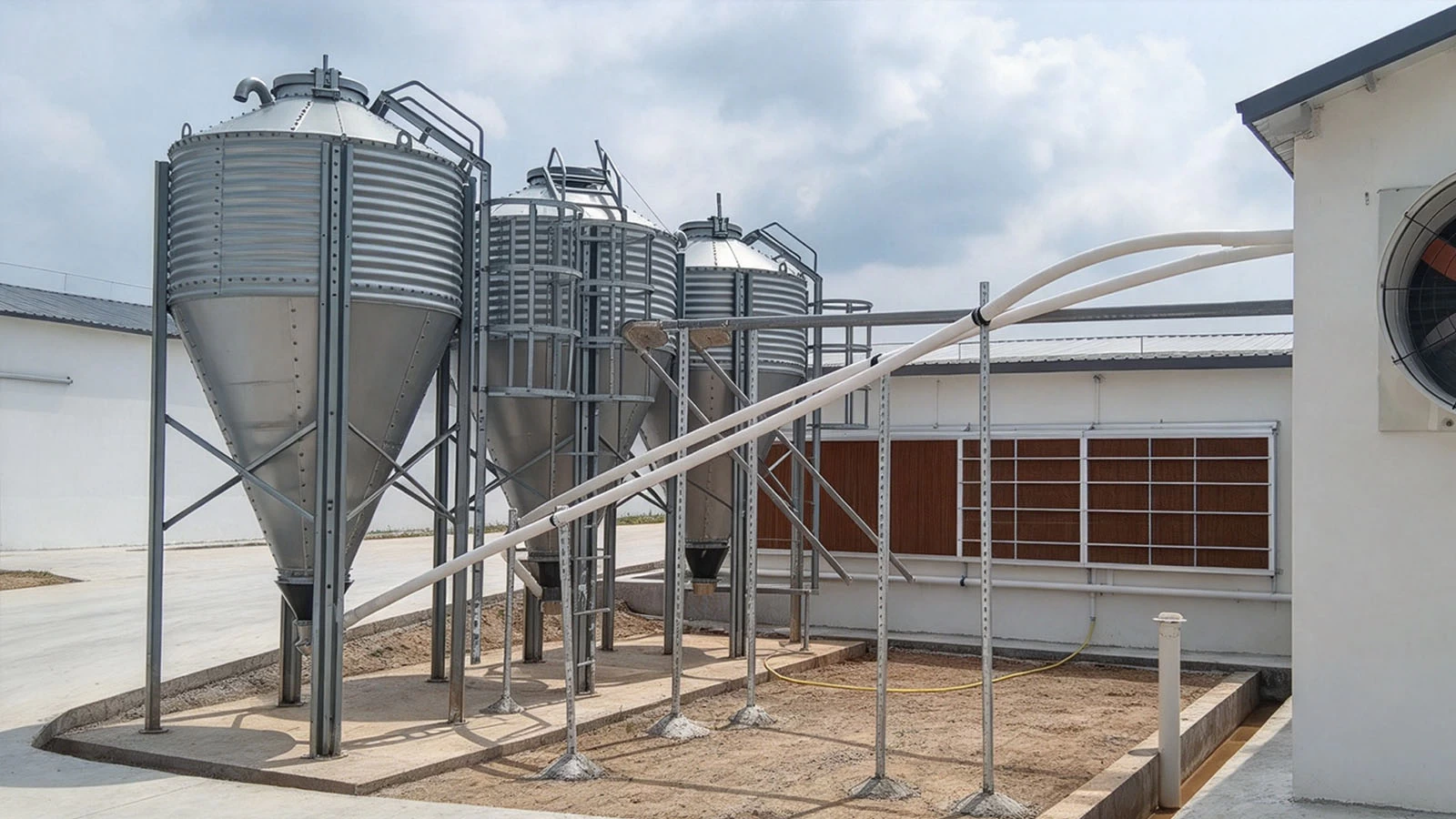
One of the most common questions livestock farmers ask when upgrading their automated feeding systems is: "What size feed silo do I actually need for my farm?"
Choosing the right silo capacity depends directly on your herd or flock size, daily feed intake, and required feed reserve days. A silo that is too small leads to frequent orders and high delivery costs, while an oversized silo risks feed spoilage and unnecessary upfront expenses.
In this guide, we break down practical sizing standards and clear examples for broiler, layer, and swine farms.
 |
1. The Core Sizing Rule of Thumb
Before calculating for specific livestock, keep these basic principles in mind:
- The Basic Math: Multiply your total animals by their daily feed intake per head, then multiply by the number of reserve days, and divide by 1,000 to get total metric tons.
- Storage Days: Always design for 3 to 5 days of feed reserves to handle transport delays, logistics issues, or bad weather.
- Volume vs. Weight: Poultry and pig feed generally weighs between 0.6 and 0.65 tons per cubic meter. When browsing silo catalogs, always convert weight in tons into cubic meters of total volume.
2. Broiler Farms (Meat Chickens): Accounting for Peak Feed Intake
Broilers grow rapidly, meaning their feed consumption increases every week. Silo capacity must be calculated based on peak daily consumption during weeks 5 to 7 right before harvest.
- Average Peak Daily Intake: Around 0.15 kg per bird per day (varies slightly by breed and market weight).
- Standard House Sizes: 10,000 to 30,000 birds per house.
Sizing Examples for Broiler Houses (3-Day Reserve)
| Flock Size (Birds) | Peak Daily Feed Demand | 3-Day Feed Reserve Needed | Recommended Silo Capacity |
| 10,000 | 1.5 tons / day | 4.5 tons | 5 to 6 Tons (approx. 8–9 m³) |
| 20,000 | 3.0 tons / day | 9.0 tons | 10 to 12 Tons (approx. 15–18 m³) |
| 30,000 | 4.5 tons / day | 13.5 tons | 15 to 18 Tons (approx. 23–28 m³) |
Pro Tip: For large broiler houses with over 30,000 birds, installing two medium-sized silos side-by-side is much better than one massive silo. This allows for seamless feed transitions between different growth stages (Starter, Grower, Finisher) without downtime.
3. Layer Farms (Egg Production): Consistent Daily Volume
Unlike broilers, laying hens have a very stable daily feed intake throughout their long production cycle.
- Average Daily Intake: Around 0.11 to 0.12 kg per bird per day (110 to 120 grams).
- Standard House Sizes: 20,000 to 100,000 birds in modern multi-tier cage systems.
Sizing Examples for Layer Houses (3-Day Reserve)
| Flock Size (Layers) | Daily Feed Demand | 3-Day Feed Reserve Needed | Recommended Silo Capacity |
| 20,000 | 2.3 tons / day | 6.9 tons | 8 to 10 Tons |
| 50,000 | 5.75 tons / day | 17.25 tons | 18 to 20 Tons |
| 100,000 | 11.5 tons / day | 34.5 tons | 35 to 40 Tons (or 2 x 20 Ton silos) |
Pro Tip: Egg producers often store large quantities of feed. Ensure your feed bin uses high-grade galvanized steel (275 g/m² or higher) or fiberglass (FRP) to prevent internal condensation from spoiling high-calcium layer feed.
4. Swine Farms (Pig Production): Multi-Phase Sizing
Pig farms vary significantly depending on whether you operate a nursery, fattening, or breeding barn. Feed consumption changes drastically across different growth phases.
- Nursery Pigs (7 to 30 kg): Around 1.0 kg per pig per day.
- Finishing Pigs (30 to 110 kg): Around 2.5 to 3.0 kg per pig per day.
- Lactating Sows: Around 6.0 to 7.0 kg per sow per day.
Sizing Reference for Swine Operations (3 to 4-Day Reserve)
| Barn Type & Capacity | Daily Consumption | 3 to 4-Day Reserve Needed | Recommended Silo |
| 500 Weaners (Nursery) | 0.5 tons / day | 1.5 to 2.0 tons | 3 to 4 Ton Silo |
| 1,000 Finishing Pigs | 2.8 tons / day | 8.4 to 11.2 tons | 10 to 12 Ton Silo |
| 500 Sow Breeding Farm | 2.5 tons / day | 7.5 to 10.0 tons | 10 to 12 Ton Silo |
Pro Tip: Swine feed often contains high moisture or fat content. Choose silos with steep 60° to 67° hopper cones and consider adding pneumatic or electric arch-breakers to prevent feed hang-ups inside the bin.
Summary Sizing Checklist
- Size for Peak Intake: Never size based on early-stage growth when raising meat animals; always size for the maximum consumption stage.
- Account for Delivery Logistics: If your feed supplier delivers in full truckloads (such as 15 or 20 tons), choose a silo capacity that can hold a full truckload plus a 1-to-2-day safety buffer.
- Double-Silo Strategy: For automated houses over 30,000 chickens or 2,000 pigs, twin silos connected with a two-way boot slider allow continuous feed flow during batch changes or cleaning.