

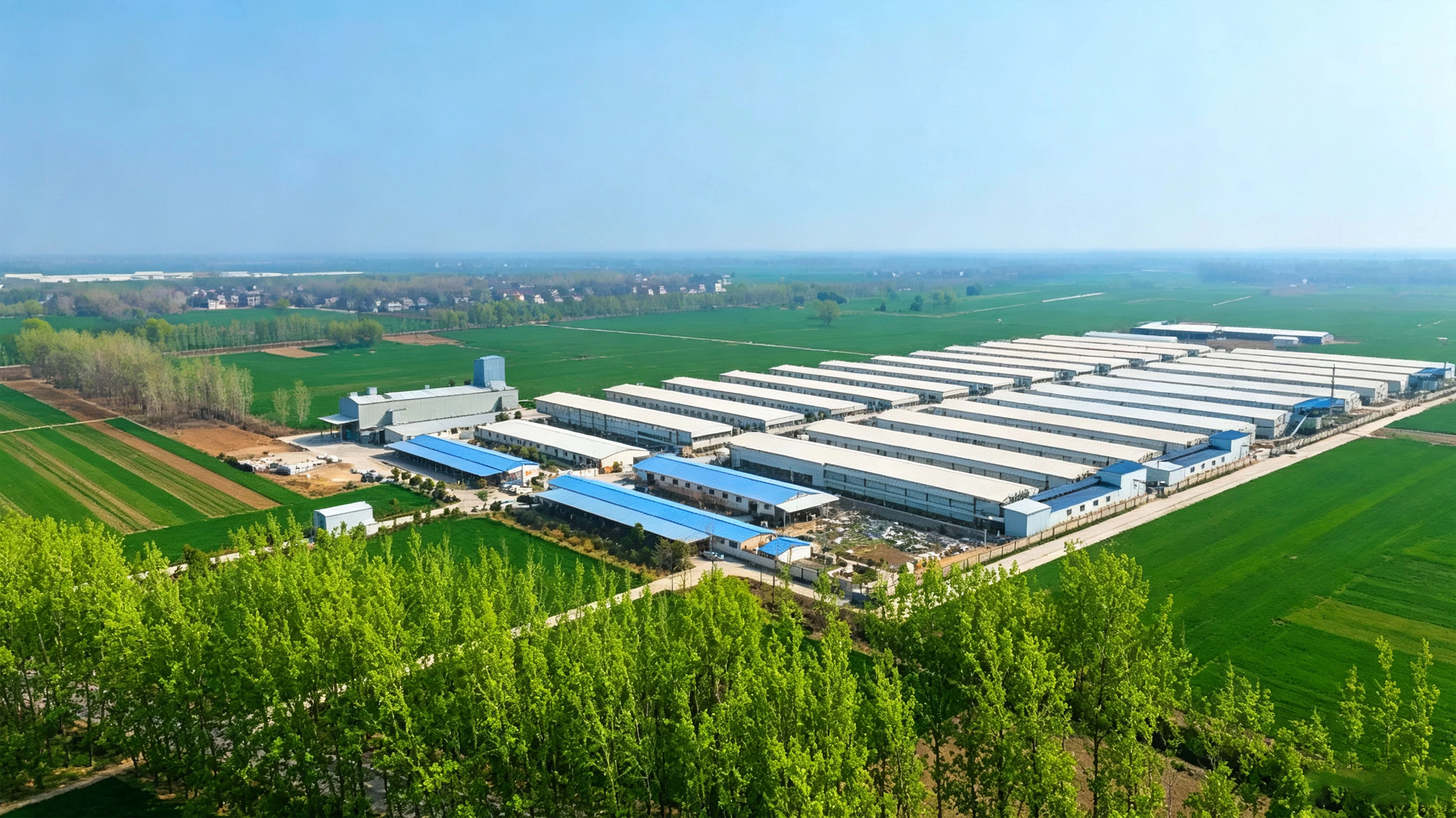
Maintaining an optimal microclimate inside a poultry house requires a multi-stage ventilation strategy. Regardless of regional climate, poultry houses need three distinct ventilation modes—Minimum, Transitional, and Tunnel Ventilation—to maintain bird comfort, manage air quality, and safeguard productivity throughout all seasons.
 |
1. Minimum Ventilation: Managing Air Quality and Moisture
Minimum ventilation is primarily used when house temperatures are at or below the desired set-point, most commonly during the brooding stage or during cold periods.
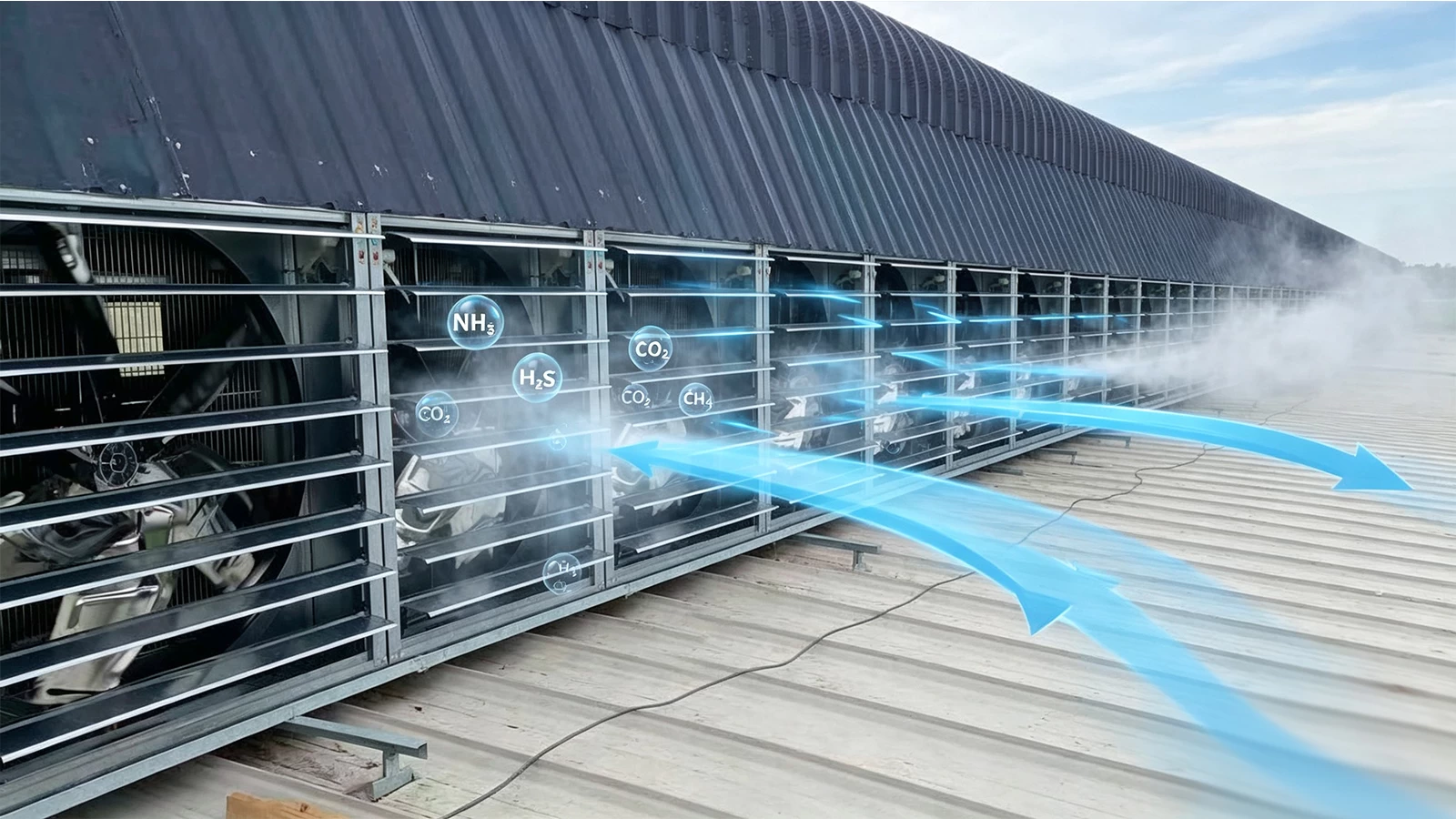
Objective: Its primary goal is not just temperature control, but removing moisture, carbon dioxide, and ammonia while bringing in fresh oxygen.
Negative Pressure & Inlets: Air enters through evenly spaced sidewall inlets driven by negative pressure. The air direction plates direct cold incoming air toward the roof peak, where it mixes with accumulated hot air before reaching bird level.
Minimum Opening & Pressure: Inlets should maintain a minimum opening of 3–5 cm (1–2 inches). Proper negative pressure ensures the incoming air travels to the house centerline rather than falling directly onto chicks.
Cycle Timers: Exhaust fans operate on a cycle timer (e.g., 5-minute ON/OFF cycles), providing short bursts of airflow without chilling the birds.
2. Transitional Ventilation: Bridging Moderate Temperatures
Transitional ventilation is activated when house temperatures exceed the set-point, but cooling pads are not yet required.
Objective: It increases the volume of air exchange to remove excess body heat produced by growing birds.
Operation: More sidewall inlets are opened and additional exhaust fans are activated. It transitions the house from air-quality-driven ventilation to heat-removal-driven ventilation without creating high-velocity wind chill.
3. Tunnel Ventilation: High-Velocity Heat Stress Relief
Tunnel ventilation is designed for warm to hot weather conditions, providing high-velocity airflow across the flock.
Objective: Removes heat rapidly by creating a "wind chill effect," making birds feel several degrees cooler than the actual dry-bulb temperature.
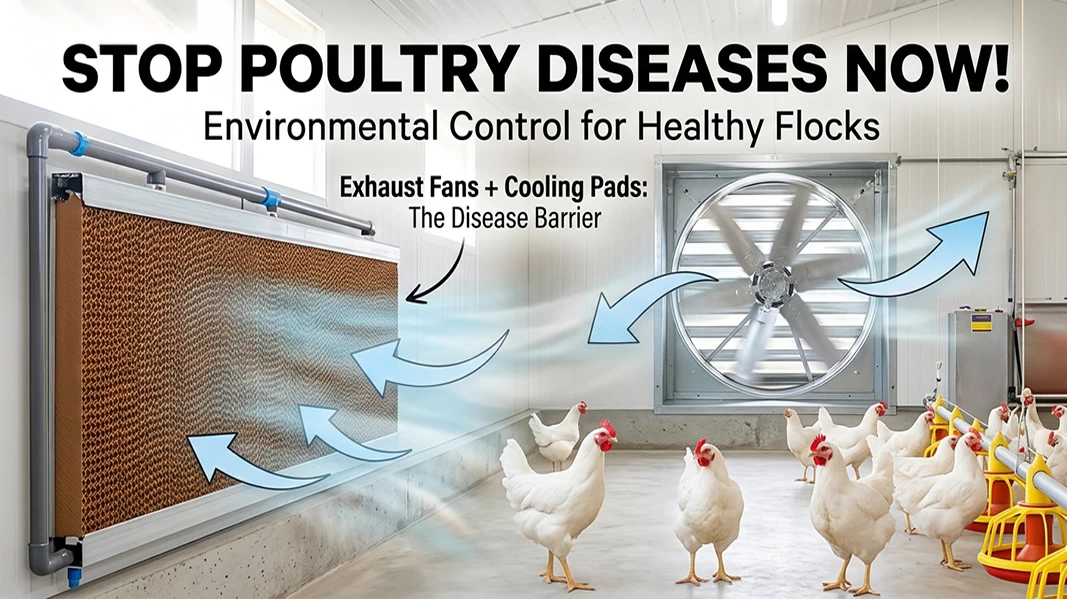
Operation: All sidewall inlets are closed. Air enters exclusively through large tunnel doors or cooling pad inlets at one end of the barn and is pulled along the length of the building by heavy-duty tunnel cone fans at the opposite end.
Cooling Pad Integration: When tunnel ventilation alone cannot keep house temperatures within safe limits, evaporative cooling pads are activated to lower incoming air temperature.
 |
Conclusion
A complete poultry climate control engineering system must seamlessly switch between Minimum, Transitional, and Tunnel ventilation modes. Balancing negative pressure, inlet calibration, and fan capacity ensures optimal bird welfare, improved Feed Conversion Ratios (FCR), and higher commercial yields regardless of external weather conditions.