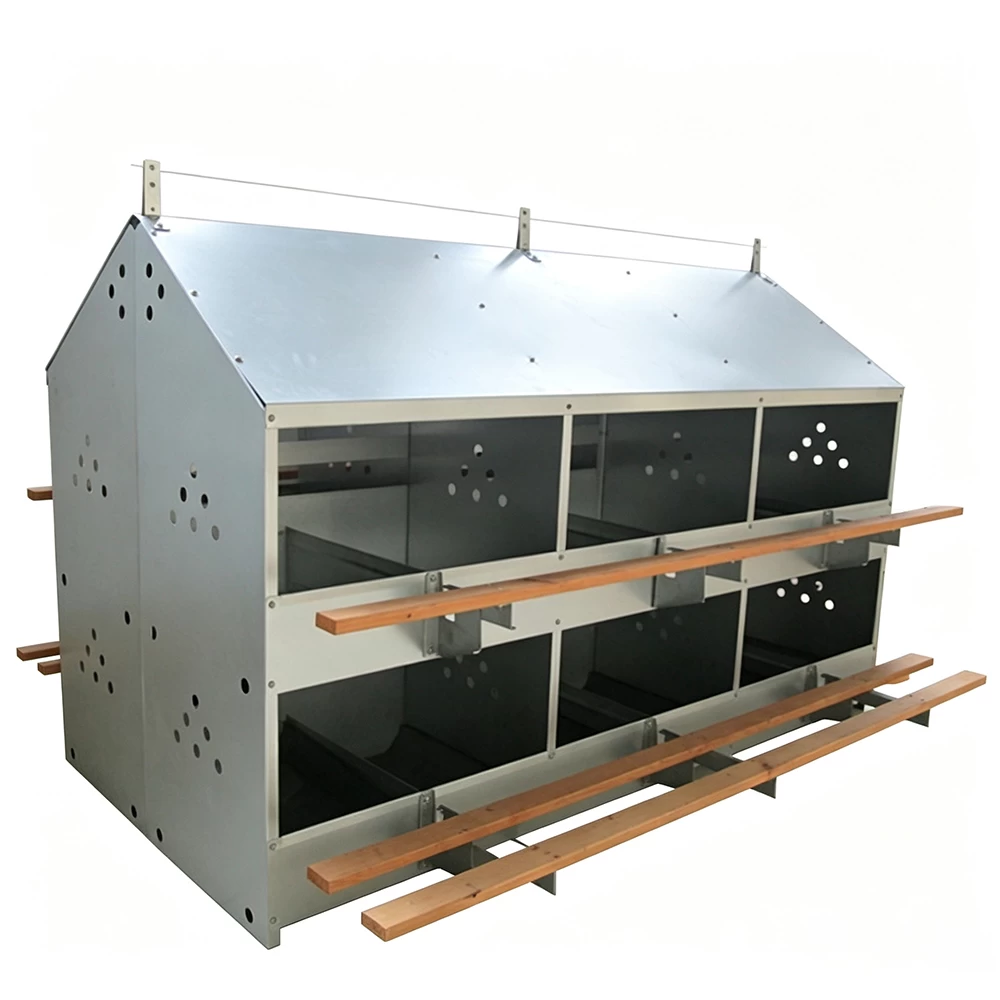

**Installation Tips for Galvanized Steel Nesting Boxes in High-Density Layer Barns**
In modern poultry farming, especially within **high-density layer barns**, providing optimal nesting solutions is essential for maximizing egg production, ensuring egg quality, and maintaining bird welfare. Among the array of nesting options, **galvanized steel poultry nesting boxes** have emerged as a preferred choice due to their durability, hygienic properties, and adaptability to various housing systems, including **free-range commercial poultry houses** and **breeder operations**.
This comprehensive guide explores the key considerations and best practices for installing galvanized steel nesting boxes in high-density layer barns, with a focus on minimizing egg breakage, reducing floor eggs, preventing egg contamination, and enhancing overall farm bio-security.
---
### Why Choose Galvanized Steel Nesting Boxes?
Before delving into installation tips, it’s important to understand why galvanized steel is the material of choice for nesting boxes in intensive poultry setups:
1. **Durability & Longevity:**
Galvanized steel offers superior resistance to corrosion, scratches, and wear compared to wood or plastic alternatives. The **heavy-gauge steel construction** ensures the boxes withstand frequent cleaning, disinfecting, and the rigors of daily use.
2. **Bio-Security & Hygiene:**
Steel surfaces are non-porous, making them less likely to harbor pathogens. This is crucial for maintaining **farm bio-security** and preventing outbreaks of diseases such as Salmonella or Avian Influenza.
3. **Clean Laying Environment:**
The ease of cleaning ensures a **clean laying environment**, reducing the risk of **egg contamination** and spoilage.
4. **Roll-Away Nesting Solution:**
Many steel nest boxes incorporate roll-away designs that allow eggs to gently roll into protected collection trays, significantly reducing **egg breakage** and preventing hens from pecking or soiling the eggs.
5. **Floor Egg Reduction:**
Properly installed nesting boxes encourage hens to lay in designated areas, thus minimizing the occurrence of **floor eggs**, which are more susceptible to contamination and damage.
---
### Pre-Installation Considerations
To maximize the benefits of galvanized steel nesting boxes, careful planning prior to installation is vital:
#### 1. Assess Barn Layout and Density
- **Barn Size & Flock Density:**
Calculate the number of hens per square meter and plan for sufficient nesting box capacity. Industry standards recommend one nest per 4–6 hens to avoid crowding and ensure each hen can access a nest when needed.
- **Location Selection:**
Place boxes away from high-traffic areas, feeders, and water lines to minimize disturbances during laying. Ideal locations offer privacy and a sense of security, encouraging hens to use nests rather than lay eggs on the floor.
#### 2. Choose the Right Nesting Box Design
- **Single vs. Double-Sided Design:**
**Double-sided designs** are particularly advantageous in high-density barns, maximizing access for hens from both sides and optimizing space utilization.
- **Roll-Away Mechanism:**
Opt for nesting boxes with integrated roll-away features. These not only protect eggs from breakage and contamination but also simplify collection for staff.
- **A-Frame Roof (Anti-Roost):**
An **A-frame roof** discourages hens from roosting on top of boxes, preventing droppings from soiling nests and eggs.
---
### Installation Steps and Best Practices
#### 1. Prepare the Site
- **Clean and Disinfect:**
Thoroughly clean the barn area where nesting boxes will be installed. Disinfect surfaces to prevent introducing pathogens during installation.
- **Ensure Level Flooring:**
Install nesting boxes on flat, stable surfaces. Uneven floors may cause the boxes to tilt, impairing the roll-away function and leading to egg breakage.
#### 2. Assemble Nesting Boxes
- **Follow Manufacturer Instructions:**
Assemble the galvanized steel boxes according to the specific guidelines provided. Use appropriate tools and ensure all bolts and rivets are tightly secured.
- **Inspect for Sharp Edges:**
Check for any exposed or sharp edges that could injure birds or staff. Smooth or cover these areas as necessary.
#### 3. Position Boxes Strategically
- **Height Placement:**
Mount boxes at a height comfortable for hens (typically 40–60 cm above the floor). Avoid placing too high, as hens may struggle to access, or too low, which increases the risk of floor eggs.
- **Spacing:**
Maintain adequate spacing between boxes to prevent overcrowding and aggressive behavior among hens. Follow standards—usually 30–40 cm apart.
- **Orientation:**
For **double-sided designs**, align boxes so both sides are accessible, facilitating efficient egg collection and maximizing usage.
#### 4. Secure Boxes Firmly
- **Anchor to Walls/Floor:**
Use heavy-duty anchors or brackets to secure boxes to walls or floors. This prevents shifting due to flock activity and ensures stability during cleaning.
- **Allow for Mobility (Optional):**
If periodic relocation is desired, use wheels or modular mounting systems. Ensure mobility does not compromise stability.
#### 5. Set Up Roll-Away Features
- **Install Sloped Floors:**
Ensure the internal floor is correctly angled (usually 8–12 degrees) so eggs roll gently into collection trays without excessive force.
- **Check Collection Trays:**
Position trays or drawers below the slope; ensure they are easy to access, clean, and empty regularly.
#### 6. Add Appropriate Nesting Materials
- **Mat Selection:**
Use sanitized, durable nesting mats (plastic or rubber) that facilitate egg rolling and provide comfort for hens.
- **Avoid Excess Loose Material:**
Minimize straw or shavings that could block roll-away mechanisms or increase contamination risks.
#### 7. Integrate Anti-Roost Features
- **A-Frame Roofs:**
Install **A-frame roof** panels, ensuring they are securely fastened to discourage roosting.
- **Additional Barriers:**
If necessary, add anti-roost wires or sloped extensions to further deter birds from perching.
---
### Post-Installation Management
#### 1. Monitor Hen Adaptation
- **Observation:**
Watch flock behavior post-installation. Some hens may initially resist using new nests; gentle guidance and blocking old nesting sites can help transition.
- **Training Period:**
Block off access to previous nesting areas and encourage hens toward new boxes by placing dummy eggs inside.
#### 2. Routine Maintenance
- **Daily Cleaning:**
Remove soiled nesting mats and sanitize surfaces to maintain a **clean laying environment** and prevent **egg contamination**.
- **Periodic Inspections:**
Check for signs of wear, loose components, or malfunctioning roll-away features. Repair or replace parts promptly.
#### 3. Egg Collection Protocols
- **Frequent Collection:**
Collect eggs multiple times daily to reduce breakage and contamination. Roll-away trays should be emptied and cleaned regularly.
- **Record Keeping:**
Log egg counts and identify patterns in laying behavior to assess box effectiveness and optimize management.
---
### Addressing Common Challenges
#### 1. Floor Egg Reduction
Despite optimal installation, some floor eggs may still occur. Strategies to minimize include:
- Regularly removing floor eggs to discourage repeated laying.
- Adjusting nest box height or location if persistent issues arise.
- Ensuring nests are inviting—adequate privacy, comfort, and cleanliness.
#### 2. Egg Breakage Reduction
To further reduce breakage:
- Inspect roll-away slopes for obstructions or excessive angles.
- Replace worn-out mats or trays.
- Handle eggs gently during collection and storage.
#### 3. Bio-Security Enhancement
- Implement strict sanitation protocols—disinfect boxes between flocks.
- Maintain rodent and pest control measures around nesting sites.
- Ensure staff adhere to hygiene standards when accessing nests.
---
### Special Considerations for Breeder Operations and Free-Range Houses
#### 1. Breeder Operations
- Precise egg handling is critical; use roll-away boxes to segregate hatching eggs from table eggs.
- Maintain higher bio-security standards to ensure breeder flock health.
#### 2. Free-Range Commercial Poultry Houses
- Position boxes near outdoor access points but shielded from direct drafts or sunlight.
- Ensure boxes are robust against pecking and scratching, given the more active nature of free-range hens.
---
### Benefits of Proper Installation
When galvanized steel nesting boxes are carefully selected, installed, and maintained in high-density layer barns, farms realize numerous advantages:
- **Enhanced Egg Quality:**
Reduced contamination and breakage lead to higher marketable egg yields.
- **Labor Efficiency:**
Roll-away solutions and strategic placement streamline egg collection and cleaning routines.
- **Improved Bird Welfare:**
Hens enjoy comfortable, secure nesting environments, reducing stress and boosting productivity.
- **Long-Term Cost Savings:**
Durable construction minimizes replacement costs, and improved bio-security reduces disease-related losses.
---
### Conclusion
Investing in **galvanized steel poultry nesting boxes** is a forward-thinking decision for operators of **high-density layer barns**, **breeder operations**, and **free-range commercial poultry houses**. By following best practices for installation—including proper site preparation, strategic placement, secure anchoring, and diligent maintenance—producers can reap the benefits of reduced **egg breakage**, minimized **floor eggs**, and enhanced **farm bio-security**.
These systems, especially when featuring **double-sided designs**, **roll-away nesting solutions**, and **A-frame roofs**, contribute significantly to creating a **clean laying environment** and preventing **egg contamination**. Ultimately, the success of any poultry operation hinges on attention to detail, proactive management, and ongoing commitment to animal welfare and product quality.
For those seeking to upgrade their facilities, consulting with reputable suppliers and leveraging industry expertise ensures that installation meets both operational needs and regulatory standards, paving the way for sustainable, profitable poultry production.