
# Reducing Maintenance Costs with Zinc-Coated Corrosion-Resistant Silos
## Introduction
In modern agriculture, especially in livestock operations, the storage and handling of bulk feed is a crucial daily process. Feed silos are central to this operation, offering farmers an efficient way to store large quantities of feed for extended periods. However, traditional silos can be susceptible to corrosion, especially in harsh farm atmospheres or regions with high humidity. This vulnerability leads to increased maintenance costs and potential operational disruptions. The advent of zinc-coated, corrosion-resistant feed silos has revolutionized the industry, offering substantial benefits in terms of durability, reliability, and cost savings.
This article explores how zinc-coated, corrosion-resistant silos help reduce maintenance costs, delving into their technical features, benefits, and long-term value for livestock producers.
---
## Understanding Silo Corrosion: Challenges in Livestock Feed Storage
### The Corrosive Threats
Feed silos are constantly exposed to challenging environmental conditions:
- **High Humidity:** Many farms are located in regions prone to moisture, which accelerates rust formation.
- **Outdoor Weather Resistance:** Exposure to rain, snow, and temperature fluctuations exacerbates corrosion.
- **Farm Atmospheres Protection:** Ammonia, organic acids, and other chemicals from livestock operations can further deteriorate silo materials.
Corrosion not only weakens the structural integrity of silos but also increases the risk of contamination of stored feed, potentially impacting livestock health.
### Maintenance Costs Associated with Corroded Silos
Traditional steel silos, while strong, require frequent:
- Inspection for rust spots and leaks.
- Repairing or replacing corroded panels.
- Repainting or recoating to extend life.
- Downtime during repairs, impacting feed supply chains.
These activities contribute significantly to the operating expenses of livestock farms.
---
## Zinc-Coated Corrosion-Resistant Silos: A Technological Solution
### What is Zinc Coating?
Zinc coating, commonly known as galvanization, is a process where steel sheets are dipped in molten zinc to form a protective layer. This layer acts as a barrier against moisture and corrosive elements, dramatically reducing rust formation.
#### The 275g/m² Galvanized Steel Advantage
Modern feed silos utilize **275g/m² galvanized steel**, meaning every square meter of steel is protected by 275 grams of zinc. This heavy-duty specification offers superior protection compared to standard galvanization, making it ideal for demanding farm environments.
### High-Tensile Corrugated Steel Sheets
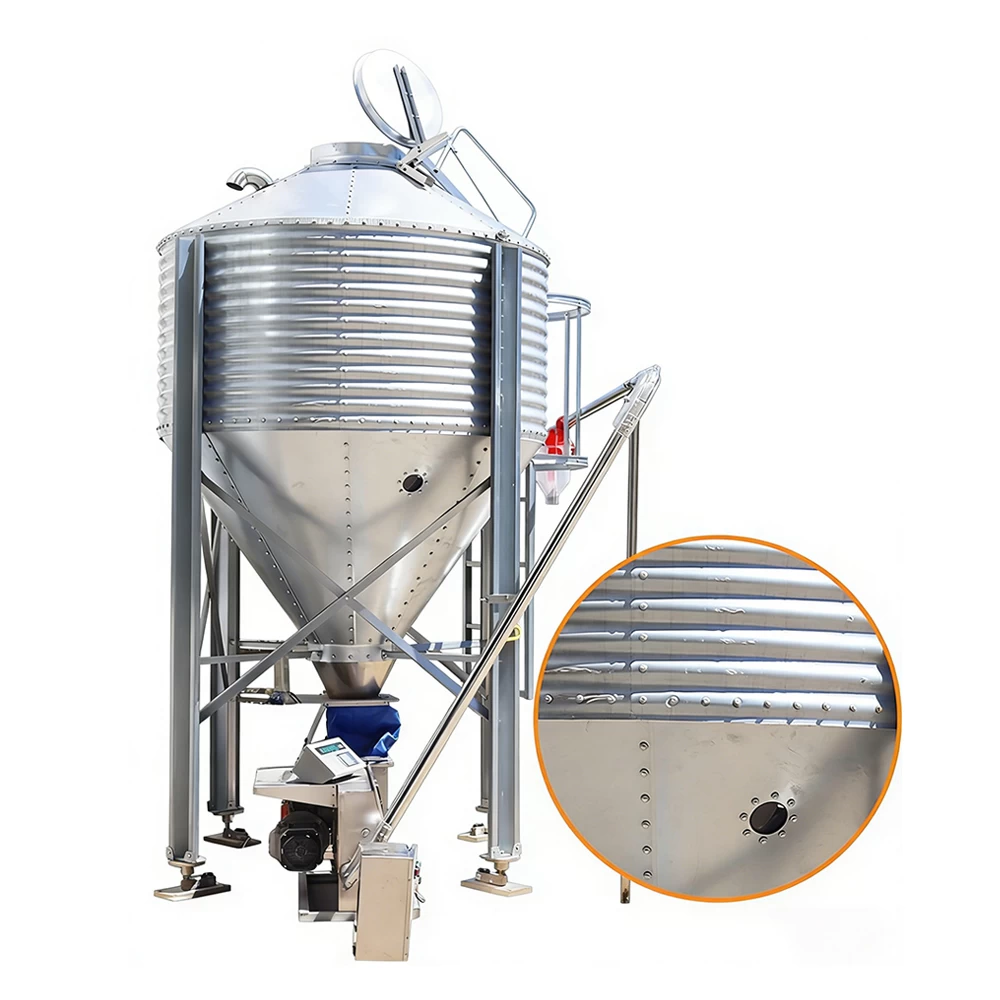
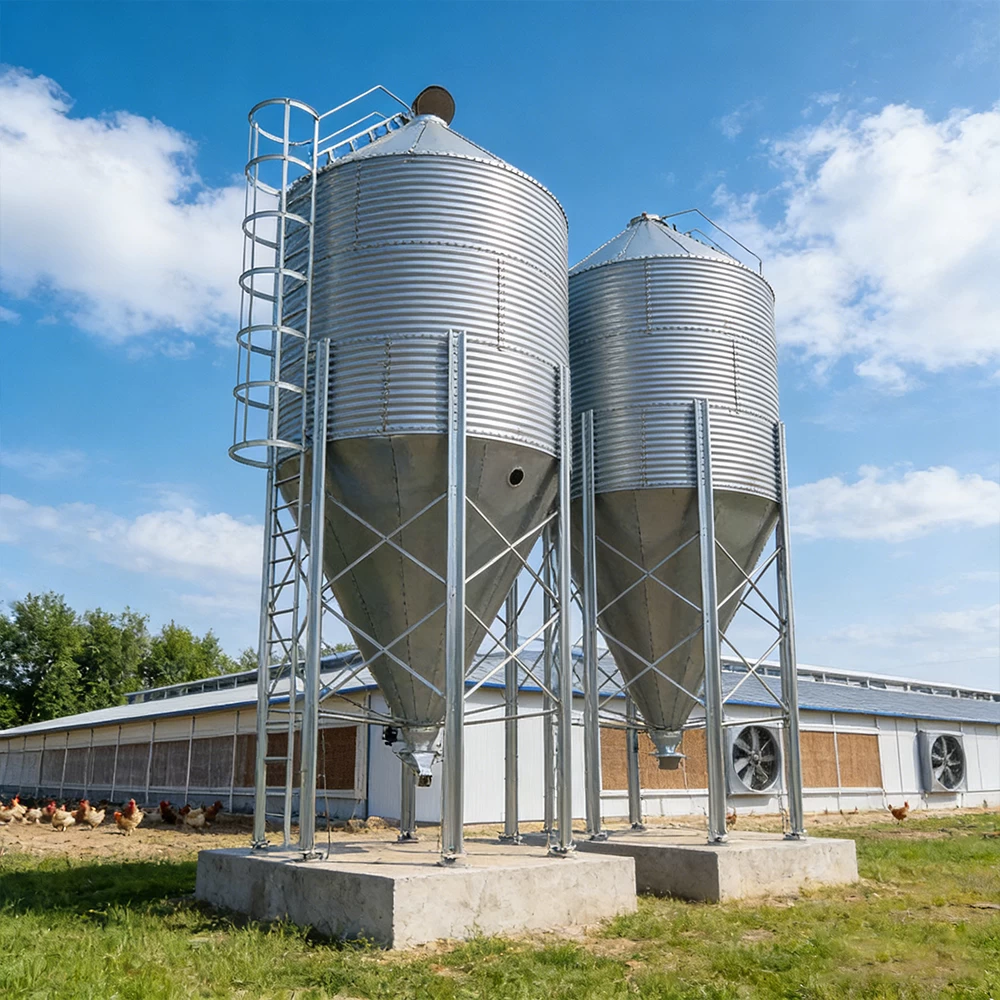
Zinc-coated silos often employ high-tensile, corrugated steel sheets. The corrugation enhances structural strength, prevents warping, and distributes load more efficiently. Coupled with zinc coating, these sheets resist both physical and chemical stressors.
---
## Key Features of Zinc-Coated Corrosion-Resistant Silos
### 1. Heavy-Duty Construction
The combination of high-tensile steel and thick zinc coating ensures that silos can withstand:
- Physical impacts from machinery or feed loading.
- Environmental stresses such as wind, hail, and temperature extremes.
### 2. Moisture Control and Anti-Caking Design
Moisture infiltration is a major cause of feed spoilage and caking. Zinc-coated silos incorporate:
- **Airtight Structural Seal:** Prevents moisture and air ingress, keeping feed dry and fresh.
- **Optimized 60° Cone Bottom:** Ensures complete feed discharge, reducing residue and minimizing caking.
These features promote better feed flow and reduce manual cleaning requirements.
### 3. Automated Feed Transport Compatibility
Modern silos are designed to integrate seamlessly with automated feed transport systems. This reduces labor costs and ensures consistent feed delivery, further streamlining farm operations.
### 4. Outdoor Weather Resistance
Galvanized silos are engineered for year-round outdoor use, resisting:
- Rain and snow
- UV radiation
- Temperature fluctuations
This resilience translates into longer service life and fewer weather-related repairs.
### 5. High Humidity and Farm Atmospheres Protection
The zinc coating acts as a shield against:
- Elevated humidity levels
- Chemical vapors from livestock waste
- Aggressive atmospheric pollutants
As a result, maintenance intervals are extended, and risk of structural degradation is minimized.
---
## How Zinc-Coated Silos Reduce Maintenance Costs
### Extended Service Life
The primary advantage of corrosion-resistant silos is their longevity. Unlike unprotected steel, zinc-coated silos can last decades with minimal intervention. The protective layer slows oxidation, preserving both structural integrity and appearance.
#### Case Study: Feed Silo Longevity
Research indicates that silos made with 275g/m² galvanized steel retain over 95% of their structural strength after 10 years of operation in high-humidity environments. In contrast, uncoated silos may require substantial repairs or replacement within 5-7 years.
### Fewer Repairs and Less Downtime
With corrosion virtually eliminated, maintenance teams spend less time:
- Inspecting for rust and leaks
- Repairing damaged panels
- Repainting surfaces
This frees up resources for other tasks and minimizes feed supply interruptions.
### Cost Savings in Labor and Materials
Reduced maintenance translates directly into lower labor and material expenses. Over a silo’s lifetime, these savings can be significant:
- Fewer replacement parts needed
- Less frequent painting and sealing
- Reduced emergency repair costs
### Improved Feed Quality and Reduced Waste
Moisture control and anti-caking features preserve feed quality. When feed is protected from humidity, spoilage and waste are minimized. This not only reduces costs but also enhances livestock productivity.
### Enhanced Safety
Corrosion can lead to sudden failures—such as silo collapse or feed contamination. Zinc-coated silos provide safer operation, reducing liability and insurance costs.
---
## Technical Innovations: Airtight Structural Seal and Optimized Cone Bottom
### Airtight Structural Seal
A critical innovation in modern silos is the **airtight structural seal**. By preventing air and moisture ingress, this feature:
- Maintains ideal storage conditions
- Reduces mold growth and feed spoilage
- Minimizes cleaning frequency
Airtight seals are particularly important in regions with fluctuating humidity and temperature, where condensation can otherwise compromise feed integrity.
### Optimized 60° Cone Bottom
The cone bottom, angled at 60°, is designed for efficient feed discharge. This geometry ensures:
- Complete emptying of bulk livestock feed
- Prevention of “dead zones” where feed can accumulate and spoil
- Easier integration with automated feed transport systems
By reducing manual intervention, these features save labor costs and maintain feed flow consistency.
---
## Integration with Automated Feed Transport Systems
Automation is increasingly common in livestock operations. Zinc-coated silos are built with compatibility in mind:
- **Automated feed transport:** Silos can connect directly to conveyor belts, augers, or pneumatic systems.
- **Remote monitoring:** Many silos now include sensors for fill level, humidity, and temperature, enabling proactive maintenance.
Automation reduces dependence on manual labor, lowers risk of errors, and further enhances cost efficiency.
---
## Outdoor Weather Resistance and High Humidity Protection
Farmers face constant challenges from the elements. Zinc-coated silos are engineered to meet these demands:
### Outdoor Weather Resistance
- Thick zinc layer withstands rain, snow, and hail
- Corrugated design resists wind loads
- Protective coatings ensure UV stability
### High Humidity Protection
- Zinc acts as a sacrificial layer, preventing water penetration
- Airtight seals eliminate condensation inside the silo
These features ensure reliable operation regardless of climate.
---
## Farm Atmospheres Protection: Guarding Against Chemical Corrosion
Livestock farms generate chemical vapors—such as ammonia and organic acids—that accelerate corrosion in traditional steel silos. Zinc-coated silos offer:
- **Chemical resistance:** Zinc layer neutralizes many corrosive agents.
- **Reduced maintenance frequency:** Silo interiors remain clean and intact longer.
This protection is vital for maintaining operational continuity and reducing repair costs.
---
## Long-Term Value and Return on Investment
### Initial Cost vs. Lifetime Savings
While zinc-coated, corrosion-resistant silos may have a higher upfront cost compared to traditional models, their long-term savings are substantial:
- **Lower maintenance expenses:** Fewer repairs and replacements.
- **Reduced downtime:** Continuous feed supply.
- **Improved feed quality:** Less waste and spoilage.
Over 10-15 years, the total cost of ownership is markedly lower, making zinc-coated silos a wise investment for any livestock operation.
### Sustainability and Environmental Benefits
Longer-lasting silos mean fewer materials consumed over time, reducing environmental impact. Improved feed preservation also minimizes waste, supporting sustainable farming practices.
---
## Choosing the Right Zinc-Coated Feed Silo
When selecting a silo, consider:
- **Zinc coating thickness:** Opt for 275g/m² or higher.
- **Steel quality:** High-tensile, corrugated sheets for strength.
- **Seal quality:** Ensure airtight structural seals.
- **Cone angle:** 60° for efficient feed discharge.
- **Automation compatibility:** Integration with existing feed transport systems.
- **Warranty and support:** Choose reputable manufacturers offering robust support.
---
## Conclusion
Corrosion-resistant, zinc-coated feed silos represent a leap forward in agricultural technology. Their robust construction, moisture control, anti-caking design, and compatibility with automated systems translate into reduced maintenance costs, improved feed quality, and safer operations. By investing in silos made with high-tensile, 275g/m² galvanized steel and optimized features, livestock producers can protect their assets, streamline workflows, and enhance profitability.
For farms seeking to future-proof their operations against the challenges of outdoor weather, high humidity, and corrosive atmospheres, zinc-coated silos are the clear choice. Their proven durability and cost-saving advantages make them an indispensable tool in modern livestock management.
---
### Keywords Recap
**Corrosion-resistant, zinc-coated, feed silo, bulk livestock feed, heavy-duty, 275g/m² galvanized steel, moisture control, anti-caking, automated feed transport, high-tensile corrugated steel sheets, outdoor weather resistance, high humidity protection, farm atmospheres protection, airtight structural seal, optimized 60° cone bottom.**
---
**Ready to upgrade your feed storage? Contact your local supplier today to learn more about zinc-coated, corrosion-resistant silos and start reducing your maintenance costs.**