

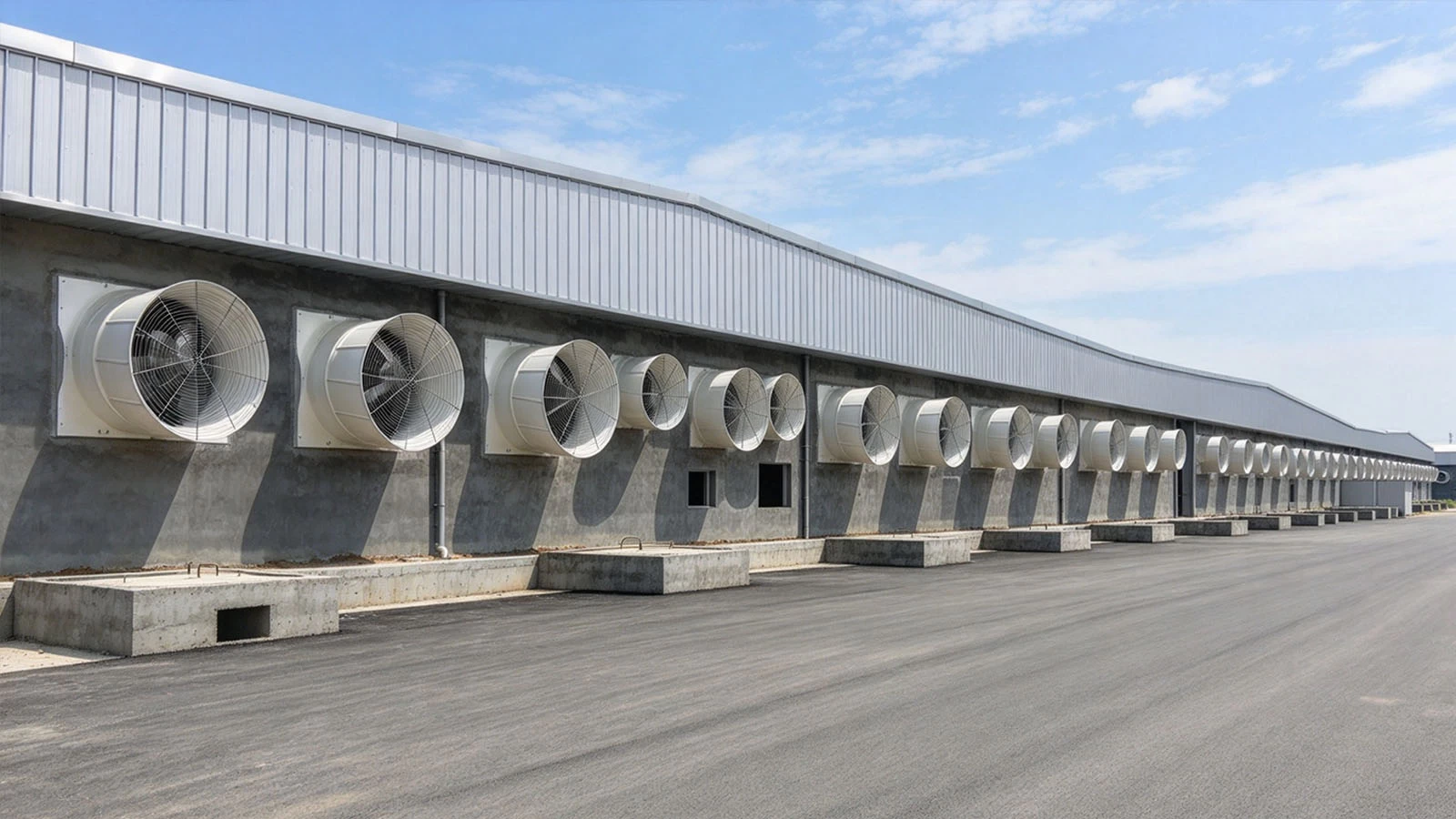
In modern large-scale livestock farming (such as poultry and swine houses) and greenhouse climate control, proper ventilation and cooling are critical to maintaining productivity and reducing mortality rates. In high-humidity and highly corrosive environments, fiberglass exhaust fans (FRP fans) have gradually replaced traditional metal fans thanks to their unique material properties, becoming the top choice for modern farms.
This comprehensive guide breaks down the performance advantages, key selection criteria, and daily maintenance practices for fiberglass exhaust fans to help you select and operate the best equipment for your facilities.
Why Choose Fiberglass Exhaust Fans? Core Advantages
1. Superior Corrosion Resistance in Acidic, Alkaline & Humid Environments
The decomposition of livestock manure releases highly corrosive gases such as ammonia ($\text{NH}_3$) and hydrogen sulfide ($\text{H}_2S$). Combined with the operation of evaporative cooling pad systems, indoor air humidity remains extremely high.
Traditional Galvanized Fans: Frame rusting, zinc layer flaking, and housing perforation typically occur within 2 to 3 years.
Fiberglass (FRP) Fans: Molded from synthetic resin and glass fiber, FRP materials possess natural resistance to acids, alkalis, and rust. Under harsh farm environments, FRP fans deliver a service life of over 10 years.
2. Streamlined Cone & Blade Design for High Airflow & Low Energy Use
The high moldability of fiberglass allows for fluid, aerodynamic housing and shroud designs:
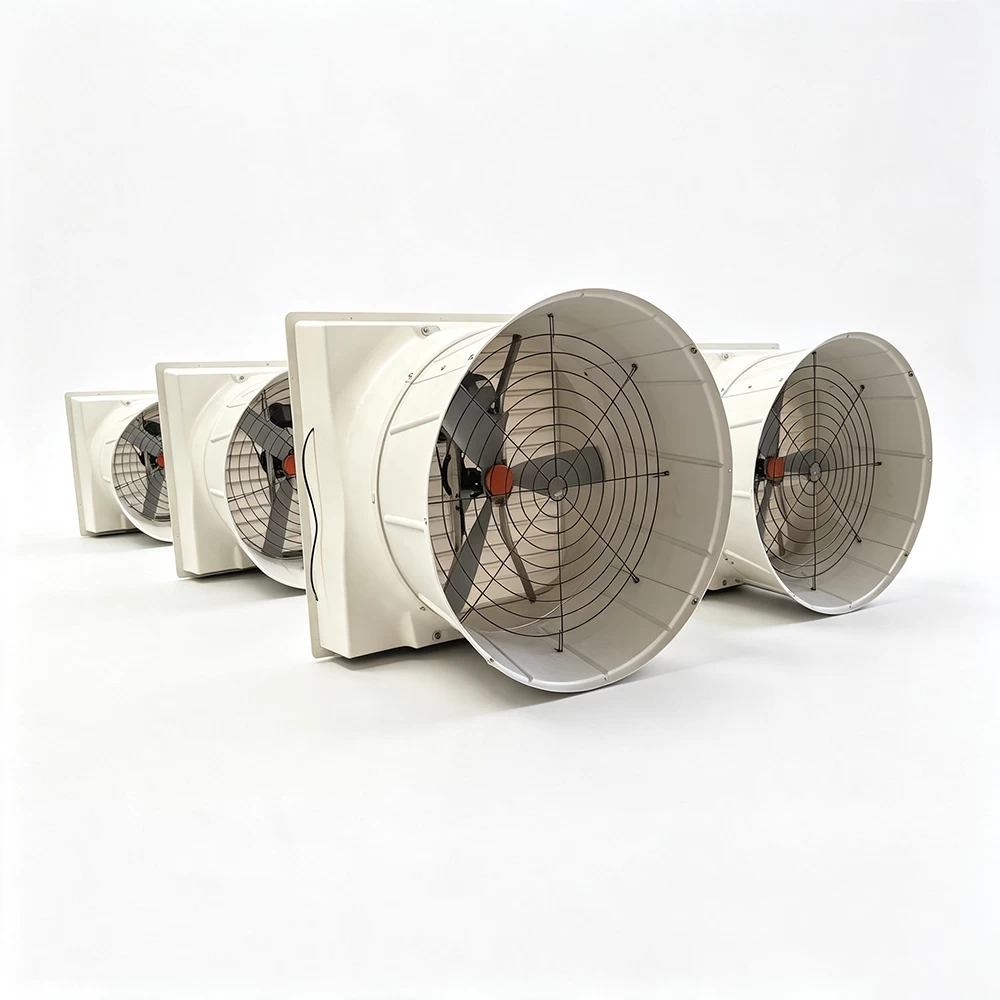
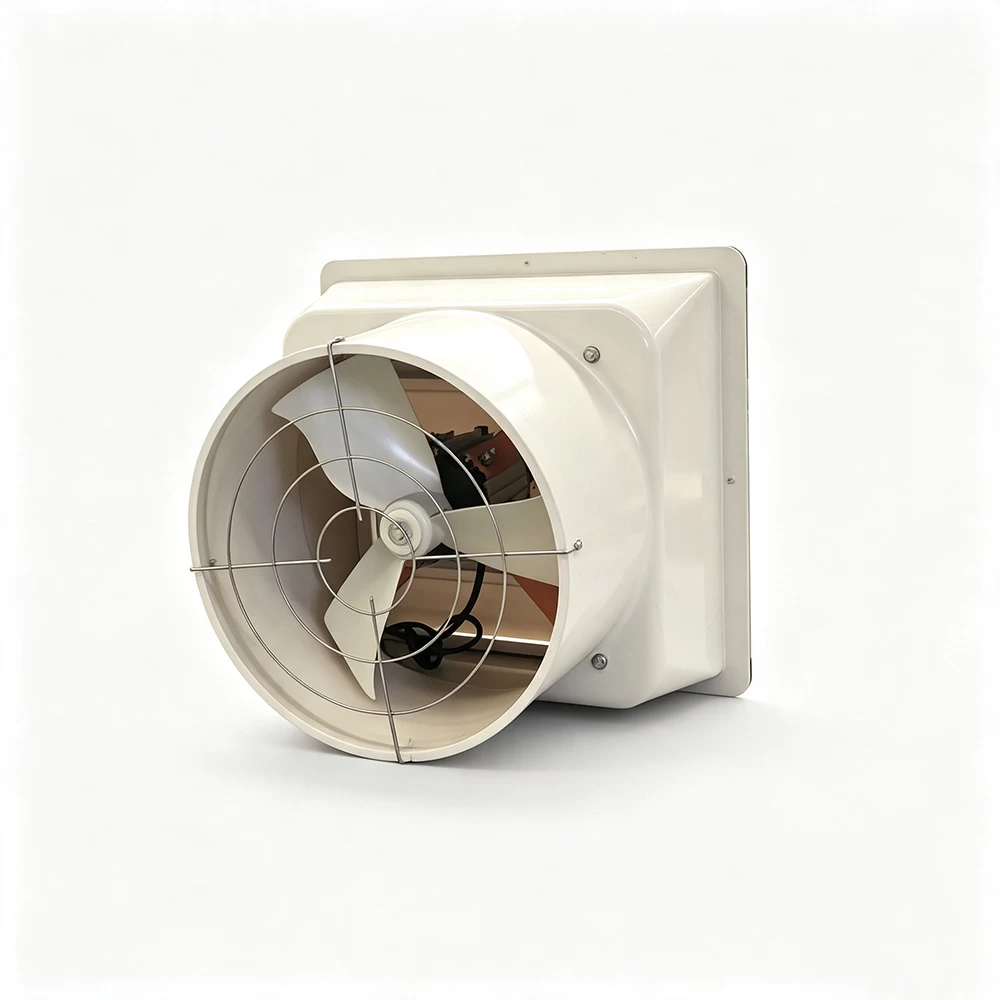
The one-piece molded cone housing minimizes discharge resistance, increasing airflow efficiency by 10% to 15%.
Equipped with precision dynamically balanced aluminum alloy or fiberglass blades, the fan delivers maximum CFM output per watt (high CFM/W efficiency), saving substantial electricity over continuous operation.
 |  |
3. Tight Shutter & Butterfly Door Sealing to Prevent Air Backflow
High-quality FRP exhaust fans feature windproof/dustproof shutters or insulated butterfly doors:
When Running: Airflow smoothly pushes the shutters/doors open with minimal resistance.
When Stopped: Gravity or spring mechanisms tightly seal the opening, preventing outdoor cold air leakage. This is especially vital for winter heat retention and lowering heating bills.
4. Smooth, Quiet Operation to Reduce Animal Stress
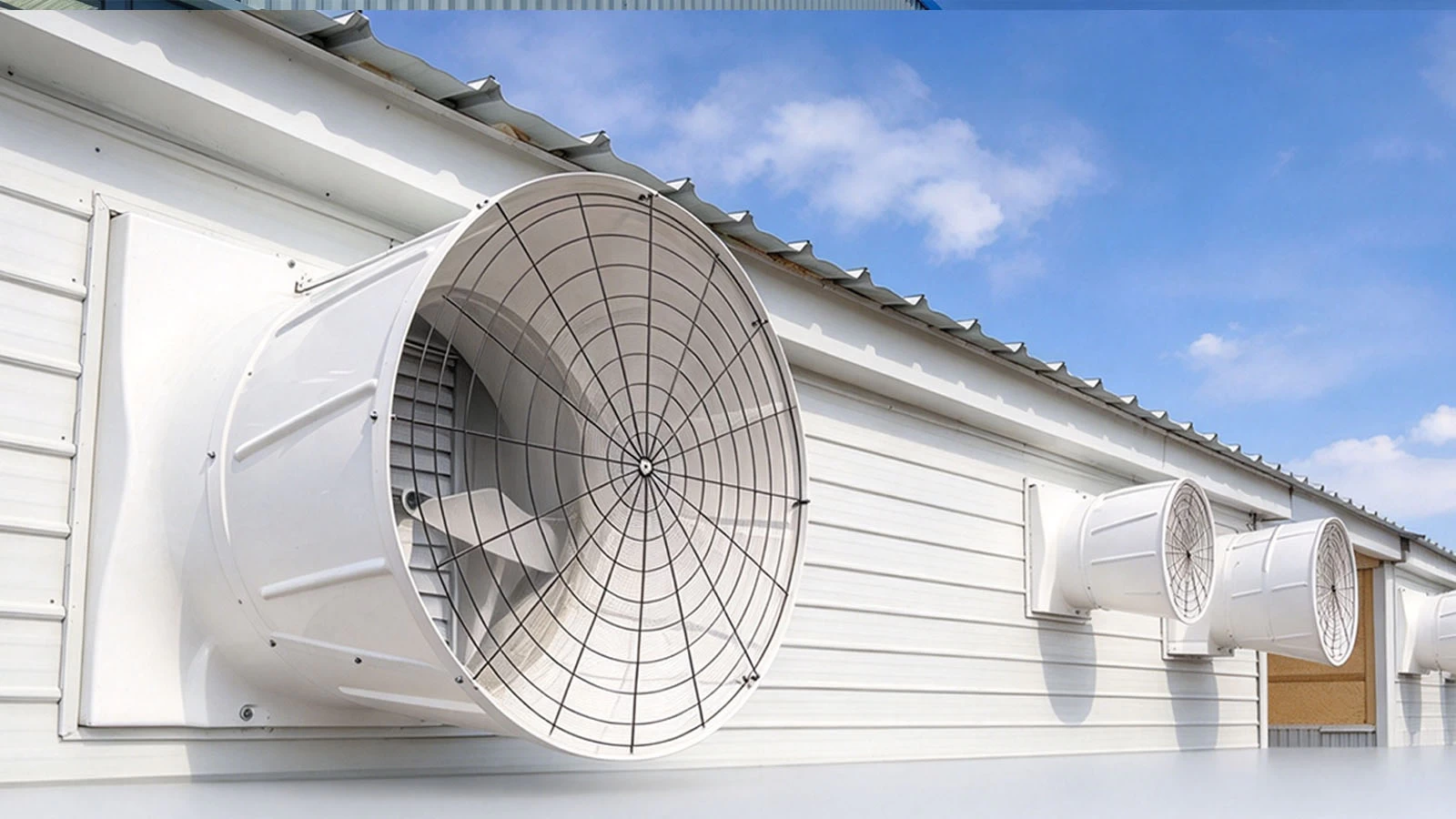
Fiberglass inherently absorbs vibration and dampens sound. Even at high speeds, the fan operates smoothly with minimal vibration and low noise, effectively preventing noise-induced stress (such as flock panic or abnormal egg production).
 |
Selection Guide for Fiberglass Exhaust Fans
When purchasing FRP fans, look beyond physical dimensions and evaluate these key technical parameters based on your project requirements:
Airflow (CFM / $\text{m}^3\text{/h}$): Calculate total ventilation demand based on house volume and summer air exchange rates (typically 1 full air exchange every 45–60 seconds in summer) to determine the required quantity of fans.
Blade Diameter & Fan Size: Common specifications include 50" (approx. 1270mm) and 54" (approx. 1380mm). Large cone fans are ideal for modern enclosed houses with long spans and high airflow demands.
Motor Protection Rating: Due to dusty and humid farm conditions, choose motors rated at IP55 (dust and water resistant) with Class F insulation.
Drive Type:
Belt Drive: Operates with smoother start-ups, lower noise, and easy maintenance (periodic belt replacement).
Direct Drive: Eliminates belt wear, requires lower maintenance frequency, and provides higher mechanical transmission efficiency.
3. Maintenance Practices for FRP Fans
To keep your exhaust fans operating at peak performance, establish a regular inspection and maintenance routine:
Clean Blades & Shutters Regularly: Remove accumulated dust, feathers, and grease from fan blades and shutters to maintain smooth shutter opening and prevent airflow resistance.
Check Belt Tension (Belt-Driven Models): Inspect drive belts monthly. A loose belt reduces fan RPM and airflow capacity, while an overly tight belt accelerates motor bearing wear.
Motor & Bearing Care: Apply lubricating grease to bearings at recommended intervals, and inspect the motor for unusual noise or overheating.
Winterization & Shutdown Care: For fans taking a seasonal break, clean them thoroughly and close the shutters or install protective covers to extend their service life.