

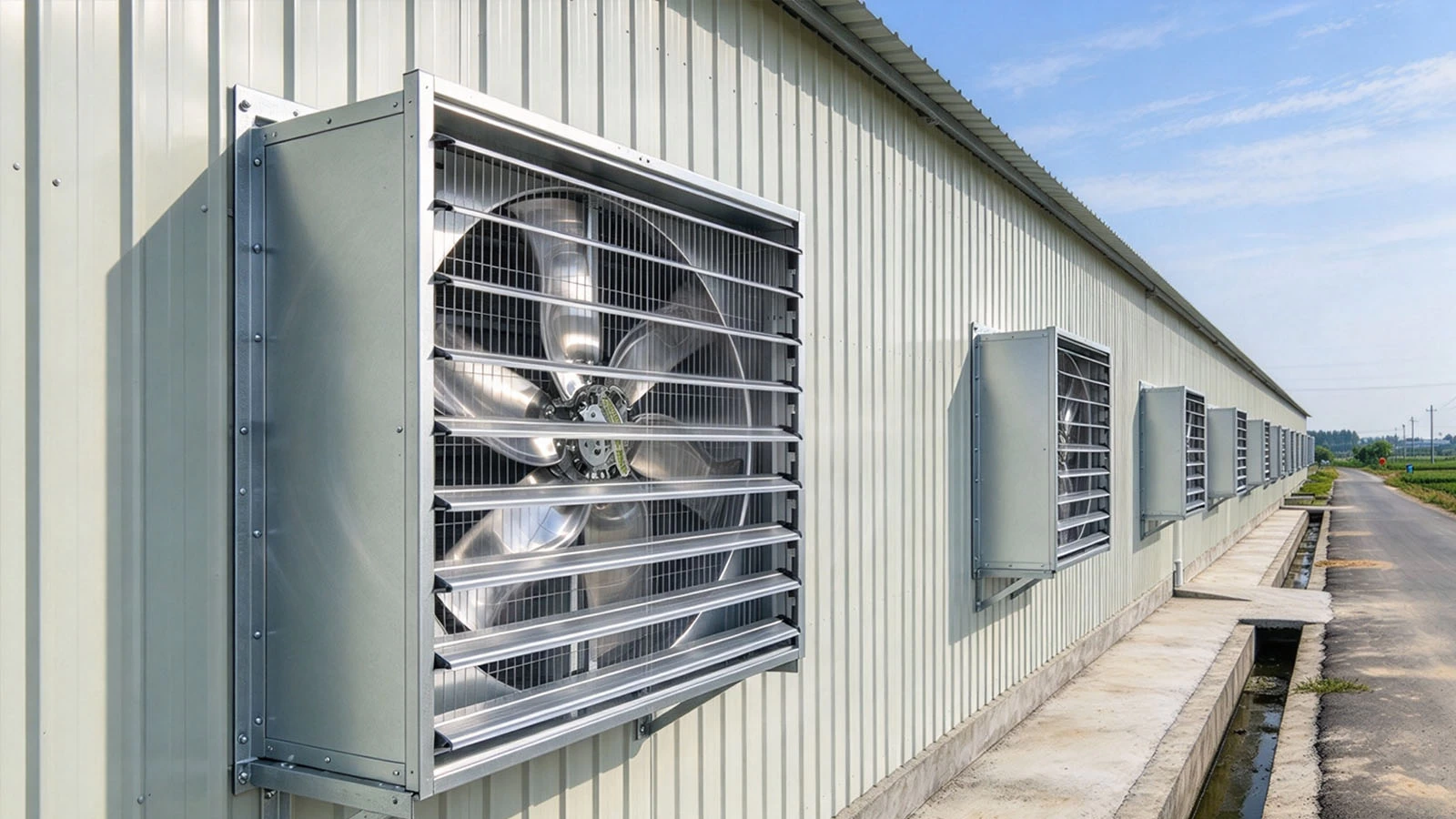
In modern agricultural livestock farming, industrial workshops, and greenhouse climate control projects, galvanized steel exhaust fans have long maintained a dominant position in the ventilation market due to their cost-effectiveness, strong exhaust capability, and durable structural design.
This comprehensive guide breaks down the working principles, core advantages, selection criteria, and daily maintenance techniques for galvanized steel fans to help you build an efficient, low-cost ventilation system for your facilities.
What is a Galvanized Steel Exhaust Fan? Core Advantages
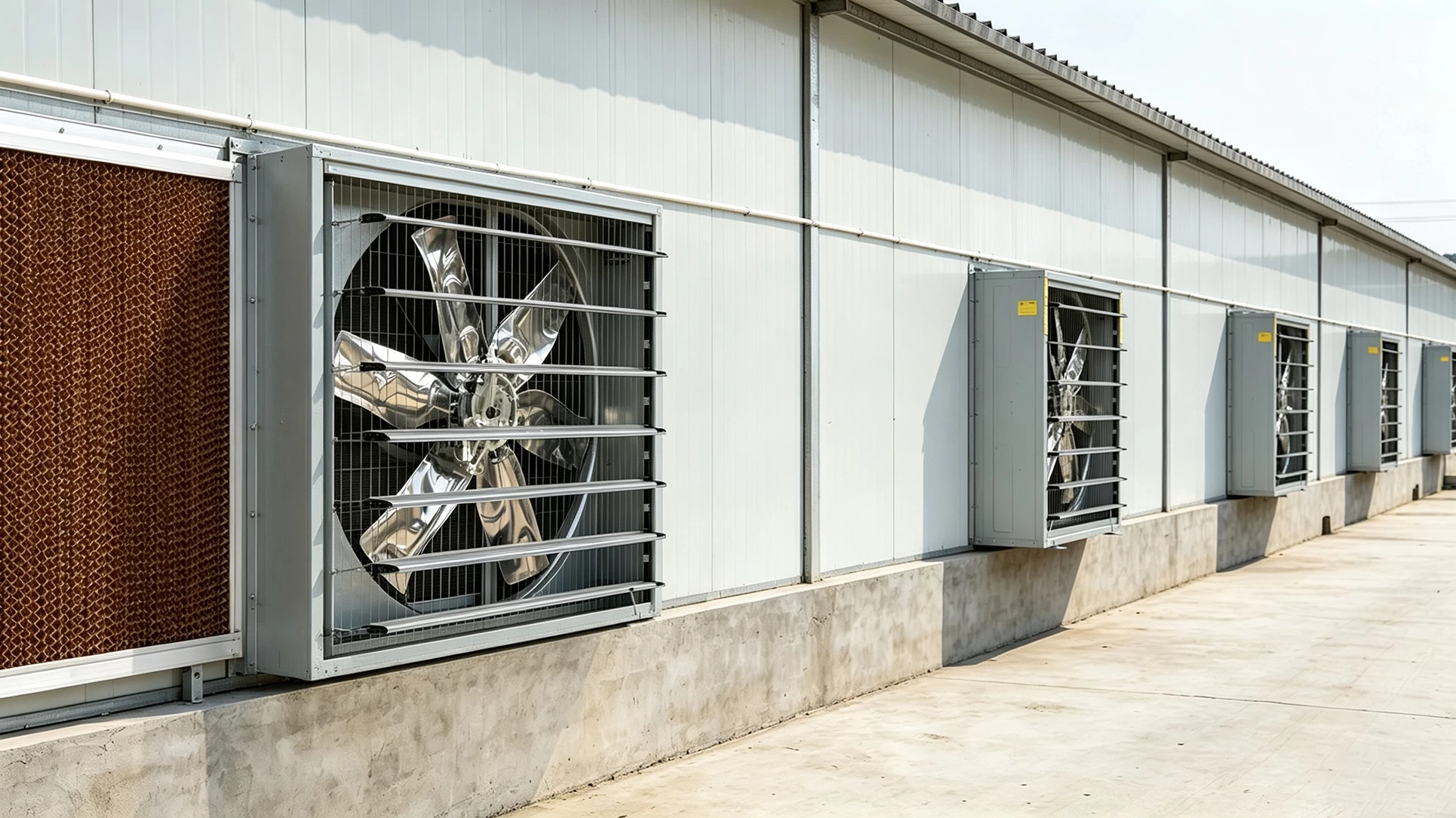
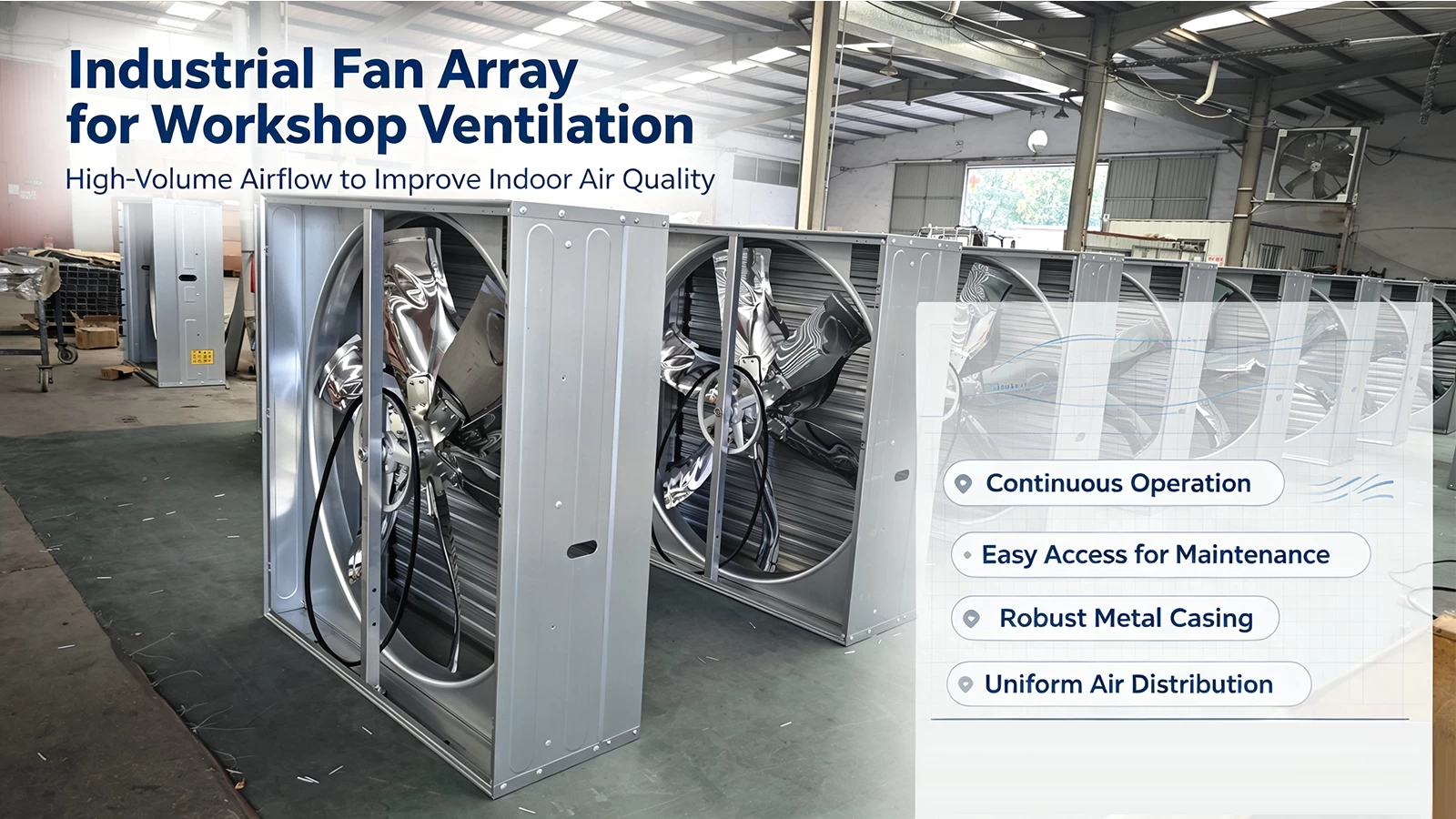
A galvanized steel exhaust fan primarily consists of a galvanized steel frame, galvanized or stainless steel blades, automatic louvers, a motor, and a drive system. Utilizing the principle of negative pressure ventilation, it rapidly extracts indoor hot air, odors, dust, and harmful gases. This creates negative pressure inside the building, forcing fresh outdoor air to flow in for rapid cooling and air exchange.
1. High Cost-Effectiveness & Low Initial Investment
Compared to fiberglass (FRP) fans, galvanized steel fans offer significant cost advantages in manufacturing processes and raw materials. For farm managers or factory owners with limited budgets or large-scale construction plans, choosing galvanized steel fans substantially lowers upfront equipment procurement expenses.
2. Zinc Coating Protection & Solid Corrosion Resistance
The housing and major structural components are made of heavy-coated hot-dip galvanized steel sheets (typically 180 - 275g/㎡. This provides reliable protection against outdoor weather and moderate humidity, ensuring long-term stable operation.
3. Automatic Louver & Push-Pull System Prevents Backflow
The fan is equipped with automatically opening and closing louvers (such as gravity shutters or push-pull centrifugal mechanisms):
- When Running: Louvers open smoothly under airflow or centrifugal mechanism force, minimizing wind resistance and maximizing airflow output.
- When Stopped: Louvers close tightly by gravity or spring action, effectively blocking outdoor dust, wild birds, and cold air backflow, maintaining indoor heat retention.
4. Robust Structure with High Wind & Pressure Resistance
Pressed and stamped from high-strength galvanized steel, the fan housing exhibits excellent mechanical strength and resistance to wind pressure. It maintains a stable structure even during stormy weather or harsh outdoor conditions.
 |  |
Key Applications of Galvanized Steel Exhaust Fans
- Commercial Livestock & Poultry Farms: Ideal for daily ventilation in broiler houses, layer houses, swine barns, and dairy cattle sheds, working in synergy with cooling pads to achieve excellent wind-chill cooling.
- Agricultural Greenhouses: Used for exhausting hot air and moisture in flower, vegetable, and mushroom greenhouses, precisely regulating temperature, humidity, and CO2 levels.
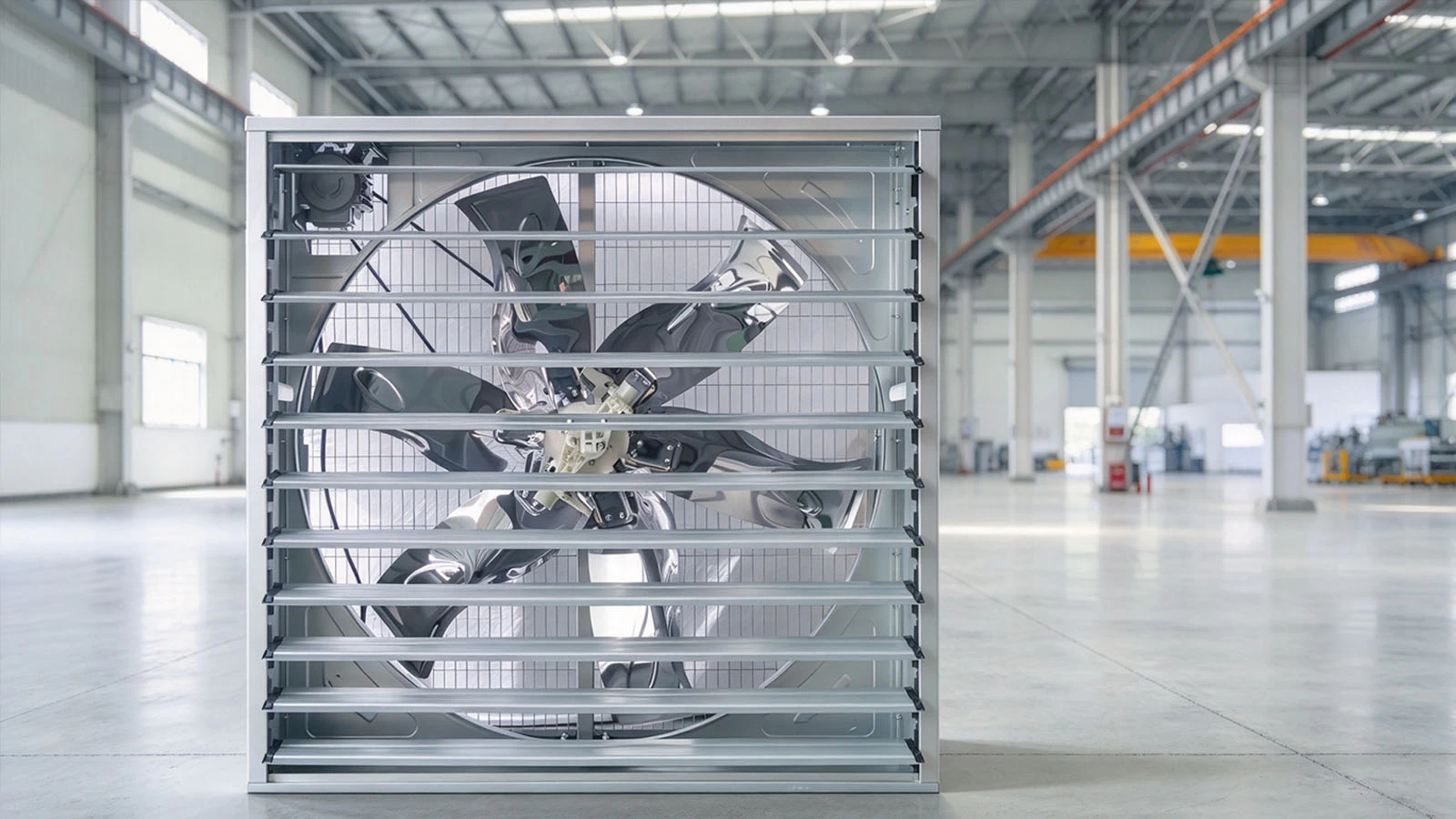
- Industrial Factories & Warehousing: Widely applied in garment factories, shoe manufacturing, electronics assembly, foundries, and large logistics warehouses to quickly clear high heat, dust, and odors.
 |
Key Selection Criteria for Galvanized Steel Fans
When selecting galvanized steel exhaust fans, evaluate these critical technical parameters:
- Zinc Coating Thickness: Prioritize high-quality steel sheets with a zinc coating weight of 275 g/㎡ for superior rust prevention and longer service life.
- Blade Material & Dynamic Balance:
- Stainless Steel Blades: Durable, resistant to deformation, and easy to wash.
- Aluminum Alloy / Galvanized Blades: Lightweight, fast start-up, and highly economical.
- Ensure blades undergo strict dynamic balance calibration to minimize operational vibration and noise.
- Drive System Type:
- Belt Drive: Smooth rotation, low noise, high airflow, and low maintenance cost—making it the first choice for poultry farms and large factory halls.
- Direct Drive: Simple structure with no belt wear or replacement issues, suitable for specific fan sizes.
- Motor Specifications: As the "heart" of the fan, select specialized fan motors with 100% copper windings, an IP55 protection rating, and Class F insulation to withstand dusty and humid farm environments.
Maintenance Practices for Galvanized Steel Fans
Proper routine maintenance significantly extends fan lifespan and maintains optimal airflow capacity:
- Clean Louvers & Blades Regularly: Accumulated dust and feathers increase motor load and prevent shutters from opening fully. Clean regularly using a soft brush or low-pressure water washer.
- Inspect Belt Tension (Belt-Driven Models): Check drive belt tension monthly. A loose belt causes RPM drops, airflow loss, and slippage wear; an overly tight belt accelerates motor bearing wear.
- Bearing Lubrication: Apply high-temperature lubricating grease to bearings at scheduled intervals to prevent dry friction damage.
- Touch-up Anti-Rust Care: If scratches or local rust spots appear over long-term use, sand the area and spray zinc-rich anti-rust paint promptly to prevent corrosion from spreading.